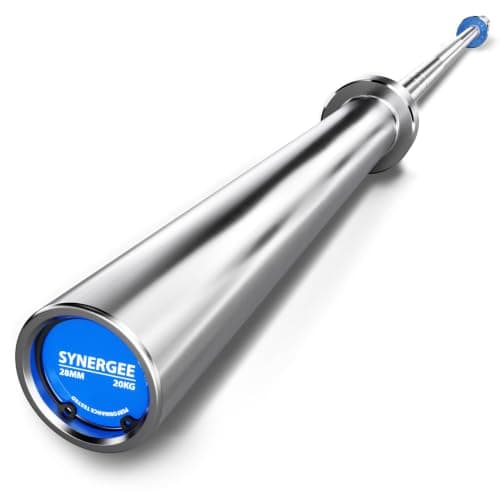
The shaft: a 28.5mm middle diameter
The Regional runs a 28.5mm shaft, which is the most useful single diameter you can pick. It splits the difference between a thin 28mm Olympic bar and a thick 29mm power bar: comfortable enough in the hand for pressing and pulling, stiff enough to feel solid under a heavy squat, without committing hard to either family. That’s the whole philosophy of this bar — it does a bit of everything competently rather than one thing brilliantly. If you want to understand how diameter changes feel, our Olympic vs powerlifting guide lays out the trade-off.
Hard chrome: the quiet standout
The best thing about this bar is the finish. Hard chromeis a genuinely durable, low-maintenance coating — a thick, hard plating that resists rust and wear far better than the thin decorative chrome you find on the cheapest bars. In a humid garage that matters more than almost any other spec, because a rusty knurl is the most common way a budget bar goes bad. It sits below stainless and Cerakote on outright corrosion resistance, but it’s well above the budget field, and it means the two-minute weekly clean-and-oil routine is all the care the bar needs. Our finishes guide ranks every coating.
Bushing spin: fine for everything but the Olympic lifts
The sleeves ride on bushings, which give the modest, controlled rotation that covers squats, presses, rows and general deadlifting perfectly well. What bushings don’t do is spin freely enough for the catch phase of a clean or snatch — for that you want a bearing bar, and our bushing vs bearing guide explains why. This is the bar’s one honest limitation: if the Olympic lifts are your main training, the Regional isn’t the bar, and our CrossFit roundup points you to a bearing bar instead. For everyone else, bushing spin is simply not a problem.
Knurl and marks: dual-marked and medium
The knurl is a medium pattern with dual marks— both the Olympic and powerlifting rings. Medium is the right call for a do-everything bar: it grips confidently without the sharp bite of an aggressive power-bar knurl that would tear your hands on higher-rep work, and the dual marks let you index a snatch grip and a bench grip on the same shaft. The honest limit is the mirror of the power bar’s: a heavy raw deadlifter chasing maximum grip will out-grow a medium knurl and want more bite, at which point a dedicated power bar is the upgrade. Our knurling guide explains the marks.
Capacity: 1,500 lb of headroom
The 1,500 lb ratingis far beyond what any raw home lifter loads, so read it as durability headroom rather than a target — a 1,500 lb-rated bar at this price is one of the cheapest ways to a genuinely high-capacity shaft. Our weight-capacity guide explains why the headline number matters less than the tensile strength behind it, and why bars actually bend from being dropped across rack safeties, not from the weight you lift.
Who should buy it — and who shouldn’t
Buy it ifyou want one dependable, low-maintenance bar for general strength training and you don’t want to think about it again. The hard-chrome finish, the versatile 28.5mm shaft and the low price make it the sensible default, and it pairs cleanly with a set of iron plates or bumpers and any rack.
Look elsewhere ifyou specialize. If you clean and snatch regularly, buy a bearing bar; if you only pull heavy raw and want maximum grip, buy a stiff power bar with an aggressive knurl. The Regional’s strength is that it does everything acceptably, which is also the reason a committed specialist will eventually want more — see our Olympic roundup for the full field.
Sources
- Synergee Regional 20kg hard-chrome barbell — manufacturer product specification (shaft diameter, capacity, sleeve/bushing type, knurl marks, hard-chrome finish) as published on the retail listing.
- General barbell-spec principles (shaft diameter and feel, bushing vs bearing rotation, knurl aggressiveness, finish and corrosion) as covered in our methodology and linked spec guides.