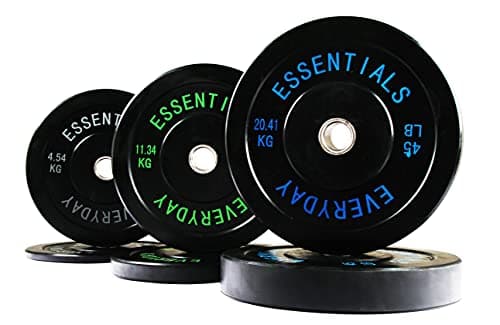
The pitch: a color-coded full set in one order
The core appeal of this set is that it removes decisions. Instead of hunting single pairs, working out which weights you need first and stacking up shipping across separate orders, you get a graduated set of color-coded plates that covers a working range out of one box. The color codingis the feature you’ll appreciate every session: weights are keyed to color, so loading a bar becomes a glance rather than a squint at stamped numbers. On a busy platform that speeds warm-up jumps and, more importantly, makes it hard to load a bar unevenly — matched colors on each sleeve is an instant visual check that both sides are the same. It’s a small thing that pays off every time you change weight.
Buying a set also means the plates match. Same brand, same rubber, same diameter and the same insert design across the range, so nothing looks or feels mismatched on the bar — and a consistent overall diameter matters for bumpers because it’s what lets a loaded bar sit level on the floor between reps. If you’re still deciding whether bumpers are even the right plate for you, our guide to what bumper plates are lays out the case before you commit to a full set. If you already know you want them, the set is the low-friction way in.
Steel hub inserts vs all-rubber centers
The spec that separates these from the bottom of the market is the steel hub insert — the metal collar at the center of each plate that rides on the bar sleeve. Cheap bumpers often use a plastic or thin all-rubber center, and that’s where they fail first: the softer material wallows out under repeated loading, the plate develops a sloppy fit on the sleeve, and you end up with the loose, rattling wobble that makes budget bumpers feel worn out long before the rubber does. A steel insert resists exactly that failure. It gives the plate a hard, dimensionally stable bore that keeps a snug fit on the bar, so the plates stay tight and quiet over years of loading and dropping.
That single feature is a big part of why this set sits above the cheapest all-rubber options; our bumper plates explainercovers what to look for. The honest framing: a steel insert isn’t exotic and it isn’t competition-grade, but it is the right choice for a durable training bumper, and its presence is a reliable signal that the maker didn’t cut the one corner that ruins cheap plates. It’s the difference between a set that still fits snugly in year three and one that clatters on the sleeve by the end of the first year. For a plate you’re going to drop deliberately, that stability is worth more than most spec-sheet numbers.
Standard vs competition: the honest limitation
Here’s where the price shows. These are standard training bumpers, not competition plates, and that distinction matters if you know what you’re buying. Competition bumpers hold a tight diameter tolerance so every plate is the same regulation size, use a controlled thin-and-dense construction for minimal bounce, and are built to an exact color-per-weight standard. Standard bumpers like these are looser on all of those counts: thicker per pound, so a heavy load eats more bar sleeve than a comp plate would, and held to a wider tolerance, so diameter and weight aren’t guaranteed to the gram.
For a home lifter, that’s mostly fine — but be honest about two consequences. First, greater thickness means if you load a lot of weight, you can run out of usable sleeve length sooner than you would on thin plates, so genuinely heavy lifters should sanity-check that the set’s thickness leaves room for the loads they train. Second, if you ever want to peak for a meet or train against exact competition feel, these won’t replicate it; you’d step up to comp plates for that. If you’re weighing thickness, tolerance and construction across the market, our guide to choosing bumper plateswalks through what standard versus competition actually changes on your platform. None of this makes the set worse for its job — it just defines the job as durable home training, not competition simulation.
Rubber, bounce and the value question
These are rubber bumpers, which is the mainstream, sensible choice for a training set. Rubber gives you the controlled dead-ish bounce you want when a loaded bar comes down on a platform, and it’s the material the vast majority of home bumpers use. It isn’t the hardest-wearing compound on the market — that’s urethane, which costs more and lives on premium sets — and if you’re curious where the two differ our rubber vs urethane comparison covers it, but for a home platform rubber is the right pick and this set is squarely on it.
On the value question, be clear-eyed. The honest con is that a full set is a premium outlay— you’re buying a whole graduated range at once, so the total is a real number even if the per-plate cost is reasonable. That’s the nature of sets, and it’s worth understanding why the category runs expensive before it stings; our note on why bumper plates cost what they do explains what the rubber, the steel and the manufacturing actually buy you. Against that, the value case for this set is convenience and consistency: one order, matched plates, color coding and steel hubs, from a brand with a lot of home-gym history behind it. It won’t be the cheapest way to get rubber on a bar, but it’s a straightforward one.
Who a graduated set suits — and who should buy by the pair
Buy the set ifyou’re building a platform in a single purchase and want the whole working range sorted at once. Someone kitting out a new garage gym, who knows they’ll want light plates for warm-ups and heavier ones for working sets, gets the most from a graduated set: it’s the fewest decisions, the fewest orders and a guaranteed-matched result. The color coding and steel hubs make it a genuinely nice daily-driver set rather than a bare-minimum one.
Buy by the pair instead ifyou already own plates and only need to fill a gap, or if you want to spread the cost over time and add weight as you get stronger. Paying for a full set when you only need one or two pairs is money wasted, and that’s exactly the case where a single-pair purchase makes more sense — our review of the BalanceFrom 45 lb pair covers the single-pair route from the same brand for people topping up rather than starting from scratch. And if you’re still not sure bumpers are the right call at all versus iron, our note on whether you actually need bumper plates is the place to settle that before you spend. Match the purchase to your situation and this set is either the obvious answer or clearly the wrong one.
Drop safety, platforms and noise
The whole point of bumpers is that they let you drop a loaded barsafely, and this set does that job. The rubber absorbs the impact so the plates — and your floor — survive being dropped from lockout, which is what makes bumpers the right plate for deadlifts, cleans and any lift you might bail. Two honest caveats keep expectations right. First, bumpers still need a surface under them: dropping onto bare concrete is hard on the plates and loud, so a platform or rubber flooring is part of the setup, not optional. Second, no training bumper is silent — rubber is quieter than clanging iron, but a heavy drop still makes noise and sends impact through the floor, which matters if you share walls or lift above a living space.
One practical reassurance: the steel hub inserts help here too. Because the metal collar keeps the plate tight on the sleeve, a loaded bar drops flat and stable rather than with plates skidding loose on the bar, and that tighter fit is part of what keeps the set quiet and controlled over time. If you want to see how this set stacks up against the rest of the field before you decide, our best bumper plates roundup ranks it alongside the alternatives, and the broader weight plates hubcovers iron and budget options if a full bumper set turns out to be more plate than you need. For most home platforms, though, a color-coded, steel-hub graduated set is a genuinely sound way to load a bar — you just want to go in knowing it’s a standard training set at a full-set price, not a competition bargain.
Sources
- BalanceFrom Olympic Bumper Plate Set — manufacturer product specification (color-coded rubber bumper plates, steel hub inserts, 2" Olympic fitment, sold as a graduated set) as published on the retail listing.
- General bumper-plate principles (steel vs all-rubber inserts, standard vs competition thickness and tolerance, rubber bounce and drop safety, platform and noise notes) as covered in our methodology and linked spec guides.