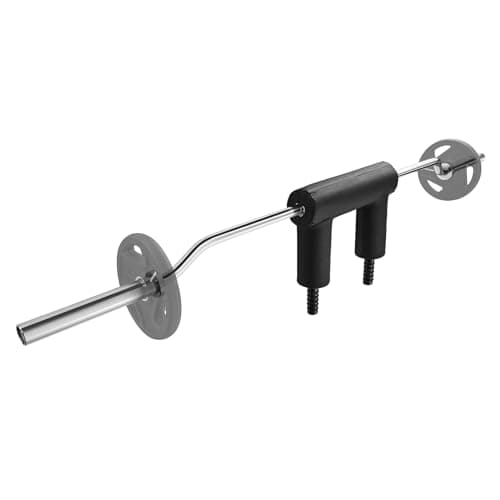
The high-capacity budget SSB
The point of this bar is right there in the rating: 1,500 lb of capacity at a budget price. A safety squat barputs a padded yoke on your shoulders and forward handles in your hands, so you squat without wrenching your arms back to hold a straight bar — a gift if low-bar squatting aggravates your shoulders, elbows or wrists, and a builder of a more upright squat besides. This VEVOR takes that design and pushes the capacity and shaft thickness up for the heavy end of home lifters, without the price of a specialist bar. If you squat serious weight and want an SSB with real headroom, that’s the whole pitch. Our SSB vs barbell guide covers the training case in full.
How it differs from the 700 lb VEVOR
Because we’ve reviewed both, it’s worth being explicit: this is the heavier-capacity sibling to the VEVOR 700 lb / 28 mm SSB. The 700 lb bar is the cheapest genuine way into safety-squat training and comfortably covers the vast majority of home squatters — it’s lighter, slimmer and easier to handle. This 1,500 lb version runs a thicker 32mm shaftand roughly doubles the rating, which is the right call only if you actually squat heavy enough to want that headroom and stiffer feel. Most lifters are better served by the lighter 700 lb bar; choose this one when your squatting is deep into the higher-load range and you want the extra margin and rigidity. Don’t pay for capacity you’ll never load.
The 32mm shaft: stiff and dead under a heavy squat
The 32mm shaft is the spec that earns the higher rating. A thicker shaft is stiffer, so under a heavy squat it sits dead and rigid instead of flexing and whipping the way a thinner bar can when it’s loaded near its limit. For a heavy squatter that’s exactly what you want — a bar that stays planted on your back and transfers your drive cleanly rather than bouncing. It’s also part of why the bar is heavier and bulkier than the 700 lb version: more steel in the shaft means more mass overall. Because an SSB has no fixed weight standard, always check the bar’s own weight before you load it — our how much does an SSB weigh guide explains why that matters more on a heavier bar like this.
The padded yoke and arm handles
The padded shoulder yoke and arm handlesare the comfort features that make any SSB worth owning, and they carry over here. The yoke pad spreads the load across your traps and shoulders instead of a single hard contact point, and the forward handles let you hold a neutral, relaxed position rather than cranking your arms back. On a heavy bar that padding matters even more, because you’re loading more weight onto your shoulders — a comfortable, planted rack position is what lets you brace and drive under a big squat. As with any budget bar, expect the padding to compress over time; it’s a known, cheap thing to supplement or replace down the line and doesn’t affect the bar’s structure.
Where the price shows: bulk, finish and welds
The honest trade-offs. First, this bar is heavier and bulkierthan the 700 lb VEVOR — the extra capacity comes as extra steel, so it’s more of a handful to move, rack and store. Second, the finish and welds are budget-tierfor the capacity: they’re functional rather than refined, which is the expected compromise at this price and the main way it differs from a specialist bar that costs several times as much. None of that stops the bar doing its job within the rating, but it’s why a lifter who wants the most durable, best-finished SSB should look at the step-ups in the roundup. The bar fits a standard rack on 2-inch Olympic sleeves, so it takes the plates you already own, and it wants a rack with safetiesthe same as any heavy squat — check the bar’s dimensions against your rack’s width and clearance before buying, especially given the bulk.
Handling, storage and the weight of the bar
The flip side of the higher capacity is that this is a heavier, bulkier barto live with than the 700 lb version, and it’s worth planning for. A safety squat bar is already longer and more awkward than a straight bar because of the yoke and the cambered ends, and adding a thicker 32mm shaft and more steel makes this one more of a handful to lift onto the rack, unrack under load, and store between sessions. Make sure your rack’s j-hooks and safetiesare set at a height you can comfortably un-rack a heavy, bulky bar from, and that you’ve got a solid spot to store it where the yoke pad isn’t getting crushed. None of this is a dealbreaker — it’s simply the physical reality of a high-capacity bar, and the reason not to buy more bar than you need.
Programming a heavy SSB squat
The reason to own a high-capacity SSB is to train the squat hard, and the bar rewards that. The forward-shifted load builds a more upright squat and hammers the upper back to stay tight, so many lifters use an SSB as a main squat variation, a way to keep squatting when a straight bar bothers their shoulders, or a tool for tempo and pause work where the upright position and the extra upper-back demand pay off. Because the bar’s own weight isn’t a fixed standard, weigh it before you build a program around it and load from there — our SSB weight guide explains why guessing leads to mismatched numbers. Whatever you run, squat it inside a rack with the safeties set, because a heavy SSB is exactly the situation where a missed rep needs somewhere safe to go.
Care and the pads over time
As with any budget bar, the padsare the part to keep an eye on. The shoulder yoke and arm padding are what make the rack position comfortable under a big load, and budget padding compresses with use over time — that’s the known, expected trade at this price, and it’s a cheap thing to supplement or replace without touching the bar’s structure. Keep the shaft and sleeves wiped down and off a damp floor to fend off surface rust on the budget finish, and store the bar so the pads aren’t sitting compressed under something. Looked after, the bar does its high-capacity job for a long time; the finish and pads are simply where you accept a cheaper standard in exchange for the capacity.
Is the extra capacity worth it for you?
The honest gut-check on this bar is whether you’ll ever use the headroom. If your squat is deep into the higher-load range and climbing, the 32mm shaft’s stiffness and the 1,500 lb rating give you a bar you won’t out-lift and a dead, planted feel that a thinner bar can’t match near its limit — that’s real value for a heavy squatter. If you’re not there yet, the extra capacity is weight and bulk you’re carrying for a number you’ll never load, and the lighter 700 lb VEVOR is the smarter, cheaper buy. Match the bar to the squat you actually have, not the one on the spec sheet.
Who should buy it — and who shouldn’t
Buy it ifyou squat genuinely heavy, you want a high-capacity, stiff-shafted SSB and you’d rather not pay specialist-bar money. The 32mm shaft and 1,500 lb rating give you real headroom and a dead, planted feel under a big squat, and the padded yoke keeps the rack position comfortable. For a heavy home squatter on a budget, it’s the honest high-capacity pick.
Look elsewhere if you don’t squat that heavy — the lighter, cheaper 700 lb VEVORis easier to handle and covers most home lifters — or if you want the most refined build and finish, in which case the enthusiast bars in our SSB roundup (like the Bells of Steel bar) are the better long-term spend.
Sources
- VEVOR safety squat bar (1,500 lb, 32 mm) — manufacturer product specification (1,500 lb capacity, 32 mm shaft, padded shoulder and arm yoke, 2-inch Olympic sleeve fitment) as published on the retail listing.
- General safety-squat-bar principles (padded-yoke design, forward handles, shaft diameter and stiffness, capacity headroom, no fixed weight standard, rack fitment) as covered in our methodology and linked specialty-bar guides.