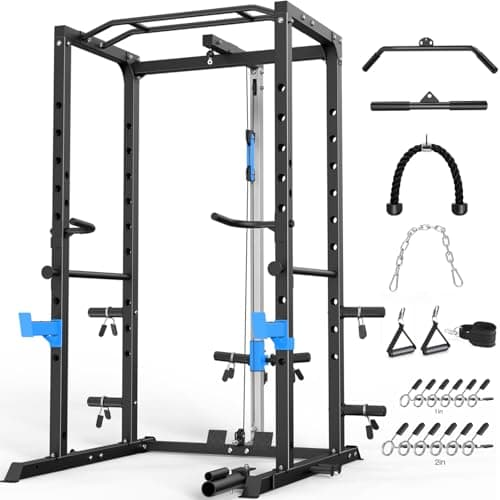
What “full cage” buys you here
The ULTRA FUEGO is a full cage— a four-upright enclosure you can lift inside, rather than a two-post squat stand or half rack. That distinction matters because a full cage lets you set safeties on both sides and bail out of a failed squat or bench with the bar caught by the rack rather than by you. If you’re still deciding between rack styles, our what is a power rackguide explains why a full cage is the safest way to train heavy alone, which is exactly the situation most home lifters are in. On that core job — catching the bar when a lift goes wrong — the ULTRA FUEGO does what a cage is supposed to do, and it’s the reason to consider it over a cheaper open stand.
Fitment is the standard 2"Olympic pattern, so it works with the plates, collars and bars you already own or plan to buy. There’s nothing proprietary about the loading, which is what you want — a rack that locks you into a single ecosystem of parts is a trap, and this one doesn’t do that.
The bundled attachments: the real value story
The strongest argument for the ULTRA FUEGO is that it comes with the attachments most beginners forget to budget for. Out of the box you get J-hooks to hold the bar, dip handles for bodyweight work, and a landmine for rotational and pressing movements. That bundle matters more than it looks, because the classic first-rack mistake is buying a bare cage and then discovering that every useful attachment is a separate purchase that quietly doubles the real cost. Our J-hooks and rack attachments guide walks through what each attachment actually does and why the ones included here are the ones you reach for first.
Think of it in terms of total cost rather than sticker price. A cheaper cage with nothing in the box can end up costing more once you’ve added the J-hooks, dip station and landmine separately — and you’ll have spent time hunting for compatible parts on top. The ULTRA FUEGO front-loads those decisions, which is genuinely useful for a first-time buyer who doesn’t yet know what they’ll want. The dip handles and landmine in particular are the kind of accessories people add six months in; having them from day one means the cage grows with your training instead of gating it.
The optional pulley: grow into cables, don’t pay upfront
The other flexibility feature is the optional cable pulley system. Rather than baking a cable stack into the base price, the ULTRA FUEGO lets you add cables later when you actually want them. That’s a sensible way to structure a mid-range cage: many buyers never add a pulley, and the ones who do usually want it after they’ve settled into a routine, not on day one. A pulley opens up lat pulldowns, cable rows and triceps work — our lat pulldown attachment guide covers what a cable setup adds and what to check before you buy one.
The honesty note has to be here, though: the best cable setup is a paid add-on, not included. So if a full cable stack is a must-have for you from the start, price the pulley into the total before you compare this cage against rivals that bundle a pulley in the box. Framed correctly, the optional pulley is a strength — it keeps the entry price down and lets you grow into cables — but only if you go in understanding that “optional” means “extra spend later,” not “free upgrade.”
Where the price shows: the steel
The clearest place the budget shows is the frame. The ULTRA FUEGO’s uprights are a lighter gauge than commercial racks. Steel gauge describes how thick the tubing is, and heavier gauge means a stiffer, more stable cage that shrugs off heavy loads and rough re-racking. Commercial and premium home racks typically use thicker 11-gauge 3x3 steel; a mid-range cage like this uses lighter tubing to hit its price. Our 11-gauge vs 14-gauge steelguide explains exactly what that difference means in practice — it’s mostly about rigidity, wobble under load, and how much abuse the rack tolerates over years.
In real terms, lighter steel is perfectly adequate for the loads a home lifter puts up, but it won’t feel as dead-solid as a commercial 3x3 cage, and it rewards being assembled tightly and used sensibly. It’s the honest ceiling on this cage: you’re getting a genuinely useful full cage with a great attachment bundle, and the compromise that pays for all of it is a frame that’s lighter than the premium tier. For most people that’s a fair trade; for a powerlifter loading near-maximal weights and slamming the bar down, a heavier commercial rack is worth the step up.
Footprint and who it suits
The ULTRA FUEGO offers a solid footprint for the price— a stable base that suits a garage or dedicated home-gym space. It sits in the mid-range: more capable and more complete than a bare budget cage, without reaching commercial weight or price. That makes it a natural fit for the intermediate home lifter who wants a cage they won’t immediately outgrow but doesn’t need gym-grade steel. If you want to see where it lands against the field, our best power rack and best budget power rack roundups are the right place to compare, and the Sportsroyals power rack is a close rival worth reading alongside this one.
Who should buy it — and who shouldn’t
Buy the ULTRA FUEGO if you want a flexible mid-range full cage you can grow into, you value having J-hooks, dip handles and a landmine included from day one, and you like the option to add a pulley later rather than paying for it upfront. For a first serious cage that covers most of what a home lifter needs, the bundled attachments and the room to expand make it a smart, low-regret pick.
Look elsewhere ifyou need commercial-grade steel for near-maximal loads, or a full cable stack included in the base price with no add-on. In those cases the honest move is to step up to a heavier 3x3 rack or choose a cage that bundles the pulley from the start — the ULTRA FUEGO is built to be the flexible mid-range option, not the heaviest or the most fully loaded. On its own terms, that’s exactly what it delivers.
Assembly, space and total cost
Two practical realities deserve a mention before you buy. First, a cage like this ships flat and needs assembling, and a lot of the finished feel comes from doing that carefully — bolting every joint down tight is what turns lighter-gauge steel into a stable cage, and a rushed assembly is the usual reason a budget rack feels wobbly. Budget a couple of hours, use the hardware provided, and go back to re-tighten everything after your first few sessions once the frame has settled. Second, plan your floor space honestly: a full cage needs its footprint plus room to walk around it and load plates, and if you’re adding the optional pulley later you’ll want clearance behind or beside the rack for the cable travel.
On total cost, the ULTRA FUEGO makes the most sense when you count what you’d otherwise buy piecemeal. A bare cage plus separate J-hooks, a dip station and a landmine can quietly cost as much as — or more than — a cage that bundles them, and you’d spend time chasing compatible parts on top. The honest way to compare this rack against a cheaper one is to add the attachments you’ll actually use into both totals; do that and the ULTRA FUEGO’s bundle often wins on value even when its sticker price isn’t the lowest. Where a rival genuinely beats it is at the extremes — a heavier commercial cage at the top end, or a bare two-post stand at the bottom if you truly need nothing but posts and a bar. In the middle, where most home lifters actually shop, the bundled-attachment maths is what makes this cage worth a look.
Sources
- ULTRA FUEGO Power Cage — manufacturer product specification (full cage; includes J-hooks, dip handles and a landmine; optional cable pulley system; 2" plate fitment) as published on the retail listing.
- General power-cage spec principles (full cage vs open stand safety, value of bundled attachments, optional pulley economics, steel gauge and rigidity, footprint and stability) as covered in our methodology and linked rack guides.