Skip to content
Knurl Knock

01

YOLEO Squat Rack Review

Our top squat stand: what adjustable width, extended safety arms and a pull-up bar get you in a fraction of a cage's floor space — and the honest limits of a two-post design at maximal loads.

By Stephen V., Strength-gear enthusiastLast updated August 5, 2026How we pick
Affiliate disclosure: Knurl Knock earns a commission when you buy through our links, at no extra cost to you. We accept no free products and no sponsored placements — we only earn if you buy, never for recommending. How this works.

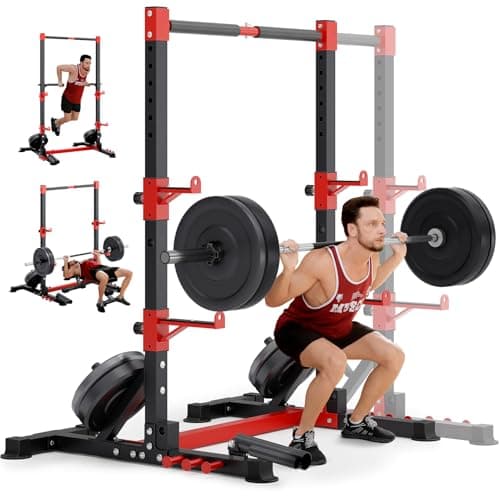
The YOLEO squat rack is the stand we recommend to the lifter who wants to squat and press heavy but can’t — or won’t — give a full cage the floor. It’s an adjustable-width squat stand with extended safety arms and a pull-up bar, and it tops the squat-stand slot in our best squat rackroundup. As always on Knurl Knock, this isn’t a lab test — we don’t run a rig — it’s a read of the published spec set against every rack you can actually buy today.

The short version: this is the best-value way to get rackable, spotter-free squattinginto a small room. The extended safety arms let you bail a squat, the adjustable width fits both 6 ft and 7 ft bars, and the whole thing takes a fraction of a cage’s footprint. What you give up is the total enclosure and rigidity of a four-post cage — a two-post stand is inherently less planted at the very top loads. That’s the trade this review exists to make clear.

01

At a glance

YOLEO Squat Rack with Pull-Up Bar
Best overall squat stand

YOLEO Squat Rack with Pull-Up Bar

YOLEO

8.4

An adjustable-width squat stand with extended safety arms and a pull-up bar — the best-value way to squat and press heavy without a full cage's footprint.

Type
Adjustable-width squat stand
Width
35"–67" adjustable
Includes
Safety arms, pull-up bar
Fits
6 ft & 7 ft bars

What we like

  • Extended safety arms let you bail a squat safely without a cage
  • Adjustable width fits both 6ft and 7ft bars
  • Far smaller footprint than a four-post rack

Trade-offs

  • A two-post stand is less rigid than a bolted cage at max loads
  • Safeties don't fully surround you the way a cage does
Value
9
Stability
7
Safety
8
Footprint
9
$149.99 · View on Amazon

$179.99 17% off

#ad · Price as of August 5, 2026 · Affiliate disclosure

02

The full review

Why a stand, not a cage

The case for a squat standis space and access. It uses two posts instead of four, so it claims far less floor, is easy to work around, and doesn’t box in a small room. For a lot of home lifters that’s the difference between owning a rack and not. The YOLEO keeps the one feature that makes a stand safe to train on alone — extended safety arms— so a failed squat drops onto the arms rather than onto you. Our power rack vs squat rack guide walks the full trade-off between the two formats.

Extended safety arms: the reason it’s safe to squat alone

The safety armsare what separate this from a bare pair of uprights. Set them just below your bottom position and a missed squat lands on the arms, letting you bail without a spotter — the single most important thing a solo squatter needs. They don’t fully surround you the way a cage’s safeties do, so setup discipline matters more: dial the arm height in for each lift. Used correctly, they make heavy solo squatting genuinely safe in a stand’s footprint.

Adjustable width and bar fitment

The stand adjusts from 35" to 67" wide, so it fits both 6 ft and 7 ft bars— useful, because not every budget bar is a full 7 ft, and you may run a shorter bar for pressing and a full-length one for squats. Matching the upright spacing to your bar keeps the J-cups under the loadable shaft where they belong. If you’re still choosing the bar that lives in it, our Olympic and power-bar roundups rank the options, and our barbell dimensions guide explains how to check a bar fits.

A pull-up bar built in

The top crossmember doubles as a pull-up bar, which turns the stand into two tools in one footprint — rack your pressing and squatting, then pull from the top. It saves buying and mounting a separate bar, and it’s part of why the stand punches above its price. If a built-in pull-up bar is a priority across the rack field, our racks with a pull-up bar roundup ranks the options.

The honest limit: two posts vs four

The trade-off is rigidity. A two-post standis inherently less rigid than a bolted four-post cage at the very top of the load range — it can feel livelier under a grinding max, and the safeties don’t enclose you. The fix is to anchor it or load the base, which tightens it up considerably, and to keep honest about your loads: for the vast majority of home squatting the stand is plenty; for a chase-the-cage-record squatter, a full power cage is the more planted platform. Knowing that going in is the whole point.

Who should buy it — and who shouldn’t

Buy it ifyou want to squat and press heavy in a small room, value easy access over full enclosure, and like getting a pull-up bar in the same footprint. It’s the best-value route to spotter-free squatting, and it pairs cleanly with a bar and a set of plates.

Look elsewhere ifyou want maximum rigidity and full enclosure for very heavy benching and squatting — a full cageis the better long-term buy — or if your room is so tight that even a stand is a stretch, in which case a wall-mounted folding rack reclaims the floor entirely.

Sources

  • YOLEO squat rack — manufacturer product specification (adjustable-width squat stand, 35"–67" width, extended safety arms, pull-up bar, 6 ft/7 ft bar fitment) as published on the retail listing.
  • General squat-stand principles (two-post vs four-post rigidity, safety-arm setup, anchoring, bar fitment) as covered in our methodology and linked rack guides.
03

Common questions

Can you squat heavy safely on a two-post squat stand?

Yes, with the extended safety arms set correctly. Dial the arm height just below your bottom position and a missed squat lands on the arms, letting you bail without a spotter. A two-post stand is less rigid than a bolted cage at maximal loads, so anchor it or load the base and set the arms for every lift.

Does the YOLEO squat rack fit a 7-foot barbell?

Yes. The uprights adjust from 35 to 67 inches wide, so the stand fits both 6-foot and 7-foot bars. Match the width to your bar so the J-cups sit under the loadable shaft. That flexibility is handy if you run a shorter bar for pressing and a full-length one for squats.

Is a squat stand or a full power cage better?

A stand wins on space and access — far smaller footprint, easy to work around — and costs less. A full cage wins on rigidity, full enclosure and higher capacity, and makes solo benching easier. If your room is tight and your loads are in the normal home range, the YOLEO stand is plenty; if you lift very heavy and have the floor, a cage is the more planted buy.

Does the YOLEO squat rack have a pull-up bar?

Yes — the top crossmember doubles as a pull-up bar, so you get racking and pulling in one footprint without mounting a separate bar. It's part of why the stand punches above its price. If a pull-up bar is a must across the rack field, our racks-with-a-pull-up-bar roundup ranks the options.

Read next

Heavy squats, small footprint

If you want spotter-free squatting without a cage's bulk, the YOLEO is our top stand. Compare it against the whole squat-rack field first.