Affiliate disclosure: Knurl Knock earns a commission when you buy through our links, at no extra cost to you. We accept no free products and no sponsored placements — we only earn if you buy, never for recommending.
How this works.
Most rack advice assumes you have a garage bay to fill. Plenty of home lifters don’t — they have a spare bedroom, a corner of a one-car garage that still has to hold a car, or an apartment with a landlord. In a small space the usual full four-post cage stops being the obvious answer, because its footprint and the clearance it needs to bench and press insidethe cage are exactly what you don’t have. The good news: three formats solve this well, and the best of each is available on Amazon.
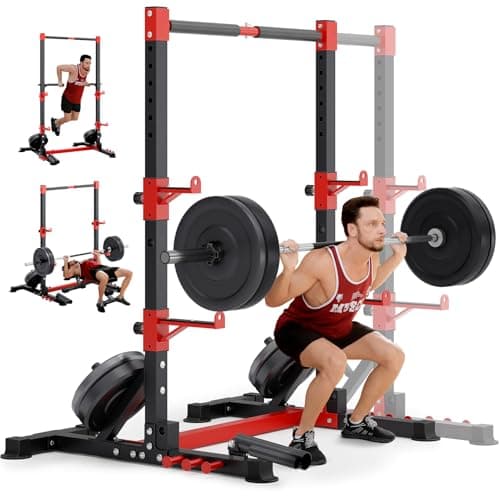
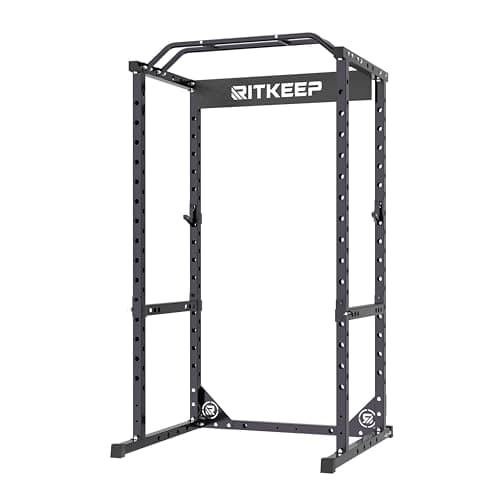
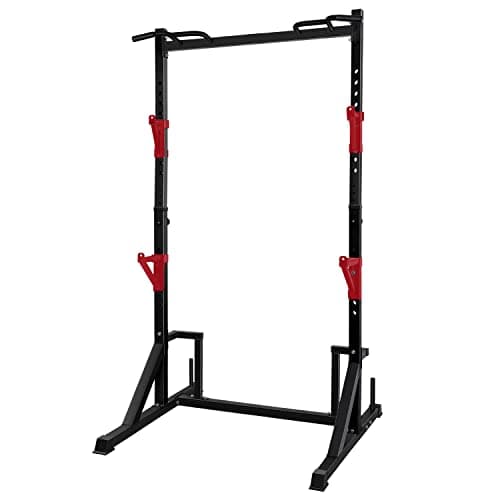
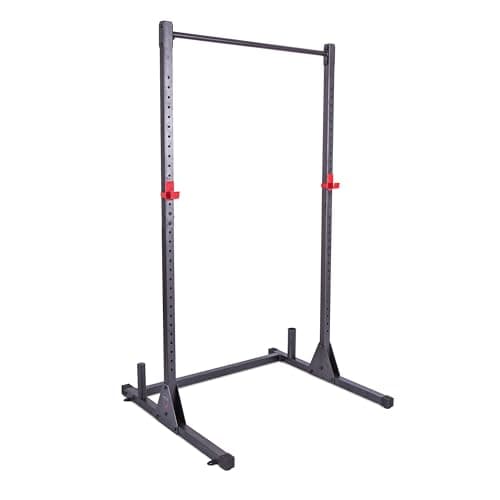
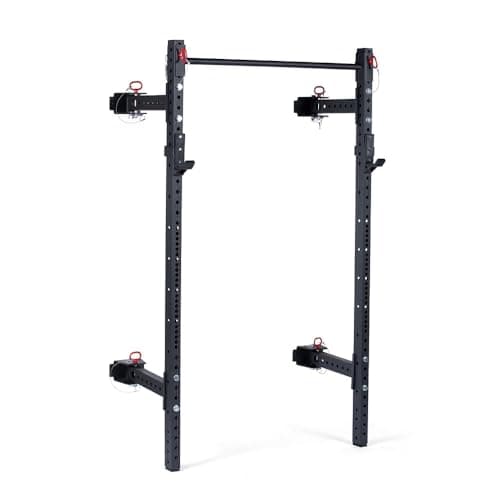
The first is the wall-mounted folding rack. It bolts to your studs and folds flat — often to just a few inches from the wall — so the room goes back to being a room between sessions. It uses real commercial-tier steel and gives you a proper rack when it’s down. The second is the squat stand: a two-post, adjustable-width upright with spotter arms that takes a fraction of a cage’s floor and still lets you bail a heavy squat. The third is a compact full cage— a smaller-footprint four-post rack for people who want the surround-safety of a cage in the least space a cage can occupy.
The trade-off to be honest about is safety geometry. A full cage catches a failed rep on both sides no matter how you dump it; a folding rack or a stand relies on spotter arms, which work but demand you set them correctly every session. We weight footprint heavily here because that’s the whole point of the page — but we call out where a format asks you to be more careful. Measure your ceiling first: you need enough height to rack the bar and, ideally, to press overhead. Our rack-sizing guide walks the exact measurements to take before you buy.