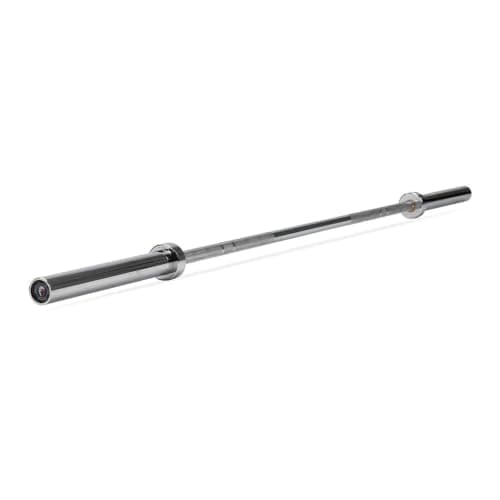
The shaft: a true 28mm all-rounder
The headline number is the 28mm shaft. That’s the diameter most home lifters actually want: thin enough to feel lively and to sit comfortably in a hook grip for the Olympic lifts, thick enough not to feel like a noodle under a heavy squat. It sits a hair thinner than the 28.5mm “multipurpose” bars and a full millimeter under a 29mm power bar. In practice that means the Performance Series presses, cleans and snatches a touch more happily than it grinds out a maximal deadlift — it leans Olympic, which is exactly what an all-purpose bar should do. If you want to understand why a millimeter changes the feel, our whip guide covers it.
Bronze bushings: smoother than the budget field
Sleeve rotation is where cheap bars give themselves away, and it’s where this bar quietly separates from the pack. The Performance Series runs bronze bushings, not the sintered-bushing or bare-steel-on-steel sleeves you find on the very cheapest bars. Bronze gives a genuinely smooth, moderate spin — not the free-wheeling rotation of a needle-bearing bar, but far more than “enough” for squats, presses and pulls, and serviceable for occasional cleans. If you clean and snatch as your main training, a bearing bar like the ones on our CrossFit barbell list will spin faster; for everyone else, bronze bushings are the value sweet spot. Our bushing vs bearing guide explains the trade-off in full.
Knurl and finish: tame on purpose, chrome on a budget
The knurl is a medium volcanic pattern with dual marks. “Volcanic” is a texture that grips without the sharp bite of an aggressive mountain knurl — friendly for high-rep work and unlikely to shred your hands, but deliberately tame. Heavy raw deadlifters who chalk up and want the bar to feel welded to their fingers will find it too polite; that’s a power-bar preference, and it’s the point of a separate power-bar knurl. The dual marks — both the Olympic and IPF rings — mean you can index a snatch grip and a bench grip on the same bar, which is exactly what an all-rounder needs. Read our knurling guide if the marks are new to you.
The finish is chrome. Chrome looks the part and resists rust reasonably, but it’s not the near-bulletproof corrosion resistance of stainless steel or a good Cerakotecoat. In a climate-controlled room it’s a non-issue; in a humid or unheated garage you’ll want to wipe it down and give it the occasional light oil. That is the single clearest place the price shows — and it’s a fair trade at this cost. Our finishes guide ranks every coating on grip and rust resistance.
Capacity: more than you’ll ever load
The 700 lb ratingreads modest next to the 1,500–2,000 lb figures some import bars advertise, but it’s worth being honest about what that number is for. Seven hundred pounds is far beyond what any raw home lifter loads on a bar — the rating is a durability headroom figure, not a barrier. Where very high ratings matter is repeated heavy dropsonto safeties, which is a powerlifting-rack or bumper-plate concern more than a “will it bend when I lift” one. For mixed training within the rating, this bar will outlast years of progress. If you specifically want a higher-capacity shaft for heavy slow work, our power-bar roundup lists 2,000 lb options.
Who should buy it — and who shouldn’t
Buy it ifyou train a bit of everything — squat, bench, press, deadlift, and the occasional clean — and want one dependable bar without overthinking it. It’s the natural center of a first serious home gym, and it pairs cleanly with a power rack and a set of plates.
Look elsewhere if you fall at either extreme. If you onlysquat, bench and deadlift heavy and want an aggressive grip and a stiff, dead shaft, a dedicated 29mm power bar suits you better. If you clean and snatch as your primary training and want the fastest possible spin, a bearing bar is worth the premium. And if your garage is genuinely damp, consider spending up for a stainless or Cerakote finish you can neglect. For the broad middle — which is most people — the Performance Series is the honest value benchmark, and that’s why it tops our roundups.
Sources
- Titan Fitness Performance Series Olympic bar — manufacturer product specification (shaft diameter, capacity, sleeve type, knurl, finish) as published on the retail listing.
- General barbell-spec principles (shaft diameter and feel, bushing vs bearing rotation, knurl aggressiveness, finish and corrosion) as covered in our methodology and linked spec guides.