01
The Best Weight Plates, Compared on the Specs
Plates are where a home gym quietly gets expensive, so it pays to buy the right kind once. We rank the bumper plates worth owning on the specs that decide durability and drop-safety.
Plates look like the simple part of a home gym, and then you price a full loadout and realize they’re often the biggest single line item. Buying the wrong kind once is an expensive mistake to undo, so the decision is worth a few minutes. The first fork is bumper plates vs iron plates. Bumpers are rubber, all the same diameter (450mm), and built to be dropped from overhead without cracking your floor or the plate. Iron (or steel) plates are denser, thinner, and cheaper per pound — but you can’t drop a loaded bar on them safely. If you deadlift heavy or do any Olympic lifting, you want bumpers.
What separates a good bumper plate
Every bumper is a rubber disc around a metal center, and the center is where cheap plates fail. Look for a steel hub insert, not a thin all-rubber collar — the steel keeps the 2-inch opening true so the plate doesn’t wobble or split around the sleeve over time. After that, the specs that matter are bounce (lower durometer rubber bounces less, which is kinder to your bar, your platform and your neighbors), rubber quality (virgin rubber is more consistent than recycled crumb), and thickness (thinner competition-style plates let you fit more weight per sleeve, but cost more).
Set or singles?
Buying a graduated set is usually the cheapest route to a full loadout and saves you hunting for odd denominations. Buying by the pair makes sense once you own the basics and just need more 45s (the plate everyone runs short of first). We rank both approaches in the roundup, with a live price on each so you can do the per-pound math yourself.
Match the plates to the platform
Bumpers only make sense with a real Olympic barbell (2-inch sleeves) and, ideally, a rack with safeties so a missed rep lands where it should. Get the bar and rack right, then load them with plates that survive being dropped. The roundup below has the specific sets and pairs worth buying.
Start with these
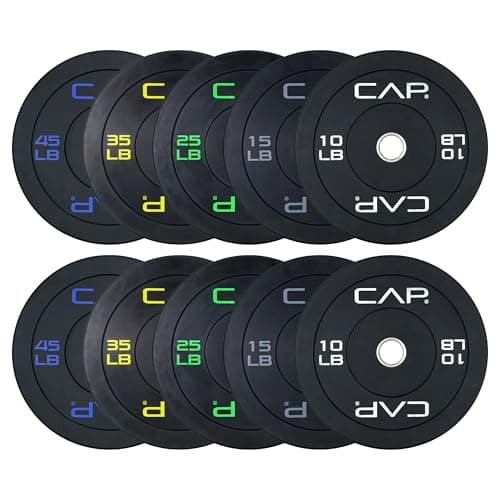
CAP 260 lb Olympic Bumper Plate Set
A 260 lb virgin-rubber bumper set with steel inserts — the value pick for a complete plate loadout that survives being dropped from the top of a deadlift.
#ad · Price as of October 21, 2026 · Affiliate disclosure
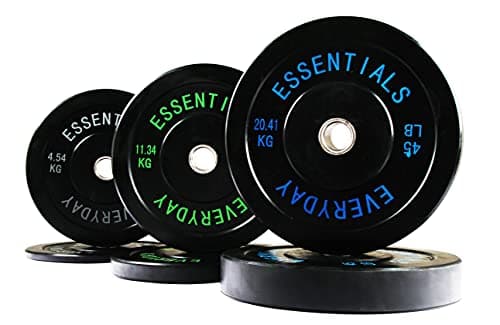
BalanceFrom Olympic Bumper Plate Set
A color-coded bumper set with steel hub inserts from a high-volume value brand — a straightforward full set for a home or garage platform.
#ad · Price as of October 21, 2026 · Affiliate disclosure
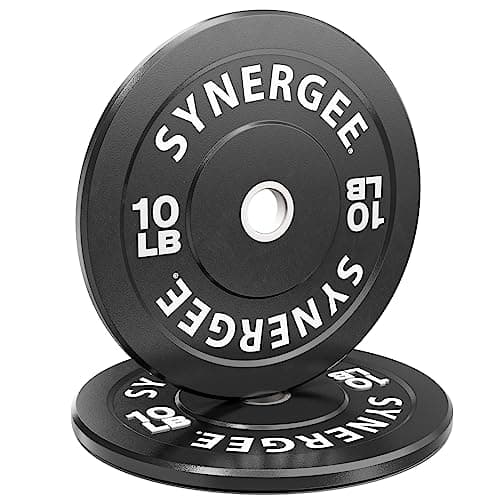
Synergee Bumper Plates (Pairs)
Durable low-bounce bumpers sold by the pair — the pick when you want to buy exactly the weights you're missing rather than a whole set.
#ad · Price as of October 21, 2026 · Affiliate disclosure
Plate roundups & the rest of the platform
Best Bumper Plates
Drop-safe rubber plates with steel hubs, ranked by set value and durability.
Explore →Best Weight Plates
Iron, cast and grip plates — cheaper per pound when you don't drop the bar.
Explore →CAP Cast-Iron Plate Set
Our value iron pick, reviewed — the cheapest honest way to buy weight, if you don't drop the bar.
Explore →CAP 260 lb Bumper Set
Our value bumper pick, reviewed — a complete drop-safe loadout with steel inserts in one buy.
Explore →Barbell Standard Plate Set
Our accuracy-first pick, reviewed — a powder-coated iron set with a published 2% weight tolerance.
Explore →Do I Need Bumper Plates?
The one question that decides it — do you drop the bar? — and what to buy either way.
Explore →How to Choose Weight Plates
The six decisions that get your plate buy right the first time.
Explore →How Much Do Weight Plates Cost?
Bumper vs iron cost per pound, set vs pairs, and how to build a loadout for less.
Explore →Tri-Grip vs Standard Plates
The cut-out handles against thin flat plates — convenience versus sleeve space.
Explore →
Bumper vs Iron Plates
The first plate decision — drop-safety against cost per pound.
Explore →How Many Plates Do I Need?
A starter loadout by strength level — and why you run out of 45s first.
Explore →Weight Plate Sizes, Explained
Hole size, the 450mm diameter rule, and thickness vs sleeve space.
Explore →What Are Bumper Plates?
The rubber plate types, the steel insert, and whether you need them.
Explore →Best Budget Weight Plates
The cheapest honest ways to load a bar — cast iron and bumpers together — ranked on cost-per-pound.
Explore →RitFit Rubber Grip Plates
Rubber-coated tri-grip plates, reviewed — quieter and easier to carry than bare iron for accessory work.
Explore →Synergee Bumper Plates
Low-bounce bumpers sold by the pair, reviewed — the pick when you want to top up exactly the weights you're missing.
Explore →Amazon Basics Grip Plates
Labeled 2-inch Olympic grip plates by the pair, reviewed — the cheapest way to buy the exact iron denominations you're short of.
Explore →BalanceFrom Bumper Plate Set
A color-coded full bumper set with steel hub inserts, reviewed - straightforward drop-safe weight for a platform.
Explore →BalanceFrom 45 lb Bumper Pair
The 45s you always run short of first, sold on their own - reviewed for topping up an existing set.
Explore →CAP Elite 110 lb Cast-Iron Set
A 110 lb starter iron set for pressing and accessory work, reviewed - real 2-inch Olympic plates on a budget.
Explore →Best Weight Plates for Outdoor Use
Ranked by how much bare metal the weather can reach - and the plate to keep indoors.
Explore →Bumper Plates on Concrete?
Yes - but the thing a hard floor damages first is the barbell, not the plates or the slab.
Explore →Bumpers for Bench Press?
Fine for the lift - the real catch is how much sleeve space rubber eats.
Explore →Common questions
Bumper plates or iron plates — which should I buy?
Buy bumper plates if you deadlift heavy, do any Olympic lifting, or ever need to drop the bar — they're rubber, uniform diameter, and drop-safe. Iron plates are cheaper per pound and thinner, so more weight fits per sleeve, but you can't safely drop a loaded bar on them. Many home lifters run bumpers for the working weights and add iron for fine increments.
Why do bumper plates need a steel hub insert?
The steel insert is what holds the 2-inch collar opening true. All-rubber centers deform and split around the sleeve over time, especially when dropped; a steel hub keeps the plate concentric and tight on the bar for the life of the plate. It's the single most important durability spec on a bumper.
Are cheaper bumper plates worth it?
For most home training, yes — budget bumpers from established brands with steel hubs perform fine for reps and drops. You pay up for thinner competition plates (more weight per sleeve), tighter weight tolerances, and lower bounce. If you're not competing, the value sets are the smarter spend.
How much weight in plates do I actually need?
A common starting loadout is around 230–300 lb of plates plus the bar, which covers most beginners' and intermediates' working sets. Heavy deadlifters and squatters will want more 45-lb pairs. Buying a graduated set first and adding 45s later is usually the cheapest path.
Read next
Ready to load up?
The bumper plate roundup ranks the sets and pairs worth buying, with a live price on each top pick so you can do the per-pound math.