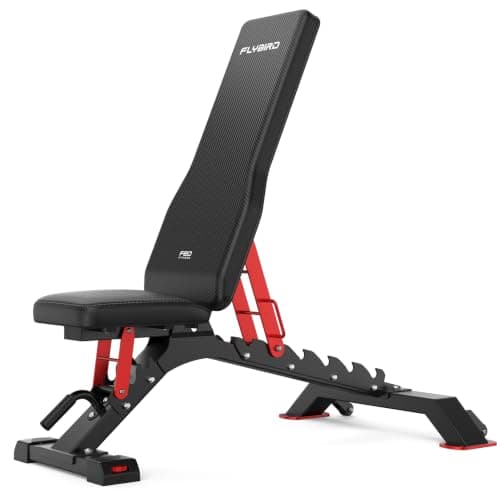
How to choose a heavy-duty weight bench
Buy on load rating with headroom, not the headline
The rated capacityshould comfortably clear your bodyweight plus the loaded bar — with margin. A 200 lb lifter benching 315 lb is loading the bench with roughly 515 lb, so an 800 lb rating already has headroom; the 1,000–1,300 lb benches here simply move that ceiling further out of sight. The reason to pay for the higher rating isn’t the raw number, it’s what comes with it: thicker steel, better welds and stiffer pivots that keep the platform dead under a max effort. Read the rating as a build-quality proxy, and see our capacity guide for how the figures are actually derived.
Frame steel and welds decide the “planted” feel
The difference you feel between a light bench and a heavy one is stiffness. A heavier-gauge steel frame and clean, full welds are what stop the sway you notice when you set an aggressive arch and drive hard off the pad. It’s the same principle that separates a thick-tube power rack from a thin one— more steel, less flex. Heavier benches also simply weigh more, and that mass is part of why they don’t skitter when you unrack; it’s a feature, not just shipping weight.
Base width is the other half of stability
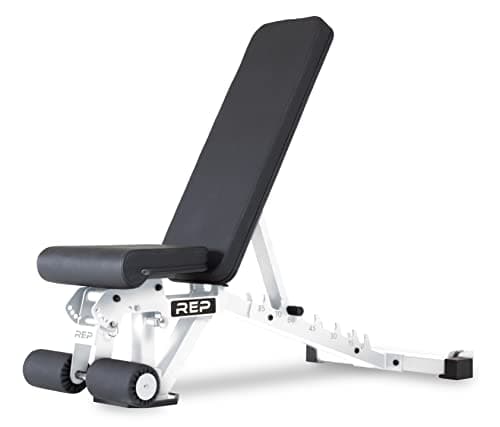
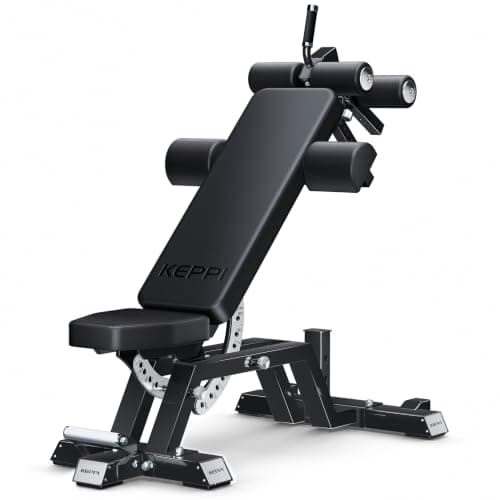
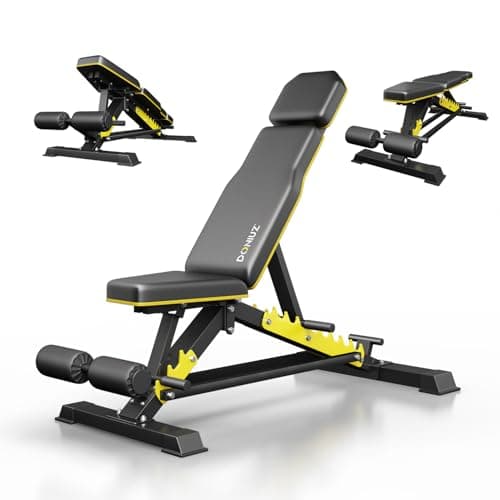
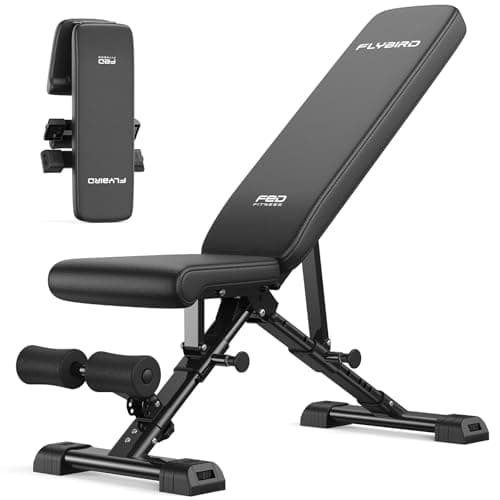
Capacity keeps the bench from failing; base widthkeeps it from rocking. A wide front-and-rear footprint gives you a stable platform to press from, which matters most on incline work where your drive tries to tip the bench backward. Look for a broad, planted base — several benches here add leg rollers or a headrest that also help anchor you on decline and steep-incline sets. If the base is narrow, no rating will make the bench feel solid.
Don’t give up the FID range for the frame
A heavier bench can still be a full FID (flat / incline / decline) bench, so you keep flat press, incline press, shoulder work and accessory movements in one unit. Check the angles are useful steps rather than a single jump from flat to steep, and check the backrest length— a longer pad supports taller lifters fully, where a short one leaves your head hanging on a decline. A firm pad, not a mushy one, is what lets you set your shoulder blades and drive; our how to choose a bench guide walks the full checklist.
Bench where it’s safe
A solid bench doesn’t replace safeties. Press inside a rack with the safety bars set just below your chestor with a spotter — a failed bench press is the most dangerous miss in the gym, and a heavier bench only means you’re loading it more. If you train alone, our bench without a spotter guide covers the safe setups, and pairing the bench with a stiff power bar finishes the heavy-pressing station.