01
Best cast-iron set
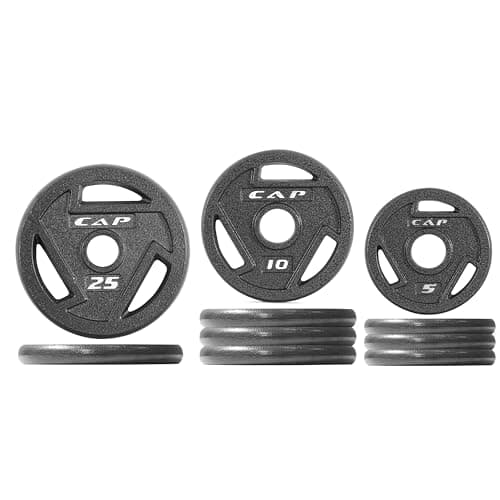
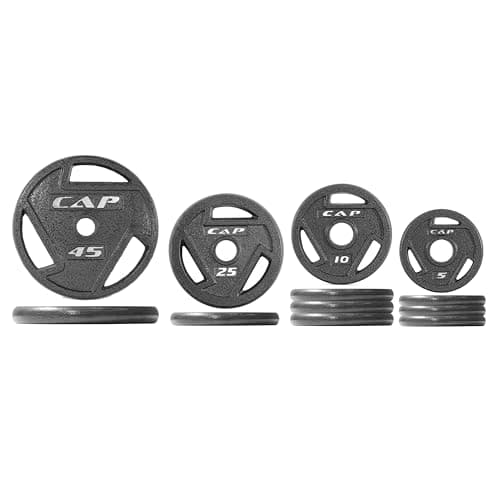
8.3CAP Elite 200 lb Olympic Cast-Iron Plate Set
CAP Barbell
A 200 lb cast-iron set with machined 2" Olympic holes and a baked-enamel finish — the thin-plate default for a lifter who loads iron in a rack and sets the bar down under control.
- Set weight
- 200 lb
- Plates
- 4x5, 4x10, 2x25, 2x45 lb
- Material
- Cast iron, baked enamel
- Fitment
- 2" Olympic, machined hole
What we like
- Thin iron plates fit far more weight per sleeve than rubber bumpers
- Machined 2-inch center holes seat cleanly on an Olympic sleeve
- Grip holes and raised weight numbers make loading and handling easier
Trade-offs
- You cannot safely drop a loaded bar on iron — bumpers only for that
- Bare iron can chip its enamel and surface-rust in a damp garage
- Value
- 8
- Durability
- 8
- Loadability
- 9
- Accuracy
- 8
$269.99 · View on Amazon
#ad · Price as of September 19, 2026 · Affiliate disclosure