What a safety squat bar actually does
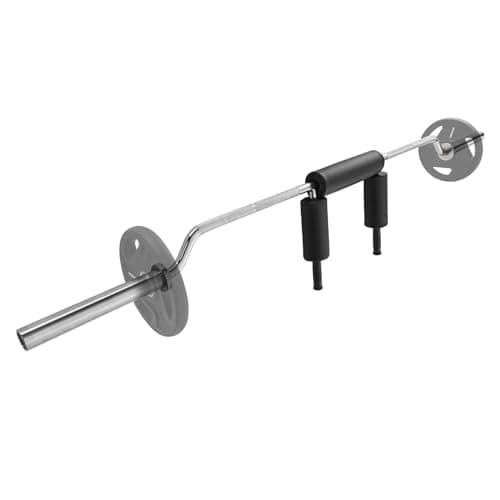
Before the specs, the point of the bar. A safety squat barputs a padded yoke on your shoulders and forward handles in your hands, so you squat without having to wrench your arms back to hold a straight bar — a gift if pressing a bar into a low-bar squat aggravates your shoulders, elbows or wrists. The forward-shifted load also builds a more upright squat and challenges your upper back, which is why lifters keep an SSB even when their shoulders are fine. Our SSB vs barbell guide covers the training case in full.
The padding: the reason to buy it
The shoulder and arm padsare what make the bar comfortable and the reason it earns its place. The yoke pad spreads the load across your traps and shoulders instead of a single hard contact point, and the forward handles let you hold a neutral, relaxed position. On a budget bar this padding is the highest-value feature — it’s what turns a length of cambered steel into a bar you actually want to squat with. The honest flip side is longevity: budget padding compresses over time, so expect to replace or supplement it eventually. That’s a known trade at this price and an easy fix.
The 28mm shaft and 700 lb rating
The bar runs a 28mm shaft and a 700 lb rating. For a safety squat bar, 700 lb is plenty of headroom — remember an SSB is heavier than a standard bar to start with, and few home squatters approach that ceiling. It’s a lower rating than the 1,000–1,500 lb commercial and enthusiast bars, which is the honest trade for the price, but it comfortably covers the vast majority of raw squatting. Because an SSB has no fixed weight standard, always check the bar’s own weight before you load it — our how much does an SSB weigh guide explains why.
Where the price shows: build and capacity
Honesty on the trade-offs. The build is lighterthan the commercial bars, and the finish and welds are budget-tier — functional, not premium. That’s fine for home training within the rating, but it’s why a heavy squatter chasing the highest capacity and the most refined feel should step up. The bar fits a standard rack on 2-inch Olympic sleeves, so it takes the plates you already own, and it wants a rack with safetiesthe same as any squat — check the bar’s dimensions against your rack’s width and clearance before buying.
Who should buy it — and who shouldn’t
Buy it ifyou want to try safety-squat training without a boutique outlay, your shoulders or wrists complain under a straight bar, and your squatting is in the normal home load range. It’s the honest cheapest way in — and the padding, the part that matters most, is genuinely good for the money.
Look elsewhere ifyou squat very heavy and want the highest capacity and most durable build — the commercial and enthusiast bars in our SSB roundup (like the Body-Solid and Bells of Steelbars) are the better long-term spend. If you’re weighing the SSB against a trap bar for your next specialty purchase, our SSB vs trap bar guide walks the decision.
Sources
- VEVOR safety squat bar (700 lb, 28 mm) — manufacturer product specification (capacity, shaft diameter, shoulder and arm padding, 2" Olympic sleeve fitment) as published on the retail listing.
- General safety-squat-bar principles (padded-yoke design, forward handles, capacity headroom, no fixed weight standard, rack fitment) as covered in our methodology and linked specialty-bar guides.