How to choose a power rack with a cable pulley
Read what the cable setup actually includes
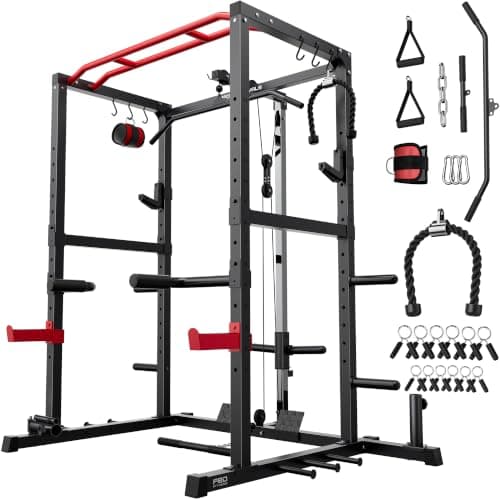
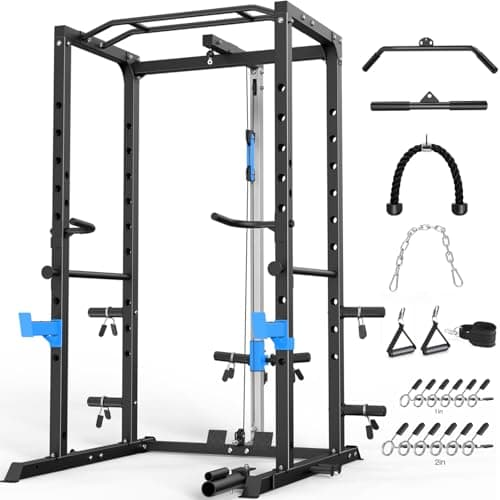
The single biggest variable is what comes in the box. A single high pulley gets you pulldowns and pushdowns; a high-and-low setup adds seated rows and low-cable work; a dedicated LAT-pulldown tower with a thigh pad is the most machine-like of the lot. Some racks include the pulley and the attachment handles; others sell the pulley as an add-on to a bare cage. Before you buy, confirm exactly which pulleys, bars and handles are included, because that list — not the headline — decides what you can actually train. Our LAT pulldown attachment guide walks through the formats, and the rack attachments guide covers the rest of what bolts on.
It has to be a good cage first
A cable pulley is a bonus on top of a rack, never a substitute for one being safe. Judge the cage on the same specs as any rack: a capacity with real headroom over your working weight, safeties (pins or straps) you can bail onto, adjustable J-hooks, and a footprintthat fits your room. If the cage is light or the safeties are flimsy, no amount of cable hardware makes it a good buy — you’d be pulling cables in a rack you can’t trust under a bar. Our what is a power rack guide covers the fundamentals, and is a power rack worth it puts the whole category in context.
Plate-loaded cables feel different — and that’s the trade
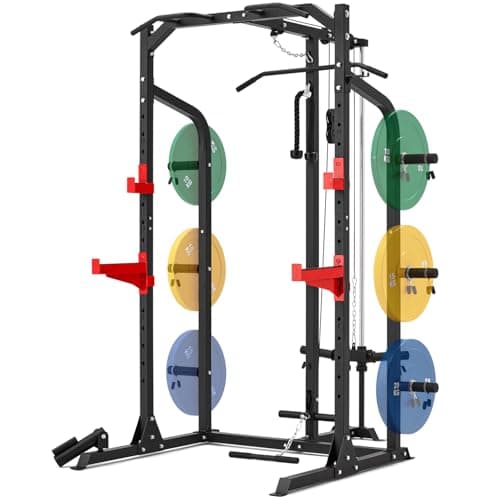
Set expectations on feel. A rack’s pulley is plate-loaded— you hang your own plates on a carriage rather than pulling a smooth commercial weight stack. It works genuinely well for building muscle and covering the pulling gaps a barbell leaves, but the travel isn’t as glassy as a gym machine, and changing weight means moving plates rather than moving a pin. That’s the honest cost of getting a barbell station and a cable machine in one footprint for a fraction of buying both. For most home lifters it’s a trade well worth making; if you want stack-smooth cables above all, that’s a separate, pricier machine.
Mind the footprint, ceiling and anchoring
Cables add height and depth. A LAT tower needs ceiling clearance for the pulley travel, and a rear pulley or weight carriage adds depth behind the cage, so measure the room before you commit. A rack carrying a loaded cable carriage is also being pulled on from new angles, which makes stability and anchoringmatter even more than on a bare cage — a rack that’s happy to be bolted down or is heavy enough to stay planted is the safer base for cable work. Check whether the attachments are proprietary too; our are rack attachments universalguide explains why you generally want to stay inside one rack’s ecosystem.
Value: one footprint doing two jobs
The whole case for a cable rack is value per square foot. Instead of buying a rack and a separate cable machine — two purchases, two footprints — you get both in the space you already committed to the rack. Weigh the combined price against what a decent rack plus a standalone cable machine would cost and how much floor you have; for most home gyms the built-in pulley wins on both. If cables aren’t a priority and you’d rather put the money into the cage itself, our main rack roundup and budget rack roundup rank the best plain cages instead.