How to choose an adjustable bench
Capacity and stability under a heavy press
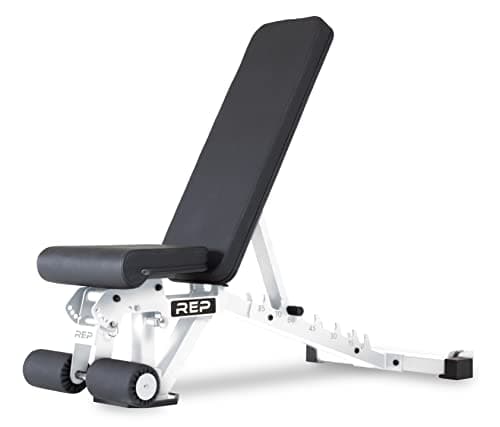
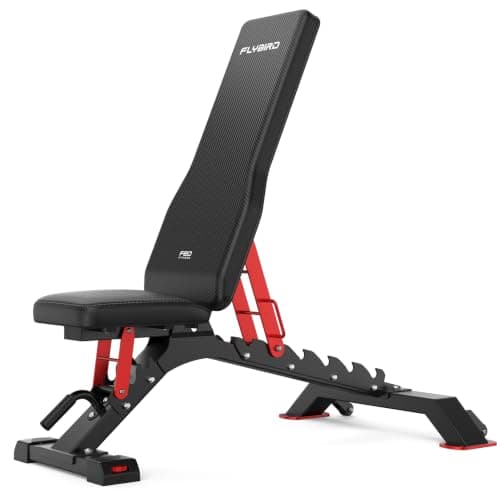
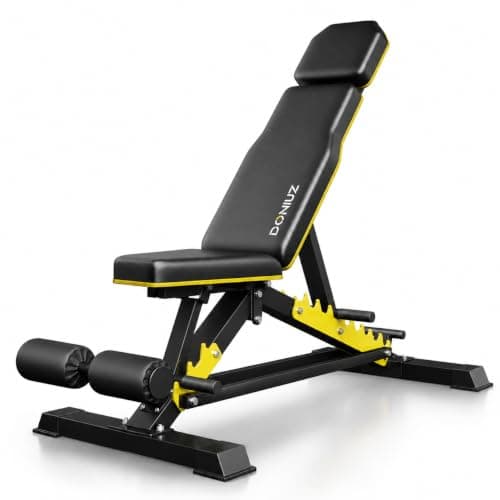
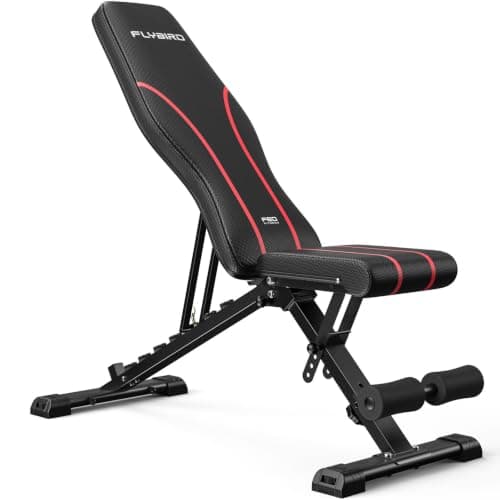
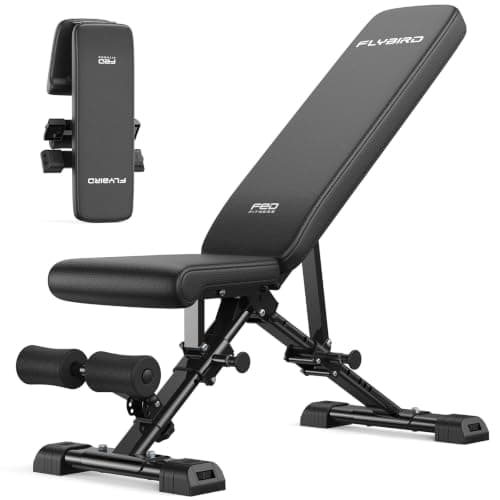
The rated capacityis lifter weight plus everything on the bar, so a 250-pound lifter benching 250 needs a 500-pound rating just to break even — and you want margin. The value benches here rate around 800 pounds; the heavier FLYBIRD and DONIUZ frames rate 1,200 to 1,300. Beyond the number, stability is about the base: a wide, planted footprint stops the bench from rocking as you drive your feet and arch, which a light folding frame can’t always match. If you press near your max, the wider commercial-grade base is worth the extra weight and the lost foldability.
Angles, backrest length and the seat gap
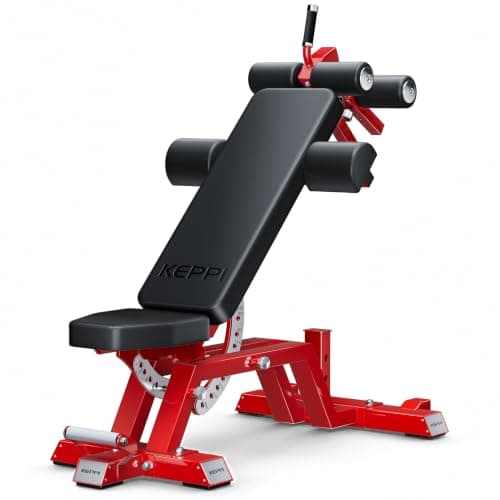
A true FID bench gives flat, several incline stops and at least one decline; a two-position bench limits you to flat and one incline. More useful than raw angle count is backrest length: a longer pad supports a taller lifter’s head and hips through a full press, while a short pad leaves the head hanging on steep inclines. Watch the seat-to-back gaptoo — almost every folding bench has one, and a smaller gap feels steadier and stops you sliding down a decline. A headrest and leg rollers, where included, help anchor you for incline and decline work.
Pad firmness, foldability and fit
Pad firmness is a real trade-off: a firm pad keeps your shoulder blades set and your drive efficient under a heavy bench, but feels hard on long accessory sessions; a plush pad is comfier but lets you sink and lose tightness. Most of these benches run firm, which is the right call for pressing. Foldabilityis the other axis — a folding bench stores in a closet between sessions, while a heavier fixed frame stays planted but eats floor space. Match the bench to your rack’s upright width so it fits cleanly inside the cage.