Skip to content
Knurl Knock

01

Keppi Bench6000 Commercial FID Bench Review

A step toward gym-floor feel: what a 97 lb, 1,500 lb-rated commercial-grade FID bench gets a serious home presser — a planted platform for a heavy arch — and who genuinely needs to spend here.

By Stephen V., Strength-gear enthusiastLast updated September 23, 2026How we pick
Affiliate disclosure: Knurl Knock earns a commission when you buy through our links, at no extra cost to you. We accept no free products and no sponsored placements — we only earn if you buy, never for recommending. How this works.

The Keppi Bench6000 is the bench we point to when a lifter says their budget folder feels a little alive under a heavy press and they’re ready for something that sits dead-solid. It’s a commercial-grade FID bench built on a 97 lb steel frame and rated to 1,500 lb, and it holds the commercial-grade slot in our best adjustable bench and best heavy-duty weight benchroundups. As always, this isn’t a lab test — we don’t run a rig — it’s a read of the published spec set against every bench you can buy today.

The short version: this is a bench built to feel planted. The 97 lb frame resists rocking when you set an aggressive arch and drive, the 2.75-inch pad keeps your shoulder blades set, and 11 backrest positions plus 8 seat positions cover flat, incline and decline. What you trade is price and sheer bulk — it is the most expensive bench we rank, and although it does stand upright for storage, 97 lb is a lot of bench to move. If pressing seriously at home is your priority, that’s the right trade; this review is about who genuinely needs it.

01

At a glance

Keppi Bench6000 Commercial FID
Best commercial-grade

Keppi Bench6000 Commercial FID

Keppi

8.4

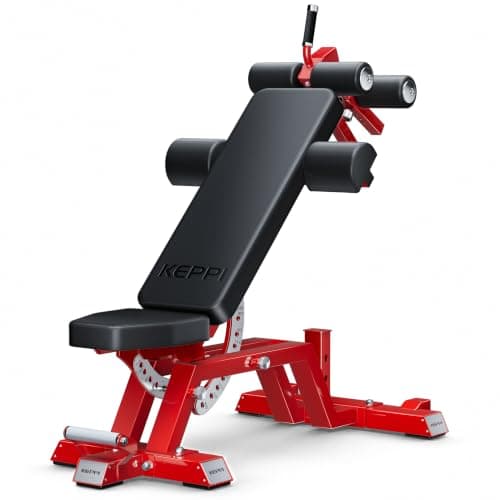
A 97 lb, 1,500 lb-rated commercial-grade FID bench with a 2.75-inch pad and an IPF-standard 17-inch seat height — a step toward gym-floor feel for lifters who press seriously at home.

Capacity
1,500 lb
Positions
11 backrest + 8 seat
Pad
2.75" high-density
Height
17" (IPF standard)

What we like

  • 97 lb Q235 steel frame is the reason it sits dead still under a heavy press
  • 2.75-inch high-density pad keeps your shoulder blades set for pressing
  • 11 backrest and 8 seat positions cover far more angles than a typical FID
  • Stores upright in about 3.5 sq ft despite the weight

Trade-offs

  • The most expensive bench here by a wide margin
  • 97 lb is a lot of bench to shift once it's built
Value
7
Stability
9
Adjustability
9
Storage
8
$399.99 · View on Amazon

#ad · Price as of November 11, 2026 · Affiliate disclosure

02

The full review

The 97 lb frame: where the “planted” feel comes from

The single most important thing on a pressing bench is that it doesn’t move, and on the Keppi that comes down to mass. Keppi builds it from Q235 steel and the finished bench weighs 97 lb— several times what a budget folder weighs, and the published reason it minimises wobble under load. Sheer weight is what resists the rocking you feel on a light bench when you arch hard and drive off the pad, and it matters most on incline work, where your drive tries to tip the bench backward. It’s the difference between a platform you fight and one you forget about. Our how to choose a bench guide covers why frame mass and base geometry sit at the top of the checklist.

A firm pad you can drive off

The pad is the other half of a planted press. A firm, supportive surface lets you set your shoulder blades and drive without sinking into the foam, which robs power and stability; a mushy pad is a quiet cap on how much you’ll press. Keppi publishes a 2.75-inch high-density padin a grippy PVC leather, which is built for pressing feel over lounge comfort — the right priority on a strength bench. The bench also sits at a 17-inch height, matching the IPF competition standard, so your foot placement and leg drive transfer to a meet platform. If you press heavy, you’ll notice both on your first set.

Full FID range with sturdy hardware

This is a genuine FIDbench — flat, incline and decline — so one bench covers the flat press, incline press, shoulder work and decline in a single unit, and it carries an unusually fine range: 11 backrest positions and 8 seat positions, where a typical FID gives you six or seven back angles and three seat settings. Our bench angles guideexplains what each position trains. An adjustable leg hold-down and a removable bicep curl pad come with it. You want the back and seat to lock in without play, because any slop in the adjustment is movement you feel under load. Combined with the frame’s mass, it makes for a bench that behaves like a gym-floor unit.

The honest trade-offs: price and portability

Two honest limits. First, it’s the most expensive bench we rank— the commercial-grade build isn’t cheap, and a lifter who doesn’t press seriously will get most of the benefit from a good value bench for a fraction of the money. Second, it’s 97 lb. Keppi does design it to stand upright for storage, in a published 3.5 sq ftfootprint, so it doesn’t have to claim your floor space full-time — but tipping a 97 lb bench up and down between sessions is real work, and it is not the same thing as folding a 30 lb bench flat and sliding it under a rack. If you want the bench to disappear easily and often, our foldable bench roundupis the better place to look, and you’ll trade a little planted feel for the convenience. The Keppi is a bench for people who have decided pressing is a priority and want the platform to match.

Bench where it’s safe

A solid bench isn’t a substitute for safeties. Press inside a rack with the safety bars set just below your chestor with a spotter — a failed bench press is the most dangerous miss in the gym. If you train alone, our bench without a spotter guide covers the safe setups, and pairing the Keppi with a stiff power bar completes a serious pressing station.

Who should buy it — and who shouldn’t

Buy it ifyou press seriously at home, want a bench that feels like the gym floor, and value a heavy frame and a firm pad over price. It’s the pick for a dedicated pressing station where solidity is the whole point.

Look elsewhere if you want the best value or a bench you can move easily. Our top value pick in the adjustable bench roundup gives most of the capability for far less, and our foldable roundup keeps your floor free. If you simply want the specs that decide any bench, start with our how to choose a bench guide.

Sources

  • Keppi Bench6000 commercial FID bench — manufacturer product specification (1,500 lb rated capacity, 97 lb Q235 steel frame, 11 backrest and 8 seat positions, 2.75" high-density pad, 17" IPF-standard height, upright storage in 3.5 sq ft, adjustable leg hold-down and bicep curl pad) as published on the retail listing, re-read September 23, 2026.
  • General weight-bench principles (frame mass and stability, pad firmness and pressing drive, FID range, safe benching) as covered in our methodology and linked bench guides.
03

Common questions

Is the Keppi Bench6000 worth the extra money?

If you press seriously, yes — a 97 lb Q235 steel frame and a 2.75-inch pad give it a planted, gym-floor feel that budget benches can't match, and the 1,500 lb rating with 11 backrest and 8 seat positions is built for heavy work. If you don't press near your limit, a good value bench gives most of the capability for far less, so the Keppi is aimed at dedicated pressers.

Does the Keppi Bench6000 fold for storage?

It doesn't fold flat, but Keppi does design it to be stood upright for storage, in a published 3.5 sq ft footprint — so it doesn't have to claim your floor space full-time. The catch is the weight: at 97 lb, tipping it up and down between sessions is real work. If you want a bench you can genuinely tuck away often and easily, a proper foldable bench is the better choice, at the cost of a slightly less dead-solid feel under a max press.

Is the Keppi a full FID bench?

Yes — it adjusts through flat, incline and decline, so one bench covers flat press, incline press, shoulder work and decline. It publishes 11 backrest positions and 8 seat positions, a finer range than most FID benches, plus an adjustable leg hold-down for decline work. You want the back and seat to lock in without play, because any slop in the mechanism is movement you feel under load.

Why does a firm bench pad matter for pressing?

A firm pad lets you set your shoulder blades and drive off a stable surface; a mushy pad lets you sink in, which robs power and makes the platform feel unstable. On a strength bench, pressing feel beats lounge comfort — the Keppi's 2.75-inch high-density pad is built for that, and heavy pressers notice the difference on the first set.

Read next

A bench that feels like the gym floor

If pressing seriously is your priority, the Keppi's 97 lb frame and 2.75-inch pad are the platform to match. Compare it against the whole bench field first.