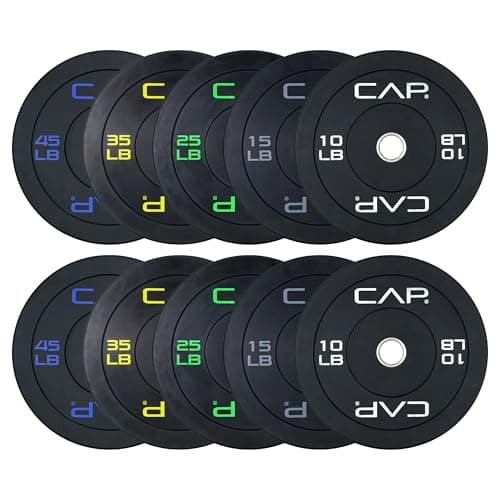
Why bumpers, and why a set
First, the case for the format. Bumper platesare rubber, all the same 450mm diameter, and built to be dropped from overhead without cracking your floor or the plate — which is exactly what you want if you deadlift heavy or do any Olympic lifting. Our bumper vs iron guide walks the first plate decision. Buying a graduated setlike this one is usually the cheapest route to a full loadout and saves you hunting odd denominations — our how many plates do I needguide explains what a 260 lb set plus a bar actually covers, which is most beginners’ and intermediates’ working sets.
Steel inserts: the durability spec that matters
The single most important spec on any bumper is the hub, and CAP’s use steel inserts. A bumper is a rubber disc around a metal center, and the center is where cheap plates fail: an all-rubber collar deforms and splits around the sleeve over time, especially when dropped. A steel insert keeps the 2-inch opening true so the plate stays concentric and tight on the bar for its life. Getting steel hubs on a value set is the reason we rank it where we do — our how to choose bumper plates guide explains why this is the spec to check first.
Virgin rubber and low bounce
The plates use virgin rubber rather than recycled crumb, which is more consistent and holds up better, and CAP rates them for low bounce— important because a high-bouncing plate is unkind to your bar, your platform and anyone nearby when a deadlift comes down. Low bounce plus steel inserts is the combination that separates a bumper you can live with from one that rattles and skips across the floor. For a home platform, it’s a genuinely well-judged spec set at the price.
The honest limits of an economy set
Two caveats, both typical of value bumpers. First, economy rubber smellsfor the first week or two — air the plates out in a garage and it fades; it’s a rubber-cure odor, not a defect. Second, these are standard-thickness bumpers, so they’re wider than thin competition platesand fewer fit per sleeve. If you load very heavy and run out of sleeve space, thinner (and pricier) competition plates pack more weight per side — but for the vast majority of home lifters, standard thickness is a non-issue. Neither limit undercuts the value; they’re just what “economy” buys you.
Match the set to the platform
Bumpers only make sense with a real Olympic barbell (2-inch sleeves) and, ideally, a rack with safeties so a missed rep lands where it should. Lock them on with proper collars, and store them upright — our plate storage guide covers keeping them off a damp floor. Get the bar and rack right, then load them with plates that survive being dropped.
Who should buy it — and who shouldn’t
Buy it if you want a complete drop-safe loadout in one purchase at the best value, and you deadlift or do Olympic lifting. Steel inserts, virgin rubber and low bounce are exactly the specs that matter, and 260 lb plus a bar covers most training.
Look elsewhere if you only need a specific denomination — buying by the pairis smarter than a set when you just need more 45s — or you never drop the bar, in which case cheaper, thinner iron plates give you more weight per pound. Our bumper roundup ranks sets and pairs together.
Sources
- CAP 260 lb Olympic bumper plate set — manufacturer product specification (set weight, steel hub insert, virgin rubber, low bounce, 2-inch Olympic fitment) as published on the retail listing.
- General bumper-plate principles (hub construction, rubber type and bounce, thickness vs sleeve space, drop-safety, set vs pairs) as covered in our methodology and linked plate guides.