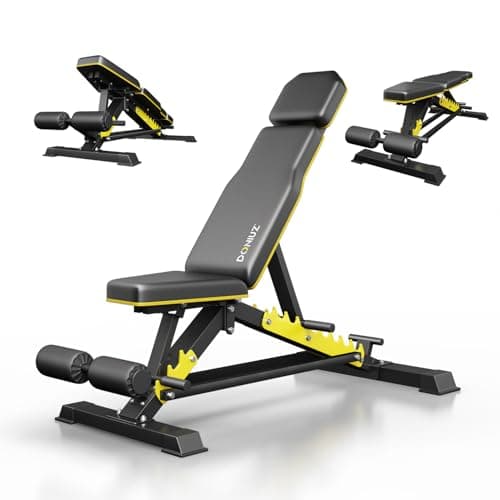
A real FID bench, not a flat-only budget board
The line that matters first: this is a full FID bench, not one of the fixed flat boards that dominate the cheapest end of the market. That means the backrest moves through incline positions for pressing and shoulder work, drops to flat for the bench press and rows, and sets to declinefor decline pressing and ab work — three benches’ worth of movements in one frame. If you’re building a home station and want more than a flat pressing surface without buying separate pieces, an FID is the format to look for, and it’s the whole reason to consider this bench over a cheaper flat one. Our weight bench angles guide explains which of those positions actually earn their keep.
The 1,200 lb rating: read it as durability headroom
A 1,200 lb ratingis a lot of capacity for a budget bench, and it’s far beyond what almost any home presser will load. Read it the way you’d read a high barbell rating — as durability headroomrather than a target. A 200 lb lifter benching 315 lb loads the bench with roughly 515 lb, so a 1,200 lb figure simply moves the ceiling well out of sight and, more usefully, tends to come with the heavier steel and stiffer pivots that keep the platform from swaying when you set your arch and drive. The number isn’t the point; what it signals about the build is. Our bench-capacity guidecovers what the rating does and doesn’t promise, and why a headline figure is only ever half the story.
Leg rollers: the anchor for decline and ab work
The leg rollers are a genuinely useful inclusion at this price. On a declineset they hook your legs and stop you sliding down the pad, so you can press and do decline sit-ups without fighting to stay in place; on steep work they give you something to brace against so your drive goes into the bar instead of into keeping yourself on the bench. Plenty of budget FID benches ship without them, which quietly limits how usable the decline and ab positions actually are. Having them here means the bench’s full angle range is something you can use hard, not just a spec on the box. It’s the kind of anchoring hardware you normally see a step or two up the price ladder.
The headrest: neck support on steep inclines
The headrest is the other feature that punches above the price. On a steep incline, a bench without a headrest leaves your head unsupported at the top of the pad, which is uncomfortable on overhead and high-incline pressing and can pull you out of position. The headrest gives your neck somewhere to sit so you can keep your shoulder blades set and press from a stable base. It’s a small thing that makes the steep end of the FID range far more pleasant to actually train, and it’s another item budget benches tend to omit.
Where the price shows: brand track record and assembly play
Now the honest trade-offs, because there always are some at this price. First, track record. DONIUZ is a less established name than the brands most home lifters recognize, so there’s a thinner base of long-term owner history to read before you buy and less certainty about parts and support down the line than you’d get from a FLYBIRDor a REP. That doesn’t make the bench bad — the spec is legitimate — but it’s a real difference from buying a known quantity, and it’s fair to weigh.
Second, and more practical: more positions means more joints to check. Every extra seat and backrest setting is another pivot and pin, and on a budget bench those tolerances can be looser than on a commercial frame — so a little play or wobble is worth checking for on assembly. When the box arrives, build it on a flat surface, seat every pin fully, snug all the hardware, and cycle the backrest and seat through their positions to feel for any rock or slop before you load it. If a joint feels loose, re-check the bolts before you write it off; a lot of “wobbly bench” complaints trace back to under-tightened assembly rather than a bad frame. Our how to choose a weight bench guide covers the stability checks that matter most.
Fitment, safety and where it sits in the range
This is a standalone bench, so it works with the bar and plates you already own and slots into a rack-based station without any special fitment. Press it the way you’d press on any bench — inside a rack with the safety bars set just below your chest or with a spotter, because a failed bench press is the most dangerous miss in the gym regardless of how solid the bench feels. If you want the sturdiest, most planted feel over outright value, step up to the heavier frames in our best heavy-duty weight bench roundup; the DONIUZ is here for lifters who want the widest feature set for the least money and are happy to do the assembly checks that the price makes worthwhile.
Assembly and the first-load checklist
Because a budget FID bench lives or dies on how well it’s put together, it’s worth spending ten unhurried minutes on assembly rather than rushing it. Build the bench on a flat, hard floor so nothing sits twisted, and follow the instructions’ bolt order rather than fully tightening each joint as you go — snug everything loosely first, get the frame square, then torque it all down. Seat every adjustment pin fully home and confirm it locks before you trust it. Once it’s together, load a light bar and run through each backrest and seat position, feeling for any rock, slop or lean; a bench that’s dead-solid empty but sways loaded usually has a bolt that backed off or a pin that isn’t fully seated. Re-check the hardware after your first week of use, because fasteners on a new frame settle and can loosen slightly — a quick nip-up fixes it and keeps the bench tight for the long run.
How it stacks up against a name-brand budget bench
The honest way to frame this bench is against the known-brand budget benches it competes with, like the FLYBIRD WB5. What the DONIUZ offers over some of those is the feature set — a high headline capacity plus leg rollers and a headrest that not every budget bench includes. What it gives up is the reassurance of a deep base of owner history and an established support and returns path. Neither is strictly better; it’s a genuine trade. If you value having the widest usable feature set for the money and you’re comfortable doing your own assembly checks, the DONIUZ makes a strong case. If you’d rather pay a little more for the peace of mind that comes with a name a lot of lifters already own, a known-brand bench is worth it. Our adjustable bench roundup lines the options up side by side so you can see where each falls.
Storage and footprint
One practical note on living with a standalone FID bench: it claims floor space full-time. Unlike a folding flat bench, a fixed FID frame with a headrest and leg rollers doesn’t tuck flat against a wall, so plan for it to sit out in your gym. That’s the normal trade for the angle range and the anchoring hardware — the same features that make it versatile also make it bulkier to store. If storability matters more to you than a full FID range, a folding bench is the format to look at instead; if you’ve got the space and want the versatility, the fixed frame is the better training tool.
Who should buy it — and who shouldn’t
Buy it ifyou want a full FID bench with real anchoring hardware — leg rollers and a headrest — for the least money, you train general strength in the normal home load range, and you don’t mind spending ten minutes on assembly checking every joint is snug. For a value-first station it packs in more usable features than most benches near its price.
Look elsewhere if you want the reassurance of a long brand track record and deep owner history, or the dead-solid feel of a heavier commercial frame. In that case the picks in our adjustable bench roundup and our heavy-duty roundupare the safer long-term spend — you pay more, but you buy the track record and the tolerances with it.
Sources
- DONIUZ 1,200 lb FID weight bench — manufacturer product specification (1,200 lb capacity, multi-position flat/incline/decline design, headrest, leg rollers, standalone bench) as published on the retail listing.
- General weight-bench principles (FID angle range, reading a capacity rating as durability headroom, base stability and pivot tolerances, assembly checks, benching safely on rack safeties) as covered in our methodology and linked bench guides.