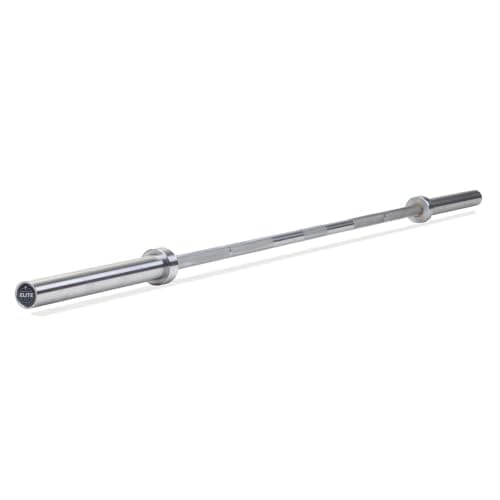
How to choose a barbell for deadlifts
Buy the knurl first
Everything else on a deadlift bar is secondary to the knurl. An aggressive, well-cut diamond pattern bites into your hands and holds the bar where a milder knurl would let it roll and slip as your grip fatigues. That bite is the difference between a lockout and a drop on a heavy single. The trade-off is real and worth knowing: an aggressive knurl that saves your deadlift will chew your hands on high-rep work, so a dedicated pulling bar is a different tool than a smooth all-rounder. Our aggressive vs passive knurling guide explains where each belongs, and it’s why the bars at the top of this list lead with grip rather than finish.
Stiffness and capacity keep the bar honest
A deadlift bar you can buy on Amazon wants a stiff shaft and a high capacity rating. Stiffness means the bar comes off the floor predictably and you’re not fighting an unexpected bend; a high tensile rating means the shaft has years of durability headroom and won’t take a permanent set from heavy pulls. Note that this is the opposite of a competition deadlift bar, which is deliberately thin and whippy so the plates leave the floor progressively — a specialist feel most home lifters neither need nor can easily buy here. Our whip guide explains why a stiff bar is the safer, more predictable default for general training, and the shaft diameter guide covers how thickness changes both grip and stiffness.
Diameter: thinner grips easier, thicker feels more secure
Shaft diameter is a quiet but real factor for pulling. A thinner shaft is easier to wrap your fingers fully around, which helps grip on a heavy deadlift; a thicker 29mm power-bar shaft feels more planted but asks more of your hands. Most of the bars here sit at 28.5–29mm, a sensible range for the powerlifts. If you have smaller hands or a stubborn grip, lean toward the thinner shaft and an aggressive knurl together — that pairing grips best of all. If you want the broader powerlifting picture, our best powerlifting barbell roundup ranks these same bars for squat, bench and deadlift together.
Skip what a deadlift doesn’t use
A deadlift never uses sleeve spin the way a clean or snatch does, and it never puts the bar on your back, so a center knurl is optional at best. That means you don’t have to pay for a fast-spinning bearing bar, and you can happily ignore whether a bar has a center knurl unless you also squat with it. Put simply: on a pulling-only bar, every dollar should go into the grip and the steel, not the spin. That’s exactly how these picks are priced, and it’s why a good deadlift bar can cost less than an all-rounder that spends money on bearings you’ll never feel.
The trap-bar alternative
If your real goal is to pull heavy safely rather than to train the straight-bar deadlift specifically, a hex/trap bar deserves a serious look. The neutral handles keep the load closer to your center of mass and are far easier on the lower back, which is why so many home lifters pull more, and more comfortably, with one. It’s a different movement, not a straight swap — our trap bar vs barbell deadlift guide lays out the differences, and the best trap barroundup ranks the hex bars worth owning. For many people, the honest answer to “best bar for deadlifts” is a trap bar plus a well-knurled straight bar for when they want it.