How to buy budget weight plates
Buy a set, not singles, to cut cost-per-pound
The first rule of buying weight cheaply: judge everything on cost-per-pound, not the sticker price. A plate that looks cheap by the pair can be poor value by the pound, and a set that looks expensive up front is often the cheaper buy once you divide it out. Complete sets are almost always cheaper per pound than buying pairsone at a time, because you’re paying a single shipping and packaging cost for a full loadout instead of stacking it up piecemeal. Work out how much total weight you actually need first — our how many plates do I needguide walks a starter loadout — then buy the set that covers it in one go rather than drifting into pairs.
Iron is cheaper per pound — but not drop-safe
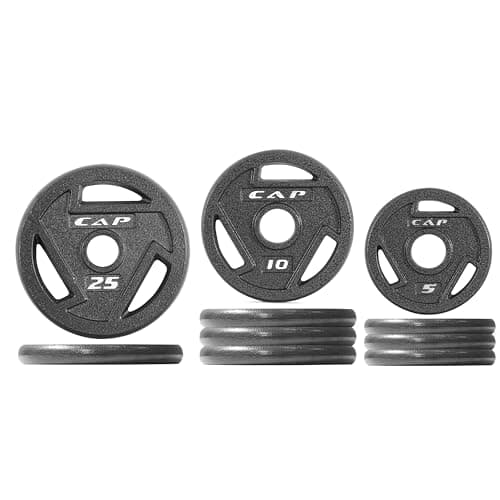
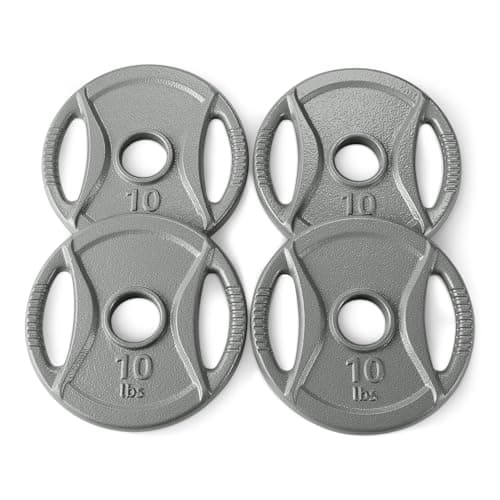
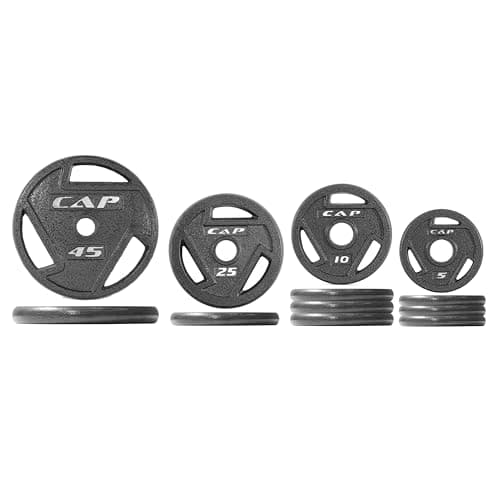
Cast ironis the cheapest weight you can buy. It’s cheaper to make than rubber-coated bumpers, it’s thinner so more fits on the sleeve, and pound-for-pound nothing beats it on price. The one hard catch is that you cannot drop a loaded iron bar— iron has no give, so a drop can crack a plate, damage the bar and gouge the floor. If your training is squats, presses, rows and controlled deadlifts, that’s no loss and iron is the obvious value pick. If you drop the bar from the hang or overhead — Olympic lifts, cleans, snatches, metcons — iron is the wrong tool and no price makes it right. Our do I need bumper platesguide settles which camp you’re in, and our cast-iron plate review covers the value iron pick in depth.
On cheap bumpers, the steel hub insert is the spec that matters
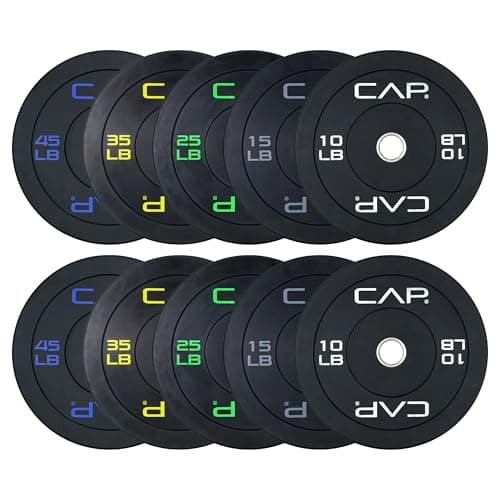
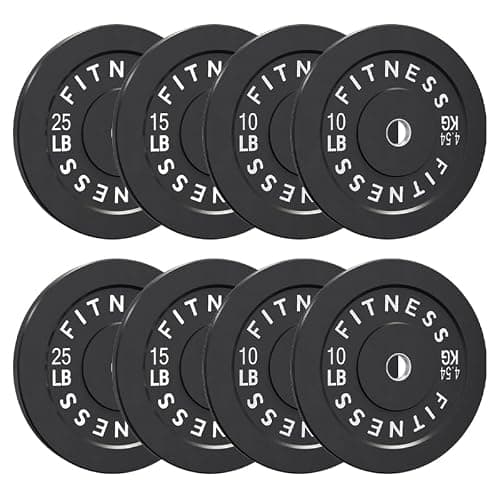
If you need drop-safety, you’re buying bumpers — and on a budget bumper the single most important durability spec is the steel hub insert. That’s the metal ring set into the center of the plate where it meets the sleeve. On the cheapest bumpers the center is just rubber, which can deform, loosen and eventually tear out around the collar after enough drops. A steel insertholds the collar opening true, stops the center wallowing out, and is the difference between a cheap bumper that lasts and one that fails early. When you’re comparing budget bumpers, look past the price to whether they have that steel hub — it’s where the money should go. Our bumper set review shows what a good budget bumper looks like, and our bumper roundup ranks the field.
Machined faces are the quality tell on budget iron
The iron equivalent of the steel-insert test is the machined face. A plate with a machined, flat face sits tight and square against the collar so a loaded bar doesn’t rattle, where a rough-cast plate can sit sloppy and let the load shift. It’s a small marker, but it separates a decent budget iron set from a cheap-and-nasty one for very little extra, and it’s worth checking before you buy. It won’t change the cost-per-pound much, but it changes how the plates feel and how long they stay tight on the bar — the kind of detail our how to choose weight plates guide covers in full.
How to build a full loadout for less
Put it together and a cheap, honest loadout looks like this: decide first whether you drop the bar, because that picks your material and can’t be fudged. If you don’t, buy a complete cast-iron setsized to the total weight you need — the lowest cost-per-pound there is. If you do, buy the cheapest complete bumper set that still has a steel hub insert, so it survives the drops you bought it for. Either way, buy the set in one go rather than pairs, size it to a real loadout rather than guessing, and don’t pay for a spec you won’t use — drop-safety you don’t need, or capacity you won’t load. Many gyms eventually own some of each: iron for the heavy static lifts, a few bumpers for anything they drop. Our how much do weight plates cost guide sets realistic expectations for what each route runs.