01
The Best Power Racks & Squat Racks, Compared on the Specs
The rack is what makes lifting alone at home safe: it holds the bar, catches a failed rep, and anchors your pulling work. We rank cages, half racks and squat stands on the specs that decide how solid they actually are.
A rack is the single biggest safety upgrade in a home gym, and the piece that decides what you can train alone. Get pinned under a squat with no spotter and the rack’s safety bars are the only thing between the loaded bar and your chest. That’s why we judge racks first on the boring structural numbers — steel gauge (11-gauge is stiffer than 12- or 14-gauge), upright dimensions (a 3x3 or 2x3 tube is far more rigid than thin box steel), weight capacity, and how the safeties actually catch a dropped bar — before we ever look at bells and whistles.
Cage, half rack, or squat stand?
The format decision comes down to space and how you train. A full power cage (four posts) fully surrounds you, so you can bench and squat to safeties with total confidence — it’s the safest and most capable, and the largest. A squat stand or half rack uses two posts with extended safety arms: far smaller footprint, easy to work around, but less enclosed and generally lower-rated. If floor space is the hard constraint, a wall-mounted folding rack gives you commercial-tier 11-gauge steel that folds flat against the wall between sessions. Our power rack vs squat rack guide walks the full trade-off.
What actually matters
Beyond the steel, look at hole spacing(tighter “Westside” spacing around the bench zone lets you set the bar height precisely), J-hook and safety design(UHMW-lined hooks protect your bar’s knurl and finish), and attachment ecosystem(a pulley, lat tower, dip handles and landmine turn a rack into most of a gym). A rack that ships with a cable pulley for the price of a bare cage is genuinely rare — we call those out. Whatever you buy, plan to bolt lighter racks to the floor; a two-post stand especially can tip under a racked miss.
Load it right
A rack is only half the platform. Pair it with a real barbell and drop-safe bumper plates so a failed rep lands on the safeties, not your floor. Our roundups below rank the specific racks worth buying, each with a live price on the top pick.
Start with these
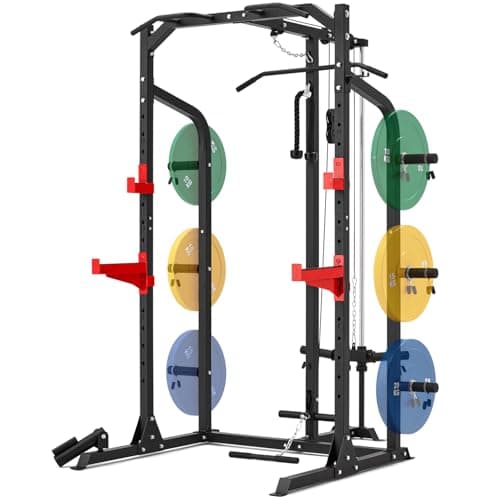
RUNFREELY Power Rack with Pulley System
A 1,000 lb-rated full cage that ships with a pulley system, safety bars and a landmine — the most complete rack on this list for the money.
#ad · Price as of October 21, 2026 · Affiliate disclosure
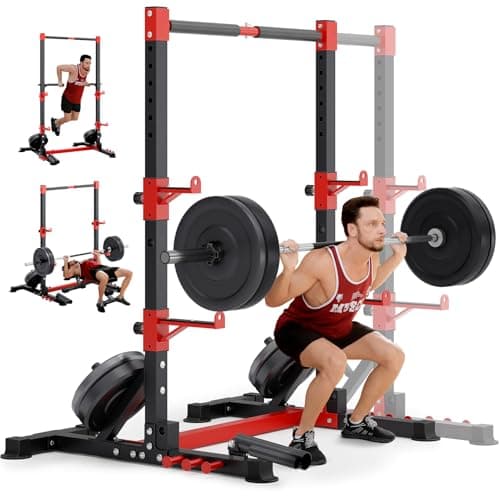
YOLEO Squat Rack with Pull-Up Bar
An adjustable-width squat stand with extended safety arms and a pull-up bar — the best-value way to squat and press heavy without a full cage's footprint.
#ad · Price as of October 21, 2026 · Affiliate disclosure
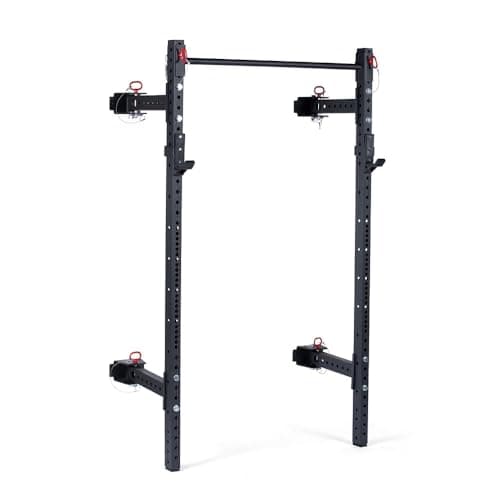
Titan T-3 Wall-Mounted Folding Rack
A 2x3 11-gauge wall-mounted rack that folds flat against the wall — the answer when floor space is the constraint and you still want serious steel.
#ad · Price as of October 21, 2026 · Affiliate disclosure
Rack roundups & guides
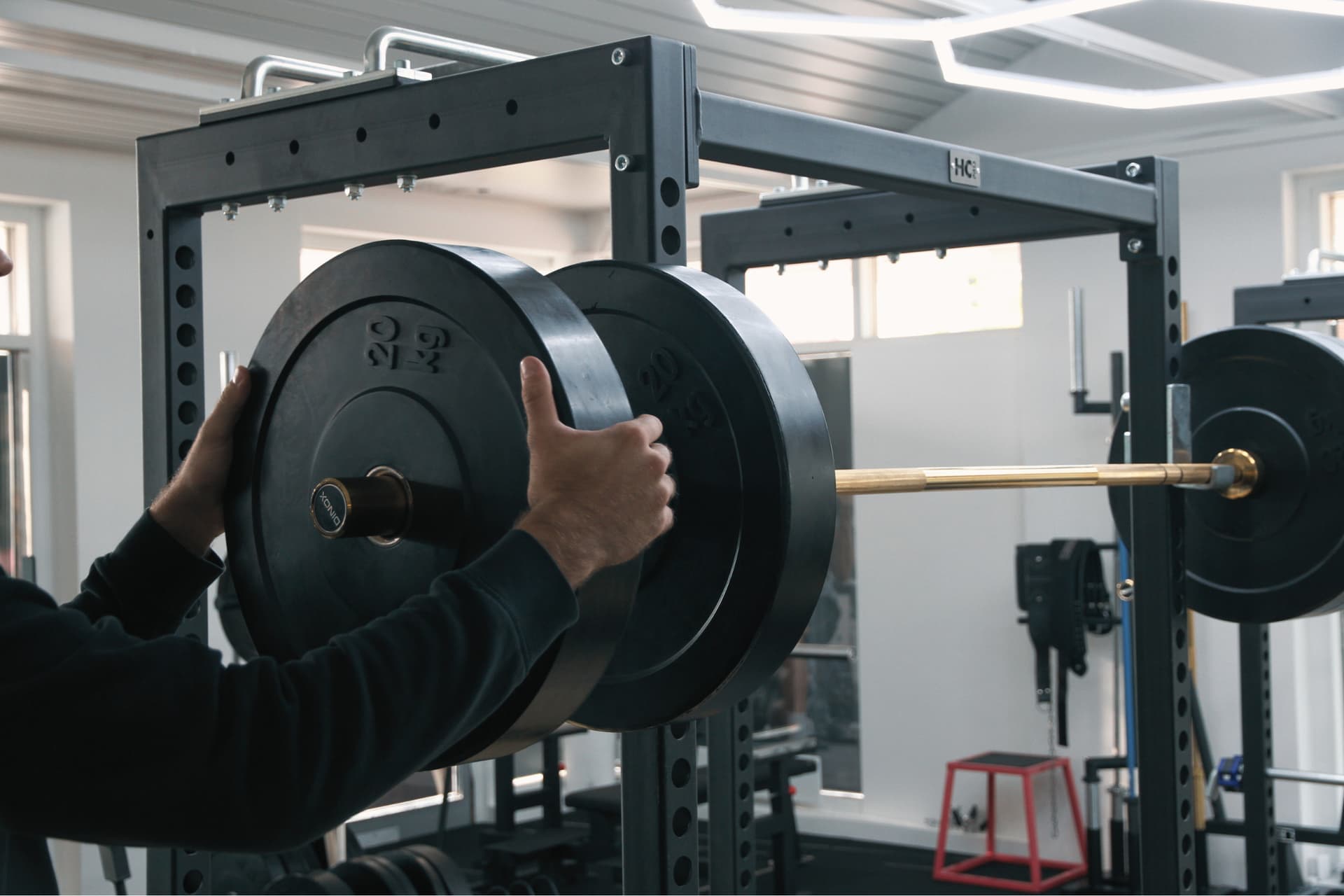
Best Home Gym Rack
Format first - cage, half rack, stand or wall-mounted - then the steel. Ranked for one room.
Explore →Best Power Rack
Full four-post cages with safeties and attachment options for training alone.
Explore →Best Squat Rack
Squat stands and half racks for a smaller footprint without losing the safeties.
Explore →Best Budget Power Rack
Cages and stands under $300 that still catch a failed rep, ranked by value.
Explore →Best Rack for Small Spaces
Folding, wall-mounted and compact racks for a tight garage, spare room or apartment.
Explore →Best Squat Rack with a Pull-Up Bar
Two tools in one footprint — racks and stands that build in a pull-up bar, ranked.
Explore →RUNFREELY Power Rack
Our top overall cage, reviewed — a pulley, safeties, landmine and pull-up bar in one.
Explore →Titan T-3 Folding Rack
Our space-saver pick, reviewed — 2x3 11-gauge steel that folds flat against the wall.
Explore →SPORTSROYALS Power Rack
Our pick with cables, reviewed — a full cage with a LAT pulldown and low row built in.
Explore →RitKeep RMAX2250 Power Rack
Our compact-cage pick, reviewed — a 1,200lb full cage on a 44x45-inch footprint, hooks and safeties included.
Explore →VEVOR Power Cage
The cheapest honest cage, reviewed — a 1,000lb four-post cage with band pegs at a stand's price.
Explore →YOLEO Squat Rack
Our top squat stand, reviewed — adjustable width, safety arms and a pull-up bar in a small footprint.
Explore →
Power Rack vs Squat Rack
Footprint, safety and cost — which format actually fits your room and your lifts.
Explore →What Size Power Rack Do I Need?
The ceiling, footprint, depth and width to measure before you buy.
Explore →ULTRA FUEGO Power Cage
A mid-range full cage, reviewed — bundled J-hooks, dip handles and a landmine, with an optional cable pulley.
Explore →CANPA Multifunction Rack
A budget half rack, reviewed — a low-cost step up from a bare squat stand toward a full cage.
Explore →CAP Power Rack with Pull-Up Bar
The cheap, widely-owned cage, reviewed — a first full rack with a pull-up bar and safeties, and where the low price shows.
Explore →Best Power Rack with a Cable Pulley
Cages that build in a pulley or LAT pulldown - one footprint that squats, benches and does cable work.
Explore →Best Power Rack for Bench Press
The full four-post cages that catch a failed press with no spotter, ranked on their safeties.
Explore →Best Power Rack for Low Ceilings
Ranked on published height and format - with the clearance math for a standard 8 ft basement.
Explore →Common questions
Do I need to bolt a power rack to the floor?
Full four-post cages loaded with weight are usually stable unbolted, but bolting them down is always safer and eliminates any rocking. Two-post squat stands and half racks should be bolted or heavily loaded on the base — they can tip forward if you miss a rep and dump the bar onto the J-hooks. Check the manufacturer's guidance for your specific rack.
What steel gauge should a power rack be?
Lower gauge is thicker and stiffer. 11-gauge steel (about 1/8 inch) is the commercial standard and barely flexes under heavy loads; 12- and 14-gauge are lighter and fine for moderate home training. Combined with a 3x3 or 2x3 inch upright, 11-gauge is what a serious lifter wants.
Can I bench press safely in a power rack alone?
Yes — that's the main reason to own one. Set the safety bars or straps just below your chest so a failed press lands on them, not on you. A full cage is ideal for this; a two-post stand with long spotter arms also works if the arms are set correctly.
Is a squat rack enough, or do I need a full cage?
A squat stand with safety arms covers squats and presses in far less space and costs less. A full cage adds full enclosure, higher capacity, more attachment points, and easier solo benching. If you have the room and lift heavy, the cage is the better long-term buy; if space is tight, a good stand is plenty.
Read next
Cage or stand?
If you have the floor space and lift heavy, start with the power racks. If space is tight, the squat racks give you the safeties in a smaller footprint.