How to buy a rack on a budget
Safeties are non-negotiable
The whole point of a rack is to catch a failed rep. A budget cage with pin-and-pipe or strap safeties that actually sit below your chest on the bench and your bottom position on the squat is doing its job. Never buy a “rack” that’s really just two uprights with J-hooks and no safeties — that’s a stand for loading, not for training to failure alone. Read our is a power rack worth it guide for why this is the feature that matters most.
Cage, half rack or squat stand
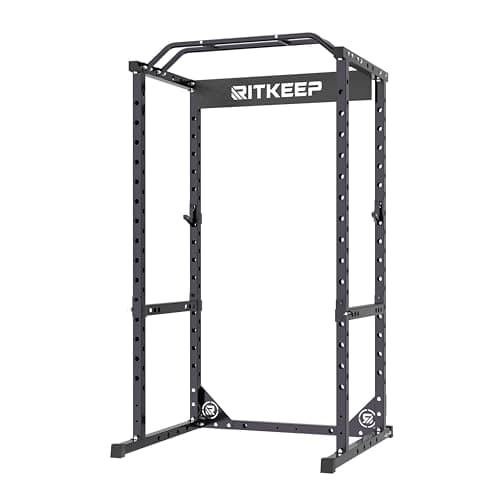
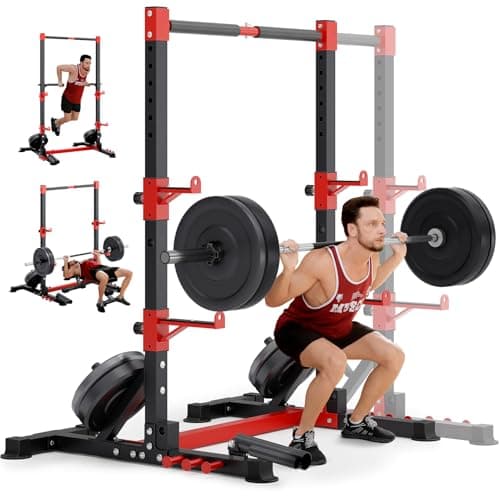
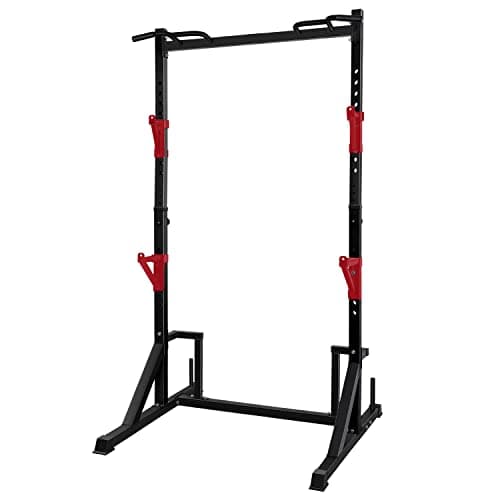
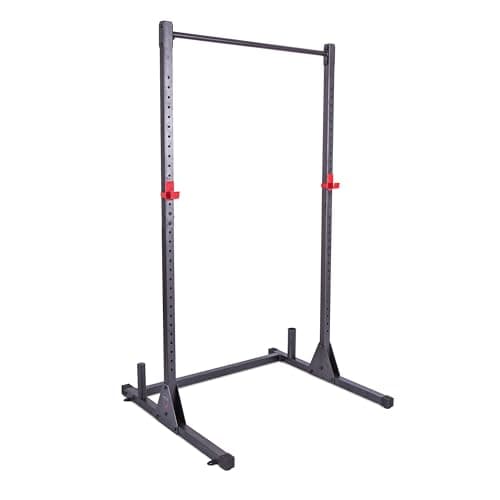
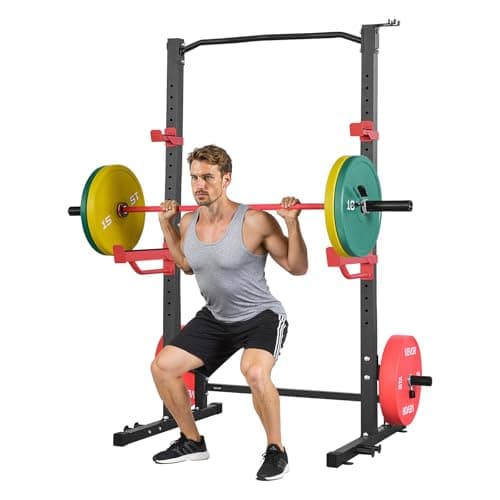
A full four-post cagesurrounds you and is the safest, most capable format; the budget cages here rate around 800–1,000 lb, which is plenty for home lifting. A half rack or squat standuses a smaller footprint and costs less, trading full enclosure for space. If your room is tight, a good stand with long safety arms is a legitimate budget answer — our power rack vs half rack guide walks the trade-off.
Steel gauge and capacity
Lower gauge is thicker and stiffer. Budget racks are usually 12- or 14-gauge rather than the commercial 11-gauge standard — fine for moderate home loads, just don’t expect a dead-solid feel under a max effort. The published capacityon these racks (commonly 800–1,000 lb) far exceeds what a raw home lifter loads, so buy on safeties and footprint, not on chasing the biggest rating.
Bolt it down
The most important thing you’ll do with a budget rack is anchor it. A two-post stand can tip forward if you dump the bar onto the J-hooks, and even light cages rock under a heavy rack-out. Bolting to the floor (or loading the base heavily where the design allows) turns a good-value rack into a safe one. Pair it with a real barbell and drop-safe bumper plates so a miss lands where it should.