How to choose a trap bar
Open vs closed frame
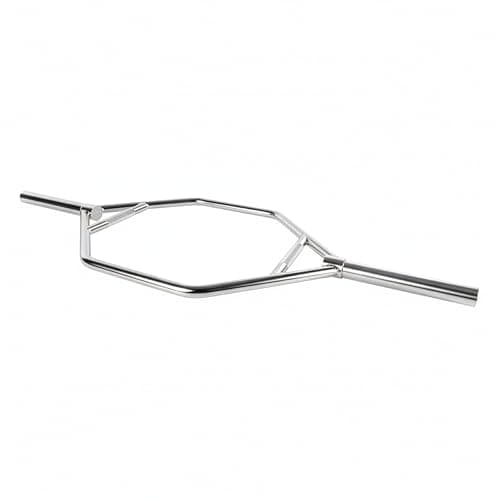
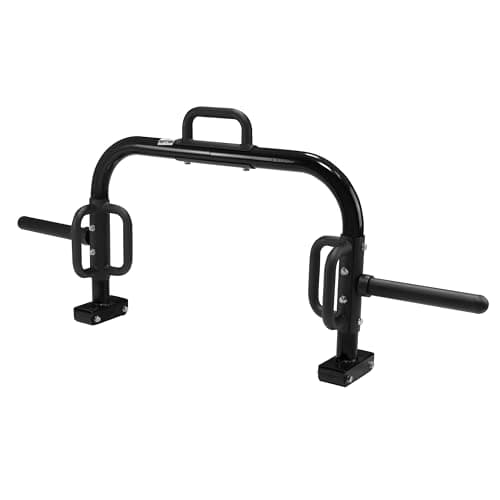
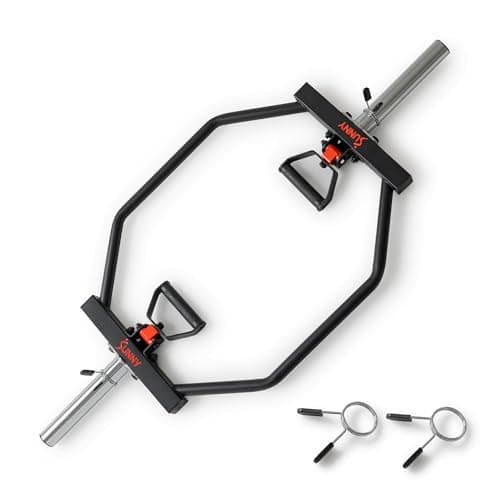
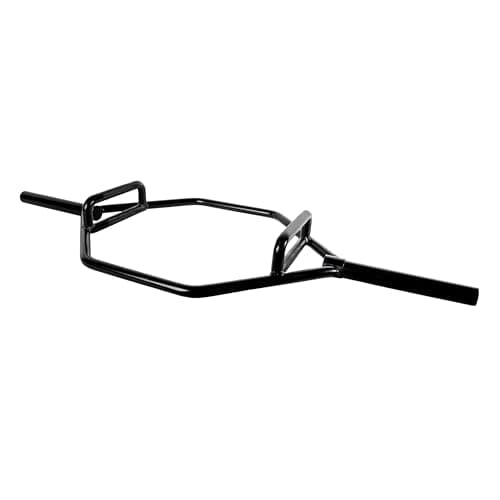
A closed hexbar is a symmetric six-sided frame you step into from the side. It’s compact, balanced and cheap, and it’s all most lifters need for deadlifts and shrugs — the CAP and Sunny bars here are closed. An opentrap bar drops the back rail so you can walk straight out of it, which unlocks loaded carries, walking lunges and an easier setup because you’re not boxed inside the frame. The CAP Deluxe is the walk-in bar on this list, and it does the format for less than the open bars usually cost. If you only deadlift, closed is fine; if you want carries, buy open.
High and low handles, and capacity
Many trap bars carry dual handles — a raised set and a low set. The high handles shorten the range of motion, which suits taller lifters, limited hip mobility, or heavier pulls; the low handles give a fuller range closer to a conventional deadlift height. Flip the bar over to switch. Two bars here have both: the CAP combo bar (on 32mm fat grips) and the CAP Deluxe Open. The other two give you one height — the chrome CAP uses flush neutral handles in line with the sleeves, which is the traditional full-range pull but offers nothing to grow into, and the Sunny uses 360° swivel handles, comfortable on the wrists and likewise single-height. Capacityis the other number that matters: the CAP combo bar tops the list at 1,000 pounds, the two 750-pound CAP bars still outlast most lifters’ trap-bar pulls, and the Sunny’s 400 pounds marks it as a starter bar. Buy above your projected top set, not at it.
Sleeve fitment and loading
Every bar on this list takes 2-inch Olympic sleeves, so it loads the same platesas your barbell — no separate plate collection. The detail people overlook is loading: a bar that stands uprighton its own lets you slide plates on at waist height instead of wrestling a frame flat on the floor. It sounds minor until you’re changing weights between every set — and it’s worth saying that none of the four bars still buyable here does it, so budget for loading off the floor. Check sleeve length too if you pull heavy — thicker bumper plates eat sleeve space faster than thin iron.