The specs, side by side
Published figures only, from each maker’s own listing for the exact bench we link to. The backrest row is the one to read first; the seat-height row is the one that matters if your femurs are long.
Who each bench is for
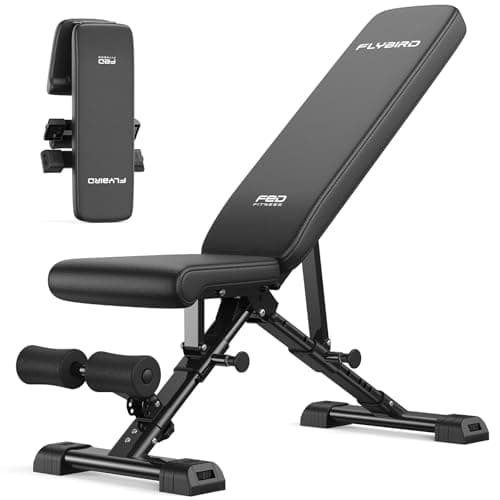
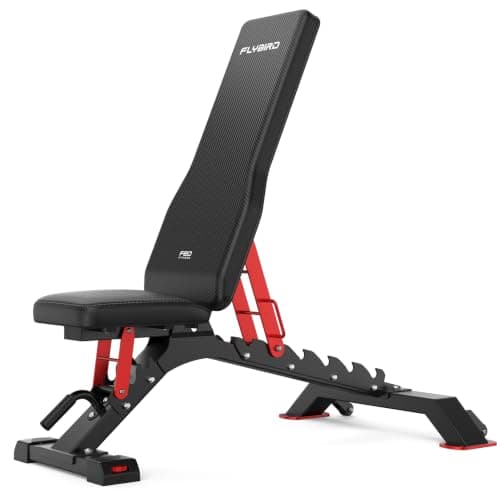
- FLYBIRD WB7— for the tall lifter who wants the longest published backrest at a home-gym price. 34 inches of pad and a 1,300 lb rating; check the decline range, since this one is incline-focused.
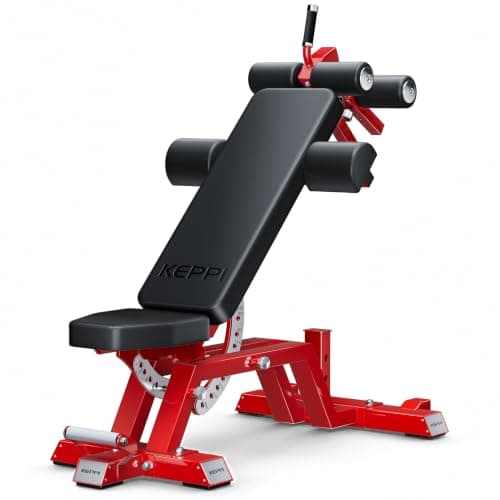
- Keppi Bench6000— for the tall lifter who presses heavy and wants competition geometry. The published 17-inch seat height and 2.75-inch pad on a 97 lb frame are what you’re paying for; it is the most expensive bench here by a wide margin.
- FLYBIRD WB5— for the borderline case. A 30-inch backrest is longer than most budget benches and it folds flat, so it suits a tall lifter in a small room who can live with a little less pad.
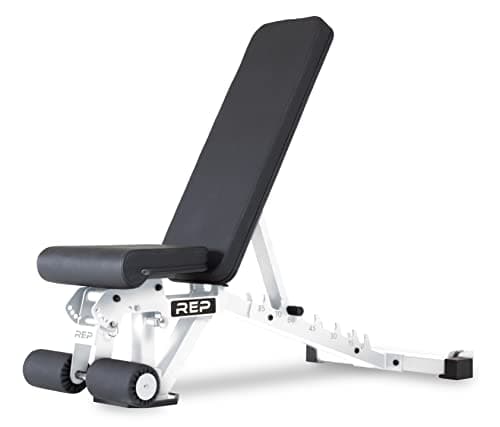
- REP AB-3000— for the lifter who prioritises build over published dimensions. Noticeably more solid than the sub-$150 folding benches, from a brand with real parts support, but REP publishes no backrest length.
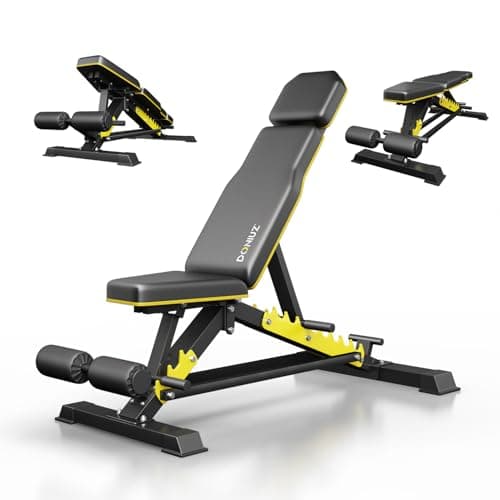
- DONIUZ FID— for a tight budget. The headrest is the relevant feature for a tall lifter on steep inclines, and the 1,200 lb rating is generous for the price.
How to choose a bench if you're tall
Measure yourself, then measure the pad
Lie on whatever bench you currently use, set to a flat press. The pad needs to support three things at once: your glutes, your upper back and your head. Now tip it to a 45-degree incline and check again, because that is where a short pad fails first — the backrest effectively gets shorter relative to your torso as it rises. If your head is unsupported at incline, measure from the top of the pad to where your head shouldsit and shop for at least that. A 34-inch backrest supports most lifters up to roughly 6′4″ in our reading of the geometry; past that, a bench with a separate headrest (like the DONIUZ) or a dedicated long-pad bench is the honest answer.
Seat height is the long-femur spec
Tall lifters usually have long femurs, and long femurs change what a good bench height means. A bench that is too low leaves your knees above your hips and kills leg drive; too high and your heels lift off the floor, which is both weaker and, under competition rules, a fault. The IPF competition envelope puts bench height at 42–45 cm (about 16.5–17.7 in), and the Keppi’s published 17 inches sits in the middle of it. If you are tall and have ever found yourself on tiptoes mid-set, this is the number to chase — and it is the reason we rank a bench that publishes it above two benches that don’t.
The seat gap matters more when you're long
Almost every adjustable bench has a gap between the seat pad and the back pad, and a tall lifter feels it more than a short one — a long torso puts that gap right under the lower back or glutes on an incline, and you end up shifting to avoid it. There is no bench on Amazon with no gap at all, so this is a trade to manage rather than eliminate: a thicker, firmer pad bridges it better than a soft one. Our bench seat gap guide covers what is normal and what is too much, and bench pad thickness and width explains why the 2.75-inch high-density pad on the Keppi is a genuine feature and not just marketing.
Tall usually means heavy, so check stability honestly
A taller lifter puts more total mass on the bench and more leverage through it when they set up hard. The spec that predicts stability is not the capacity sticker — it is frame weightand base geometry. The Keppi publishes a 97 lb Q235 steel frame, and that mass is the actual reason it sits still under a heavy press; the WB7’s roll wheels exist because it, too, is heavy enough to be awkward. A light folding bench can carry an 800 lb rating and still feel lively when a 230 lb lifter drives hard into it. See how much weight can a bench hold for what the rating really covers and how to stabilize a wobbly benchif you’re working with what you already own.
Don't buy capacity you can't use
It is worth saying plainly, because the listings push hard in the other direction: the gap between an 800 lb and a 1,500 lb rating is almost never what decides whether a bench suits a tall lifter. Capacity covers lifter plus bar, and very few home lifters approach even the lower figure. Spend the money on the pad, the published geometry and the frame mass instead. If you also need a decline setting or a flat-only bench, our flat vs adjustable bench guide and best heavy-duty bench roundup cover those decisions.