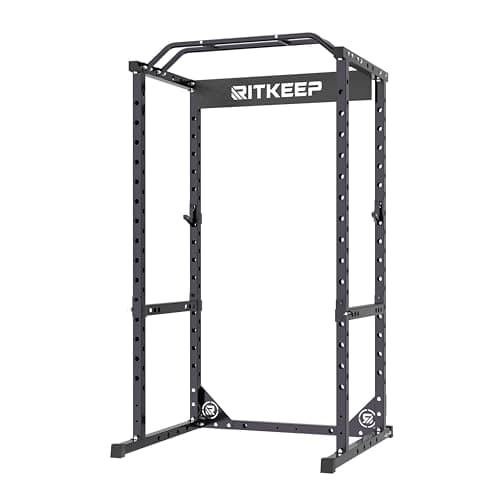
The specs, side by side
Every figure here is the manufacturer’s own published number for the exact model we link to. Four of the five makers publish a footprint but notan overall height — that is not us being lazy, it is the state of the listings, and it is the single most annoying fact about shopping for a rack with a ceiling constraint. The last row tells you what to do about it.
Who each rack is for
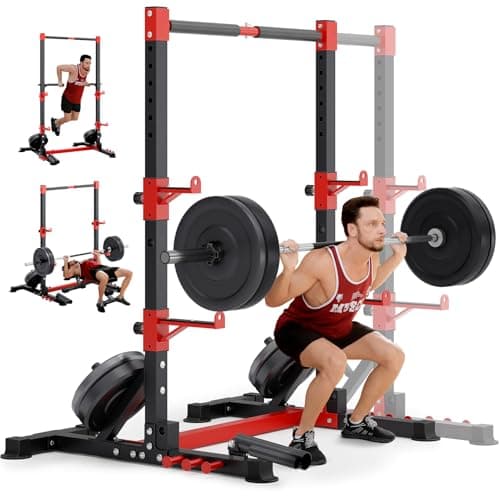
- RitKeep RMAX2250— for the lifter with a standard 8-foot basement who wants a real cage and wants to do the clearance math before buying. The published 81.7-inch height is the whole reason it leads.
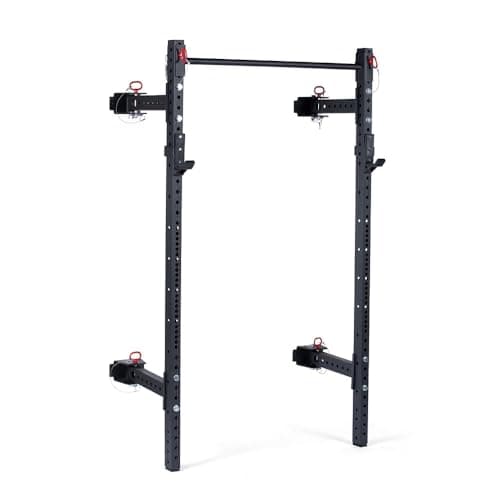
- Titan T-3 wall-mounted folding rack— for the garage where the ceiling andthe floor are both tight. 11-gauge 2×3 steel that folds to about five inches from the wall, so the room goes back to being a room.
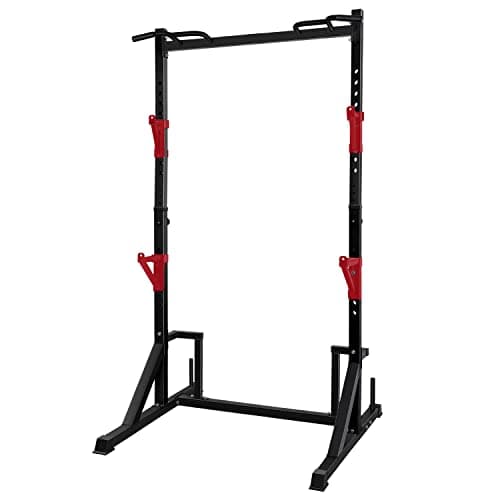
- YOLEO squat rack with pull-up bar— for the lifter who wants the lowest-profile option that still has safety arms. A two-post stand with 35–67 inch adjustable width, no top crossmember to run into.
- CANPA multifunction rack— for a tight budget in a spare room, where a step up from a bare stand matters more than published specs.
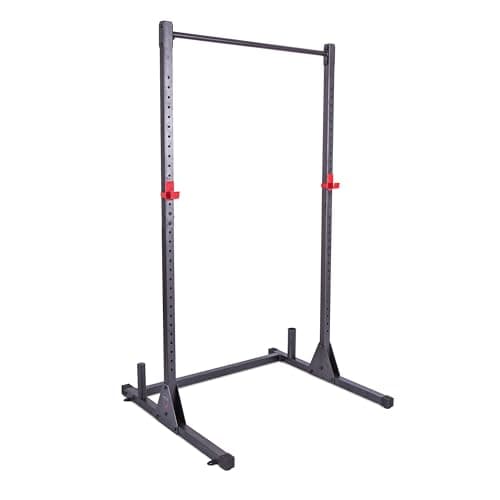
- CAP power rack— the cheapest complete cage with a pull-up bar, for a first home gym at moderate loads. Bolt it down.
How to choose a rack for a low ceiling
Measure the room, not the rack
Measure your finished ceiling height at the exact spot the rack will stand, and do it with a tape rather than assuming. Basements and garages are full of things that steal inches: a dropped ceiling, a garage door track, a joist, a light fixture, a sprinkler head. Then measure your standing reach with a bar overhead if you want to press inside the cage, and your reach with arms fully extended if you want to hang. Those two numbers, not the product title, tell you which rack fits. A rack that physically fits but leaves your knuckles brushing the joists is a rack you will stop using.
Wall-mounted folding is the real low-ceiling trick
The underrated answer to a cramped room is not a shorter cage but a folding rack. A wall-mounted folding rack like the Titan T-3 bolts to your studs, swings out to lift, and folds back to roughly five inches from the wall afterwards — so the constraint stops being permanent. The trade-offs are real and you should know them up front: it needs solid wall studs and careful mounting, and because there are no rear uprights you rely on spotter arms rather than a full cage of safeties. Our folding vs freestanding power rack guide covers the decision, and how to anchor a power rack covers doing it safely.
A squat stand sidesteps the problem entirely
A two-post squat stand has no top crossmember and no roof, so the ceiling stops being part of the conversation for squats and presses. You give up the enclosed cage — the safeties don’t surround you, and a two-post stand is less rigid than a bolted four-post at maximal loads — and you gain a much smaller visual and physical footprint. The YOLEO’s extended safety arms are the feature that makes this a defensible choice rather than a risk: they let you bail a squat without a cage. See power rack vs squat rack for the full comparison and best squat rack for the wider field.
The pull-up bar is what you actually sacrifice
Under a 96-inch ceiling, a rack-mounted pull-up bar sits somewhere in the low-to-mid 80s at best, which leaves a tall lifter unable to hang with arms fully extended and the head clear. There are three honest responses. Accept a dead-hang that starts slightly bent. Mount the bar lower on the uprights if the rack allows it and tuck your legs. Or use a separate pull-up solution entirely on a doorway or wall where you can choose the height. What you should not do is buy a 90-plus-inch rack for an 8-foot room on the theory that it will work out.
Short rack, not weak rack
Height and strength are separate specs, and it is worth not conflating them while you shop. The RitKeep publishes a 1,200 lb capacity on 2×2-inch heavy-gauge uprights; the Titan T-3 uses 2×3-inch 11-gauge tubing, which is genuinely commercial-tier steel in a format that folds. Neither is a compromise on steel just because it suits a lower room. What you should watch on the cheapest racks here is upright gauge and the advice to bolt them down — see 11-gauge vs 14-gauge steel and 2×2 vs 3×3 uprights for what those numbers buy, and what size power rack do I need to size the whole thing properly.