The specs, side by side
Every number below is the manufacturer’s published figure for the exact bar we link to. Note how few of these bars publish a tensile PSI rating — two of five — which is why we don’t rank on tensile strength alone. Where a figure isn’t published, the cell says so.
Who each bar is for
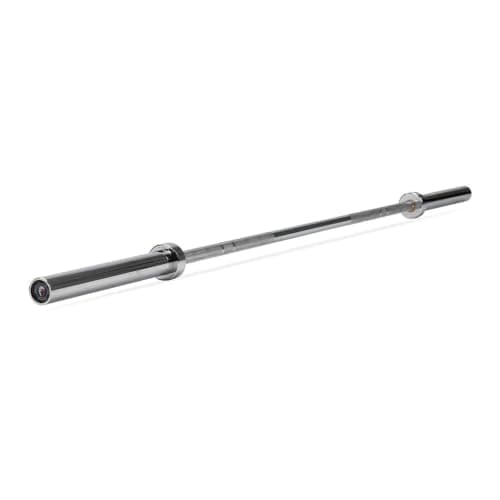
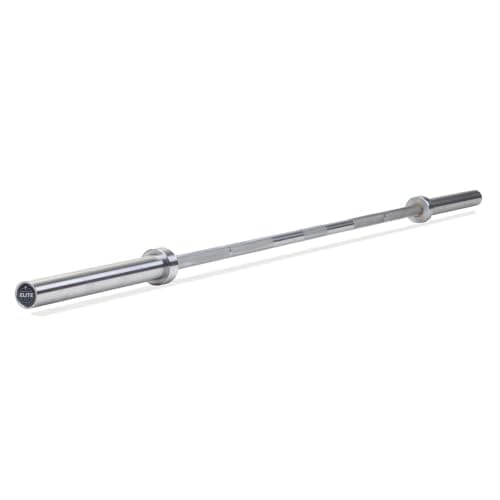
- Titan Elite Series Power Barbell— for the lifter who benches heavy and squats and deadlifts on the same bar. The stiffest, highest-rated spec sheet here, with the center knurl that a squatter wants and a bencher doesn’t care about either way.
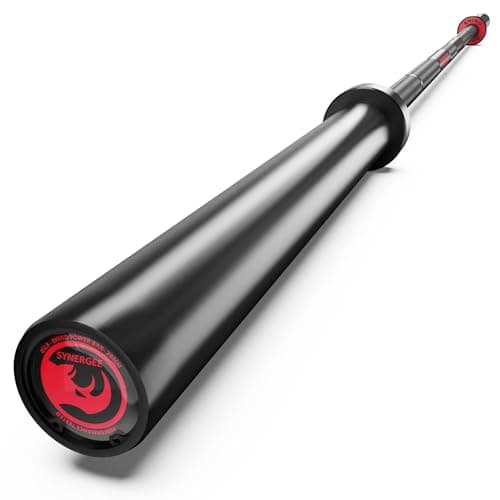
- Synergee Rhino Power Bar— for the high-volume bencher. Same 29 mm stiffness at the lowest price of any dedicated power bar on this list, with a Cerakote shaft that survives a humid garage.
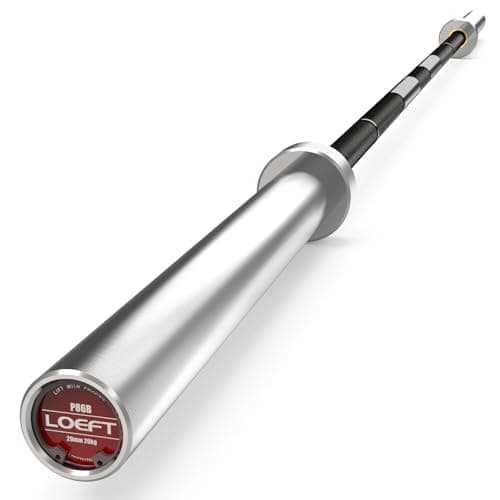
- P86B Powerlifting Barbell— for the spec-sheet buyer. It publishes a 205,000 PSI tensile figure and offers a 6 ft option, which matters if your bench sits in a narrow stand.
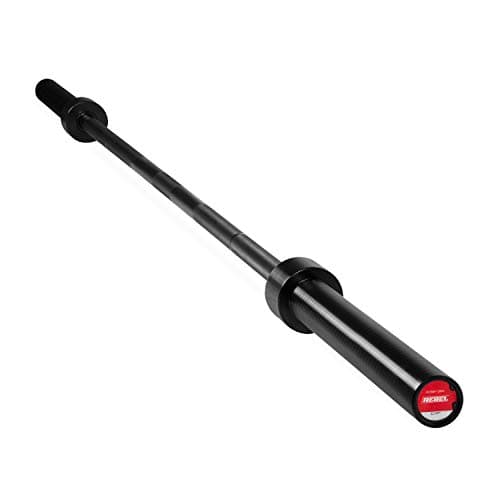
- CAP The Rebel— for the lifter on a budget who still wants a 2,000 lb-rated 7 ft shaft. The moderate knurl is a genuine plus for pressing even though it costs the bar points for deadlifting.
- Titan Performance Series— for the lifter who presses, cleans and snatches on one bar. A 28 mm shaft with dual knurl marks; the 700 lb rating is the ceiling to be aware of.
How to choose a barbell for bench press
Buy stiffness, not grip
A press is a closed chain: the bar is trapped between your hands and the load, and it is not going anywhere. So the knurl’s job on a bench is simply to stop your palms sliding laterally, which a medium knurl does completely. What you actually feel rep to rep is whether the bar is stiff. Load a whippy 28 mm bar to a hard single and the sleeves start to move independently of the center as you grind; that oscillation has to be controlled, and controlling it costs you the rep. A 29 mm power shaft stays put. If you only ever bench, this is the spec to spend on and the only one that really separates these bars.
Knurl marks matter more than knurl bite
Bench press is brutally sensitive to hand placement: a half-inch asymmetry changes which shoulder takes the load and which side fails first. Knurl markssolve this for free — you find them by feel, set up identically every rep, and never have to look at the bar. Competition bars put ring marks at a fixed spacing precisely because grip width is regulated, so a bar with clear marks is a bar you can repeat. Our knurl marks guide explains what the different marks mean, and aggressive vs passive knurling explains why the bite that wins a deadlift tears your palms on a set of ten.
The center knurl question, answered honestly
A center knurl is the most-argued spec on power bars and it is close to a non-issue for the bench specifically — the bar does not touch your neck or chest on a press, it touches your hands. Where it matters is squatting: a center knurl grips your back and stops the bar sliding, and it also scrapes your neck raw on a high-bar squat. So treat it as a squat decision made on a bar you also bench with. If you bench and squat on one bar and hate the scrape, the Rhino’s shaft is the one to look at. See center knurl explained for the full picture.
Length and capacity: the two specs that quietly bite
A full 7-foot bar is 86 inches long and is designed to sit in J-hooks at standard rack spacing; a 6-foot bar can leave too little shaft outside the hooks to be safe over a bench. The P86B publishes both options, which is useful if your bench lives in a narrow stand, but check your own hook spacing before choosing short. On capacity, the gap on this page is large and real: four bars rate 1,500–2,000 lb and the Performance Series rates 700 lb. No home bencher is pressing 700 lb, but capacity is also a proxy for how much the shaft resists taking a permanent set over years of heavy loading. Our capacity guideexplains what the rating does and doesn’t promise, and barbell dimensions and length covers fitment.
Where to spend if bench is your main lift
If pressing is genuinely your priority and you don’t pull heavy, you can take the money you’d have spent on an aggressive knurl and a bearing sleeve and put it into shaft stiffness and finishinstead. Sleeve spin does nothing on a bench press — it exists so the bar can rotate under your wrists in a clean or snatch — so a bushing bar is the correct choice and a bearing bar is money lit on fire. See bushing vs bearing for why, and barbell finishes explained for which coating survives your particular garage. If you need the bench itself, our best flat bench roundup ranks those on competition geometry.