What a flagship spec sheet actually contains
Five specs, and a great bar publishes all five. This is the sheet to measure any bar against, including the ones on this page.
Now apply it. A bar that publishes four of five is a serious product. A bar that publishes a photo and a weight is a gamble — which is the whole subject of are Amazon barbells any good.
Who each pick is for
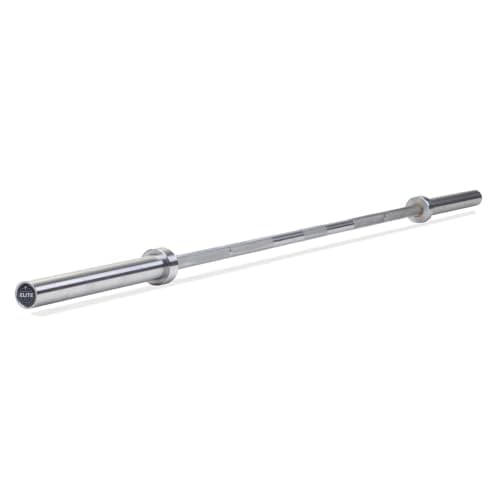
- Titan Fitness Elite Series power bar— for the powerlifter. The closest buyable bar to a flagship power bar: 29 mm hard chrome, brass bushings, an aggressive mountain knurl witha center knurl, 2,000 lb rated.
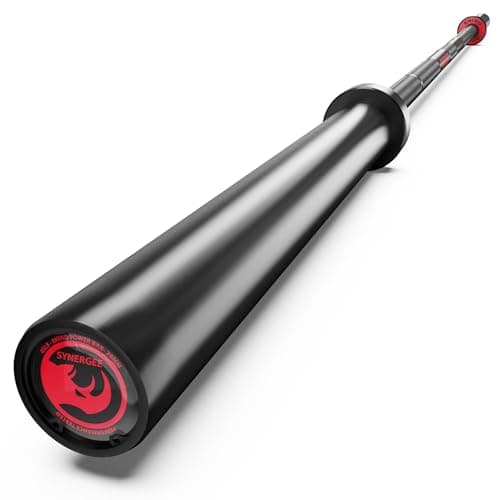
- Synergee Rhino power bar— for the lifter who wants a flagship finish. A 29 mm Cerakote shaft at a published 190,000 PSI and 1,500 lb — the same tensile figure Rogue publishes on the Ohio Bar, in the coating the flagships charge the most for.
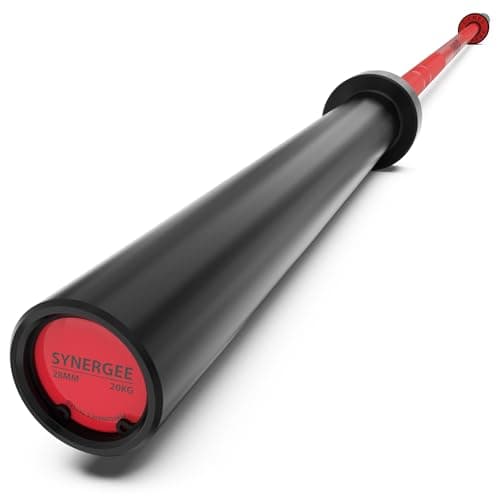
- Synergee Games bar— for the Olympic lifter. 28 mm, 1,500 lb, 10 needle bearings (five per sleeve) and dual knurl marks. Needle bearings are the flagship Olympic mechanism, and this is the cheap route to them.
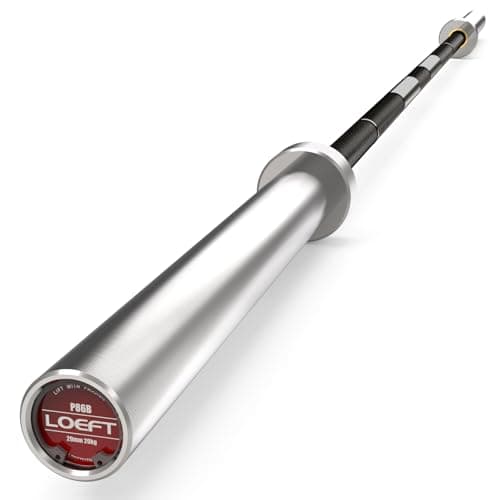
- P86B power bar — for the spec-sheet buyer. Publishes 205,000 PSI, which is the figure Rogue publishes on the Ohio Power Bar, with a 2,000 lb rating, an aggressive knurl and a center knurl.
- Titan Performance Series bar— for the lifter who does everything. 28 mm, bronze bushings, a medium volcanic knurl with dual marks and a 700 lb rating: the all-rounder, and the bar most home gyms should actually own.
Flagships vs buyable, spec for spec
The left two columns are published by Rogue and Buddy Capps; the right two are published by Titan and Synergee. Nothing here is estimated.
Read that table honestly in both directions. The flagships publish tensile and sleeve length and skip the capacity rating; the Amazon bars publish a capacity ratingand usually skip sleeve length. Neither set is complete, and the flagship advantage is not visible in the numbers at all — it is in tolerances, finish consistency and warranty. That is a real thing to pay for. It is just not a spec.
Why there is no one best bar
Diameter is a trade, not a tier
29 mm is stiffer and more planted under a max squat; 28 mm is easier to grip fully and flexes helpfully off the floor. Flagship makers sell both because both are correct for different lifts — see 28 mm vs 29 mm and barbell whip explained.
The center knurl helps one lift and ruins another
It stops the bar sliding down your back on a heavy squat, and it scrapes your neck on a high-bar squat and does nothing for a clean or a press. Every dedicated power bar has one and no serious Olympic bar does. That single feature makes “best bar” unanswerable in the abstract — center knurl explained is the five-minute read that saves a bad purchase.
Bearings and bushings are different jobs
Needle bearings spin fast and free, which the catch phase of a clean needs. Bronze or brass bushings spin slower, cost less and last longer under static heavy loading, which is all a powerlifter wants. A bar cannot be optimal at both — bushing vs bearing covers it.
So what should you actually buy?
Pick by the lifts in your program, in this order. Squat, bench, deadlift only: a 29 mm power bar with a center knurl — the Titan Elite or the P86B here, or the full ranking in best powerlifting barbell. Cleans, snatches, metcons: a 28 mm bearing bar — the Synergee Games, or best barbell for CrossFit. A bit of everything: a 28–28.5 mm bushing bar with dual marks and no center knurl — the Titan Performance Series, or best Olympic barbell. And if you are still deciding, what barbell should I buy walks the decision from the top.
One last honest note on the flagship question, because it is the reason people search for it. A Rogue or a Texas bar will almost certainly outlast an Amazon bar, hold resale value, and arrive with a knurl cut to a consistency the budget market cannot match. If you have the money and you lift seriously for years, that is a defensible purchase. What you should not believe is that the bar is the limiting factor in your training. A bar upgradeis worth it when your current bar is bent, slipping or rusting — not because the best bar in the world has a better number on it than yours.