Some Amazon barbells are genuinely good, and the rest are unknowable — and published specs are the entire difference. The best bar on this page publishes 205,000 PSI, which is the same tensile figure Rogue publishes on the Ohio Power Bar. Another publishes 28 mm, 1,500 lb and 10 needle bearings, which is the flagship Olympic sleeve mechanism. Those are real products. Alongside them sit hundreds of listings offering a photograph, a finish name, a weight and four thousand reviews about how well the bar was packaged. This guide is the five-spec test we use to separate the two, so you can run it yourself on any listing in about thirty seconds. Live prices on the bars that pass, as of October 21, 2026.
One framing note before the test. The question behind this question is usually “will a cheap bar hurt me?”, and the honest answer is: that is not the risk. The real risk at the cheap end is a bar that takes a permanent bend, seizes at the sleeve or has a knurl that is either slick or shredding — a bar you stop wanting to use, two years after buying it. A 7 ft bar publishing a 1,200 lb rating is in no danger from your squat. It may still be a bad purchase.
The five-spec test
Open the listing and look for these five. Four of five means the seller has engineered a product and is willing to be held to it. Two of five means you are buying a photograph.
That fifth row deserves a note, because it is where the Amazon market is genuinely worse than brand-direct. Rogue publishes 16.875″ and Buddy Capps publishes 16″; of the Amazon straight bars we track, not one publishes a loadable sleeve length. So treat its absence as the category norm rather than a red flag — and read loadable sleeve length so you know how to estimate from the plates you own.
Which bars actually pass
Here is how the bars we track score, using their own listings. This is the useful version of “are Amazon barbells good”: some publish four specs, and some publish two.
Read the bottom rows as carefully as the top ones. The CAP Beast publishes a capacity figure and a finish and leaves the diameter and knurl unstated — which is why we rank it as a budget pick with explicit caveats rather than as a good bar with a low price. And notice that the two bars publishing a tensile figure, the P86B and the Synergee Rhino, are both power bars: PSI figures are rarer than capacity ratings in this market, and more informative. Our capacity explained and tensile strength guides cover what each figure does and does not promise.
Five listing phrases that mean the seller is hiding something
- “High tensile strength steel” with no number. Tensile strength is a number. An adjective where a number belongs is a choice.
- “Olympic barbell” with no diameter.“Olympic” describes the 2″ sleeve, not the shaft. A real Olympic bar states 28–29 mm — see Olympic vs standard.
- “Professional grade” / “commercial grade”. Neither term has a definition, a standard or a certifying body behind it.
- A capacity rating with no shaft or sleeve spec. A big number on its own is the cheapest claim to make and the hardest to check.
- “Knurled grip” as the entire knurl description. Every bar is knurled. The useful information is the pattern, the marks and whether there is a center knurl.
One more that is not a phrase: a weight given only in pounds for a 20 kg bar. It usually means the listing was written from a catalog rather than from a spec sheet — do all barbells weigh 20kg covers why that matters more than it sounds.
The Amazon bars that pass the test
These three publish four or five of the five specs, which is why they lead our rankings. Prices live as of October 21, 2026.
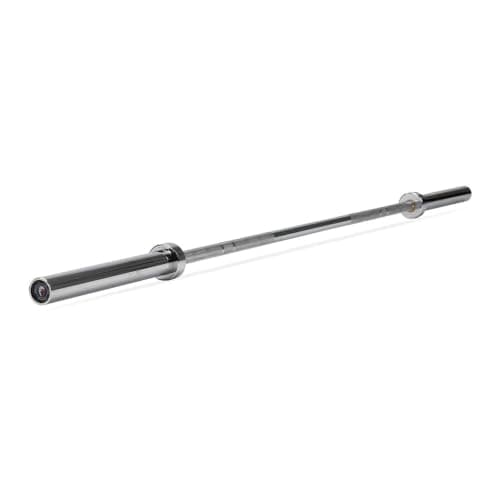
Titan Fitness Performance Series Olympic Bar
A 28mm, 700 lb-rated Olympic bar with bronze bushings and a medium volcanic knurl — the most bar you can put under mixed training at this price.
#ad · Price as of October 21, 2026 · Affiliate disclosure
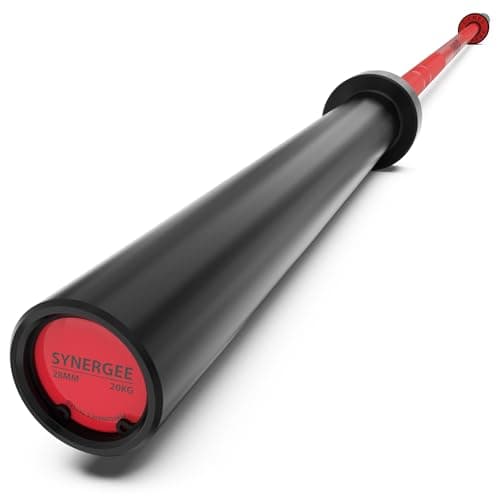
Synergee Games 20 kg Barbell
A ceramic-coated 20 kg bar rated to 1,500 lb with needle-bearing-smooth spin — the value pick for anyone who does cleans, snatches or CrossFit-style work.
#ad · Price as of October 21, 2026 · Affiliate disclosure
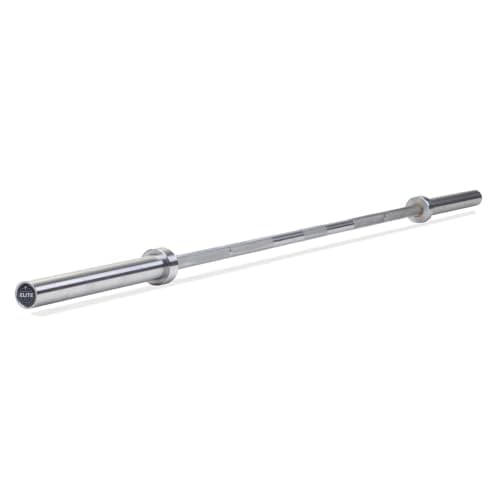
Titan Fitness Elite Series Power Barbell
A 29mm, 2,000 lb-rated power bar with brass bushings and aggressive mountain knurl — a genuine power-bar spec sheet at roughly a third of a boutique bar's price.
#ad · Price as of October 21, 2026 · Affiliate disclosure
The Titan Performance Seriesis the clearest example of the test working: a 28 mm chrome shaft, a 700 lb rating, bronze bushings and a medium volcanic knurl with dual marks — four specs, stated plainly, on a bar at the ordinary end of the market. Synergee’s Games bar publishes something rarer: ten needle bearings, five per sleeve, which is the mechanism flagship Olympic bars use. The Titan Elite Seriesdoes the same job for powerlifting at 29 mm with a center knurl. Full rankings in best Olympic barbell and best powerlifting barbell.
What you are still giving up
Being straight about it: passing the spec test does not make a bar equal to a flagship. You are giving up three things that do not appear on any listing. Tolerance— how consistent the knurl depth and the sleeve fit are from bar to bar. Finish execution — a cheap chrome and a well-applied hard chrome are different products wearing the same word, which is why finishes explained is worth reading. And support— a specialist brand will sell you a sleeve assembly in five years; a marketplace seller may not exist in five years.
Whether that is worth two or three times the money depends on how long you plan to keep the bar and how heavily you train. Are expensive barbells worth it works through the trade, and how often should you replace a barbell covers the practical lifespan question. For most home lifters the honest answer is that a bar publishing four real specs at the mid-market price is the correct purchase, and the money saved is better spent on plates or a rack you can trust.
The short version
Run the test. Diameter in millimeters, a real strength number, the sleeve mechanism, the knurl pattern— four of those four and the listing is serious. If a bar substitutes adjectives for figures, close the tab, however many stars it has: the sellers who publish nothing are not hiding good news. And remember that star ratings in this category mostly measure packaging, which is the one thing you will never think about again after the bar is in the rack.