The published specs, side by side
Every figure below is from the maker’s own listing. The format row is the one that decides the purchase; the roller row is the one that decides what happens to your bar over five years.
Read the capacity column against what you actually lift. A 600 lb jack covers a 7-foot bar with six 45s a side and change, which is more than the overwhelming majority of home lifters will ever load. The 2,000 lb Titan figure is not about your deadlift — it is about a full stand carrying the entire bar rather than levering one end, which is a fundamentally different load path.
Full stand or lever jack?
A lever jack tips one end, and that is usually enough
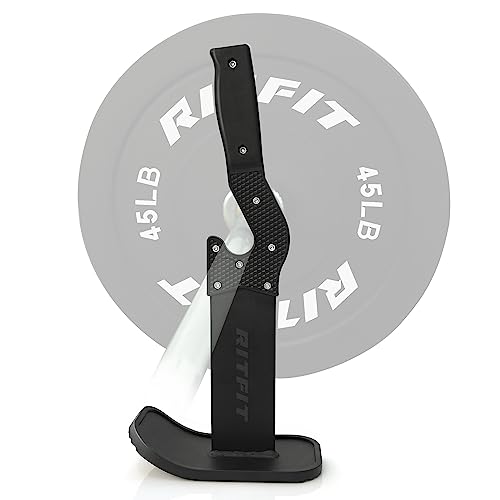
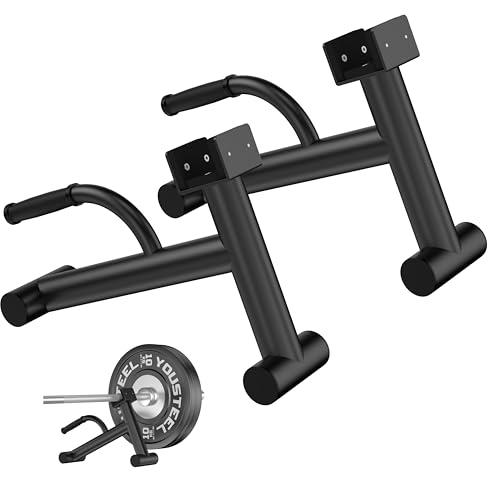
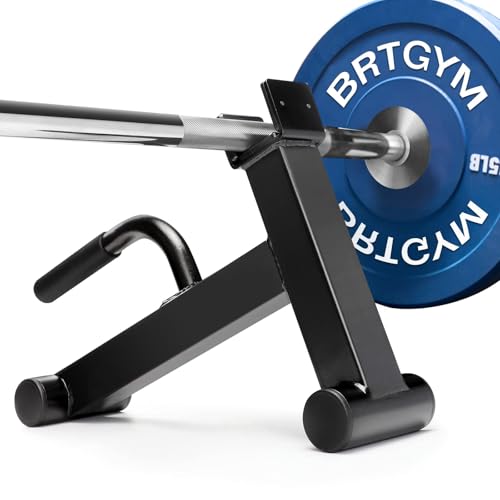
Four of the five picks here are lever jacks: you slide the jaw under the sleeve, push the handle down, and one end of the bar rises a couple of inches. Load that side, lower it, walk to the other end, repeat. It is cheap, it stores in a corner, and it removes the bent-over lift. The cost is two operations per plate change instead of one.
A full stand lifts the whole bar, and costs four times as much
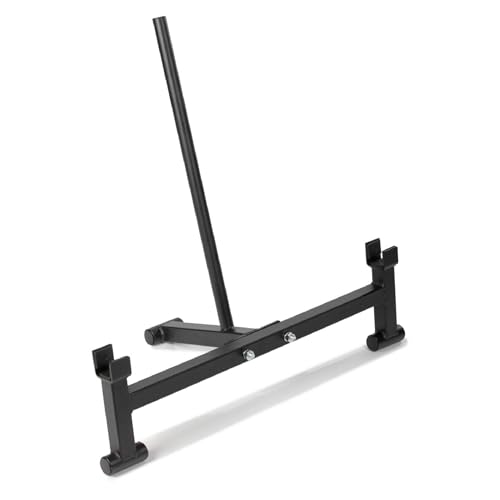
The Titan stand sits under the middle of the bar and raises both sleeves together, so a plate change is one setup. If you train heavy singles and change weight on every set, that difference compounds across a session. It is also the bulkiest thing on this page and needs somewhere to live, which is the honest trade.
Handle length is the spec nobody lists as a spec
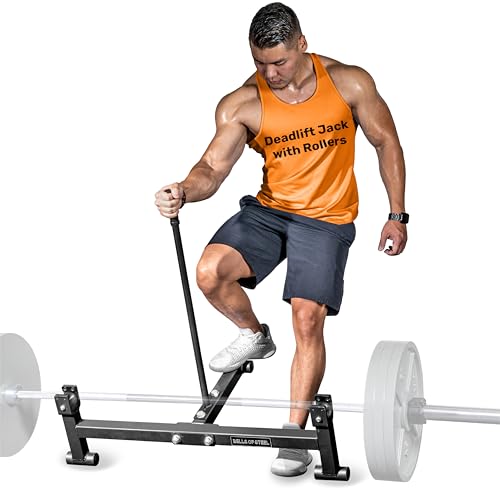
On a lever jack, the handle is the mechanism. The Bells of Steel is explicitly a long-handle design, and that is why it can be pushed one-handed under a loaded bar while a short-handled jack needs a proper shove. If two jacks publish the same capacity and one has a longer handle, the longer handle is the better tool regardless of price.
What a jack does to your bar
Something to weigh that no listing puts in a bullet point: the jaw of a jack rests against your sleeve, and over hundreds of sessions a bare steel jaw marks it. UHMW nylon — which only the Bells of Steel names — is the standard commercial answer, because it is hard enough to carry the load and soft enough not to score the sleeve. If you have spent real money on a bar from best olympic barbell or best powerlifting barbell, the roller material is worth the price difference. Barbell sleeve explained covers what is actually under the jaw, and barbell finishes explained covers which finishes mark most easily.
What the money buys in this category
- Under $40buys a working lever jack with a published 600 lb rating, no assembly and no stated roller material. For a lifter at or under three plates a side, that is the whole job done.
- Around $30 to $40is also where the useful extras live — a PVC-protected base that does not chew a garage slab, a rubber handle that still grips with chalk on your hands.
- Well over $100 buys either a named roller material and real handle leverage, or a full stand that lifts the entire bar. Those are two different upgrades and it is worth deciding which one you actually want before you spend.
If you are putting a deadlift setup together rather than buying one part, best bumper plates and how much does a barbell cost are the two pages that set the budget, and best barbell for deadlifts covers the bar itself.