The published specs, side by side
Every figure below comes from the maker’s own listing. The two rows that decide most purchases are not price — they are bar holders and published capacity.
Read the capacity row first, and read the silence in it. Three of six makers do not publish a capacity figure, which on a waist-high vertical frame loaded with 300 lb of iron is not a trivial omission. It does not make those units unsafe — a plate tree is a simple welded frame and they rarely fail — but when two units cost the same and one commits to a number, the number is worth having.
Vertical tree, horizontal rack, or bolted to the rack?
A vertical tree is the default, and the default is usually right
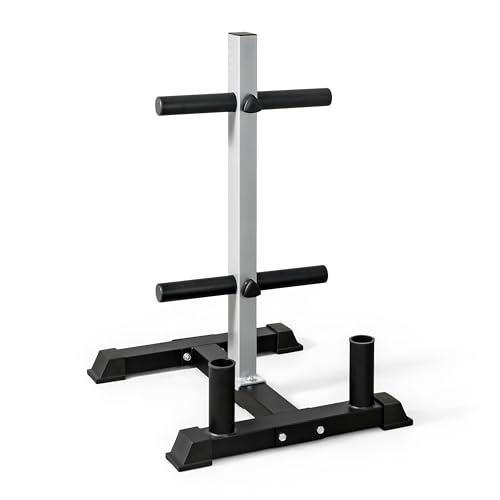
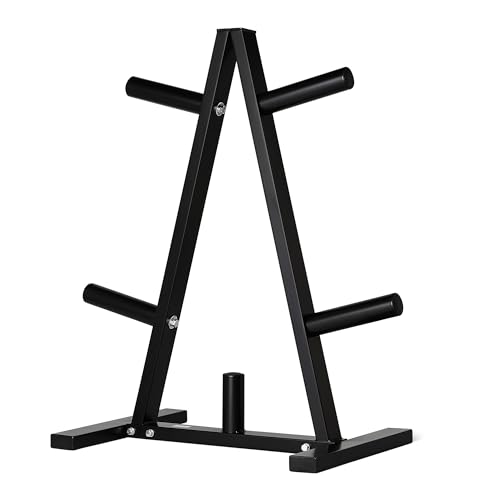
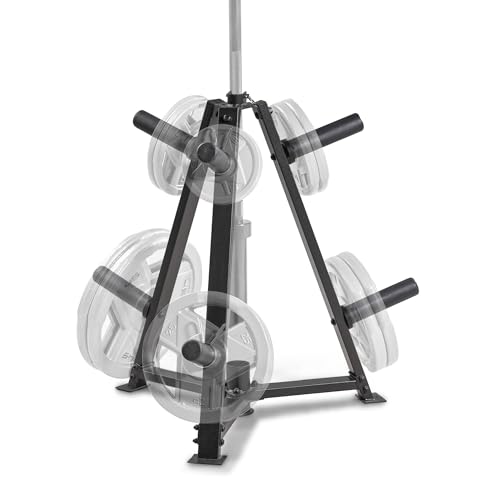
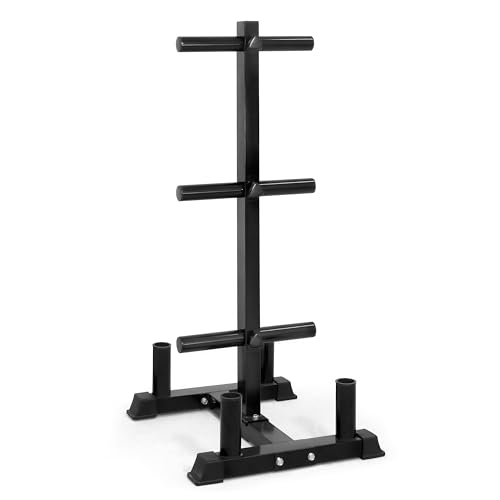
Four of the six picks here are vertical trees: a welded upright with pegs sticking out, plates slid on from the side. It takes the least floor, sorts plates by weight so you grab the right one without reading it, and costs the least. The limitation is loading height — getting a 45 lb plate onto a peg at hip height is a lift, and doing it with bumpers is an awkward one.
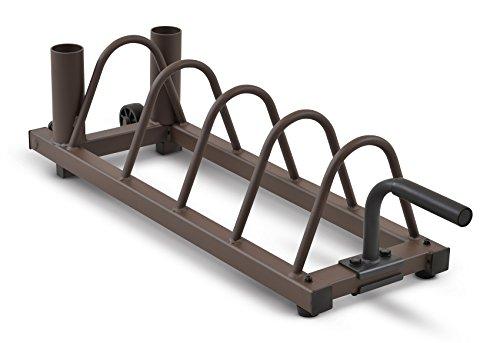
A horizontal rack is the bumper-plate answer
Bumper plates are wide and soft-edged, and a peg presses into the rubber rather than the steel insert. A horizontal rack lets them stand on edge at floor level, so you roll a plate in rather than lift it. The Steelbody is the pick here, and its transport wheels matter more than they sound — a loaded plate rack is one of the heaviest single objects in a home gym. How to store weight plates covers the rubber-and-moisture side, and do weight plates wear out explains what storage actually prevents.
Rack-mounted horns cost no floor, and only work if you own the rack
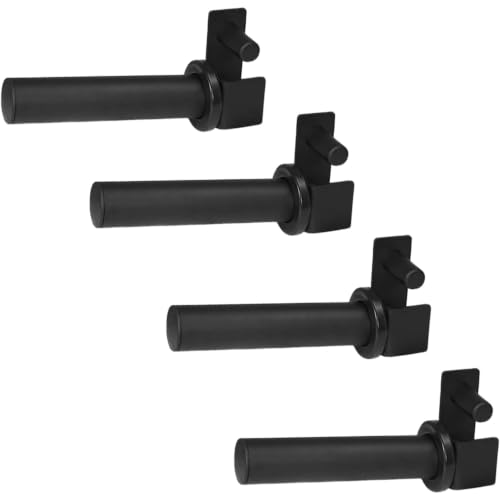
The Yes4All set bolts four plate horns onto 2×2 uprights. It is the only option here with a zerofloor footprint, and it has a useful side effect: plates hung low on the uprights add mass to an unanchored cage and steady it. The catch is fitment. Measure your upright and your hole diameter before you order anything in this class — 2x2 vs 3x3 power rack and are power rack attachments universal exist because this is where people waste money. If your rack is 3×3, this is the wrong part, and weight plate storage on a rack walks through the alternatives.
What the money actually buys
- At the bottom of the range you get a bare vertical tree: posts, a base, no bar holders and no published capacity. That is a complete answer to plates on the floor and nothing more, and for a modest iron set it is enough.
- In the middle you buy bar holders and a stated number. The CAP 4-post at the bottom of this band publishes 440 lb and includes two bar holders, which is why it is the budget pick rather than the cheapest unit here. The Marcy adds a vertical bar holder, which stores a 7-foot bar in almost no floor at all.
- At the topyou buy capacity and bar count — six posts, four holders, 660 lb published. Worth it if you own a full set and more than one bar; over-specified if you own 200 lb and a single barbell.
One honest note on the top pick: 660 lb is more plate than most home gyms own. If your collection is a 160 or 260 lb set from best barbell and weight set, the 4-post tree holds it with room to spare and leaves the price difference in your pocket.
What to check before you buy
Plate diameter and insert size. Everything on this page is built for 2-inch Olympic plates. If you run 1-inch standard plates, none of these pegs fit and 2 inch vs 1 inch weight platesexplains why the two systems do not mix.
Where it will actually stand. A vertical tree wants a wall it can sit against; a horizontal rack wants a run of floor and clearance to roll. Measure the gap you intend to fill before you choose an orientation, not after.
Whether a bar holder is doing double duty.Standing a barbell vertically puts its full weight on one sleeve end. That is fine for an unloaded bar in storage and not fine for a loaded one — how to store a barbell covers the right way round, and how to prevent barbell rust covers what storage is really protecting against in a garage.