Step one: pick the form
This is the whole decision. All five picks are magnesium carbonate; what changes is how it reaches your hands and what it leaves behind. Pick the column whose downside you can live with in your room.
Most home lifters should own two: a bulk block for the garage and a small liquid bottle for anywhere else. Together that is under thirty dollars at the prices we see, and it covers every room you will lift in.
Why we rank chalk on price per ounce
Chalk marketing is unusually aggressive for a mineral that costs cents to mine. Brands talk about purity, grain, blend and “lab-grade” formulations, and the honest position is this: we have no way to verify a purity claim, and neither does any other site telling you one chalk grips better than another. Nobody is running X-ray diffraction on a chalk block. What we can verify is what the maker publishes, what the format is, and what an ounce costs today.
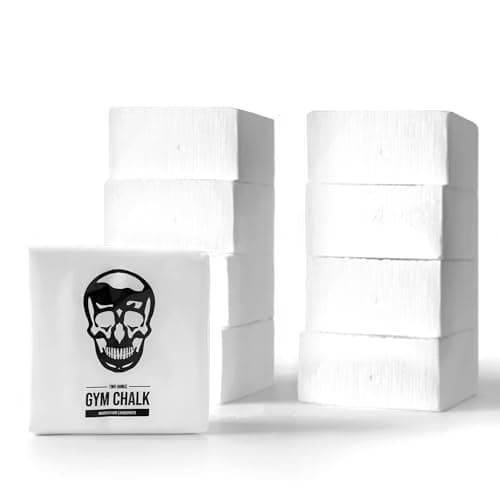
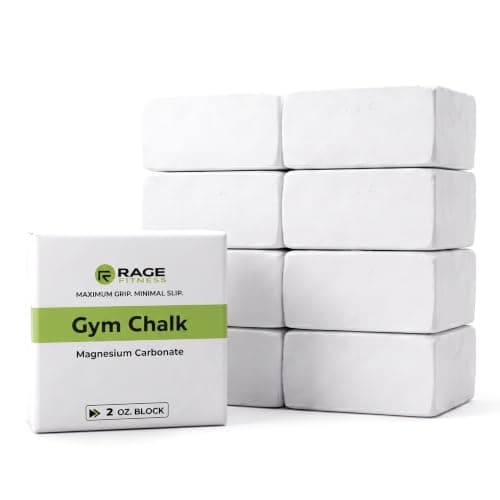
That last number is where the real decision lives. At the prices resolved for this page on October 28, 2026, the bulk 8 lb pack worked out near eleven cents an ounce, while the branded 2 oz block pack landed above a dollar an ouncefor the same compound. Liquid is more expensive again per unit of chalk delivered, because you are paying for the carrier and the bottle. None of that makes the expensive options wrong — portability and mess control are real, and a 50 mL bottle you can take to a commercial gym is worth more than eight pounds of block you are not allowed to open there. It just means you should know what the premium buys.
Live prices move, so treat those figures as the arithmetic rather than the quote. The price shown on each pick below is the current one from our daily price check.
What is actually in gym chalk
Lifting chalk is magnesium carbonate(MgCO₃), not the calcium carbonate of classroom blackboard chalk. It works by absorbing moisture from your skin, which is why it is a near-perfect answer to sweaty hands and close to useless for a grip that is failing on load alone. The gymnastics, climbing and lifting versions are the same mineral; the differences are grain size and whatever else a maker adds.
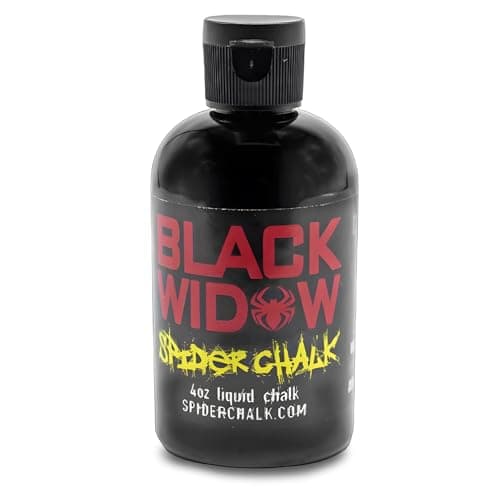
Two additives are worth knowing about. Drying agents and alcohol appear in liquid chalk as the carrier — that is what flashes off and leaves the coating, and it is also why liquid chalk dries skin out more than block chalk does. Pine rosin is the other, and it is the one additive that genuinely changes behavior: rosin is tacky rather than drying, which is why strongman competitors use it on axles and why Spider Chalk publishes it in the Black Widow formula. If your problem is a mixed-grip bar rotating out of your fingers rather than sweat, rosin is the thing to look for on the label.
Anything marketed as “chalk” with no magnesium carbonate in it at all is a grip enhancer, not chalk, and it is a different product with a different feel. We have not ranked any here.
Chalk and your bar: the part nobody mentions
Chalk is not free for the barbell. Magnesium carbonate packs into the knurl, and once it is packed in, it holds moisture against the steel. On a raw steel or black oxide barthat is the single most common cause of rust in a home gym — not humidity on its own, but chalk plus humidity sitting in the diamonds for a week.
The fix is a nylon brush and thirty seconds, not a product. Brush along the knurl after a chalked session, wipe the shaft, and leave it. Our how to clean a barbell guide has the routine, and how to prevent barbell rust covers the storage side. If you chalk heavily and hate maintenance, this is a real argument for a stainless or Cerakote shaft next time you buy a bar.
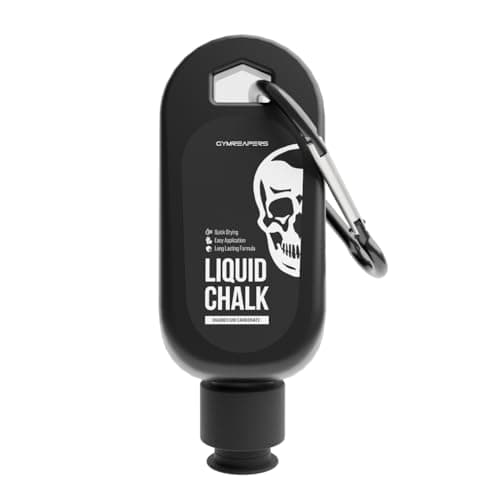
Liquid chalk is easier on the knurl than block chalk, because far less of it ends up in the pattern — another reason to keep a bottle around even if the bulk block is your default.
How much chalk does a home gym actually use?
Less than the bulk pack implies, which is the honest caveat on our top pick. A lifter chalking up for heavy sets three or four times a week is using a small fraction of a 1 lb block a month. Eight pounds is genuinely a multi-year supply for one person, and the right way to think about the Rage pack is a one-time purchase that ends the chalk question rather than a consumable — or a sensible split with training partners.
Chalk does not expire in any practical sense. Keep it dry and sealed; a block left open in a damp garage will absorb moisture and go clumpy, which is a storage failure rather than a shelf-life one. A plastic tub with a lid solves it permanently.
Keeping the mess manageable
Four habits that do more than any product choice:
- Chalk over a container, not over the floor. A cheap plastic bin or a chalk bowl catches almost everything that would otherwise land on the mat.
- Use less than you think. A thin, even coat grips better than a thick one. Caked chalk crumbles under pressure and reduces contact rather than improving it.
- Keep a brush at the rack. Thirty seconds on the knurl after the last set protects the bar and keeps the chalk from migrating onto everything else.
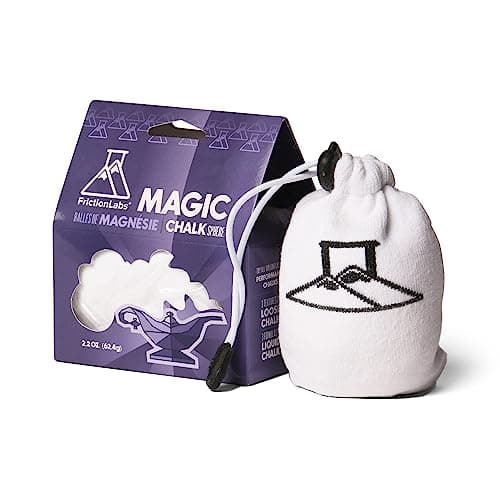
- Buy a sock for the shared room. If chalk dust is a household negotiation, the ball format is the compromise that usually ends it.
When chalk is the wrong purchase
Three cases, and we would rather say so:
- Your gym bans it. Plenty of commercial gyms do, and a block in your bag is an argument you will lose. Buy liquid, which is tolerated almost everywhere.
- Your grip is failing on load, not sweat. Chalk does nothing for fingers that are simply opening at 90% of a max. Straps are the tool for that, and a hook grip is the free version.
- The bar is the problem. A worn, slick, mildly knurled bar fights you with or without chalk. Barbell knurling explained covers what you are gripping, and our deadlift bar picks are the upgrade path.
Sources
- Availability, current price and the exact listing title for all five picks — resolved live through the Amazon Creators API (
getItems) on October 28, 2026. All five returned “In Stock” with a live price. Quantities, fill weights and bottle sizes quoted above are the ones stated in those listings. - Spider Chalk Black Widow published formula (“100% pure, laboratory-grade magnesium carbonate mixed with pine rosin and proprietary bonding agents”) and manufacturing location (Atlanta, Georgia), from the maker’s product documentation as reproduced in Rogue Fitness’s product guide for the Black Widow, checked October 28, 2026 at support.roguefitness.com. That document lists Black Widow in a 4 oz bottle; the Amazon listing states no size, which is why the pick above flags it.
- FrictionLabs Magic chalk ball fill weight (2.2 oz / 62 g), refillable cotton-sock construction with no plastic hardware, and the maker’s high-purity magnesium carbonate claim, from FrictionLabs’s own product page, checked October 28, 2026 at shop.frictionlabs.com.
- Composition claims for the Rage Fitness, Gymreapers block and Gymreapers liquid picks are the makers’ own, as stated on their Amazon listings. Neither Gymreapers product publishes a full ingredient breakdown, which the picks above say explicitly rather than filling in.