Step one: pick the strap type
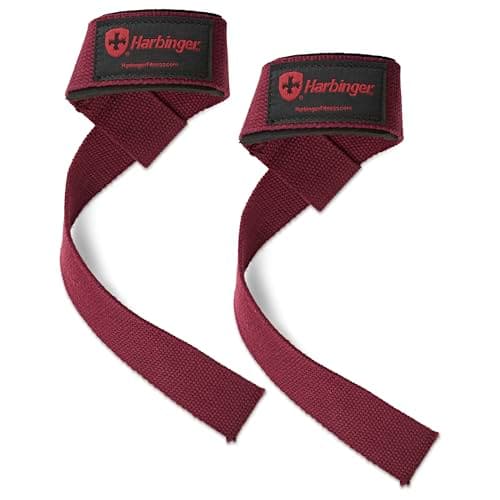
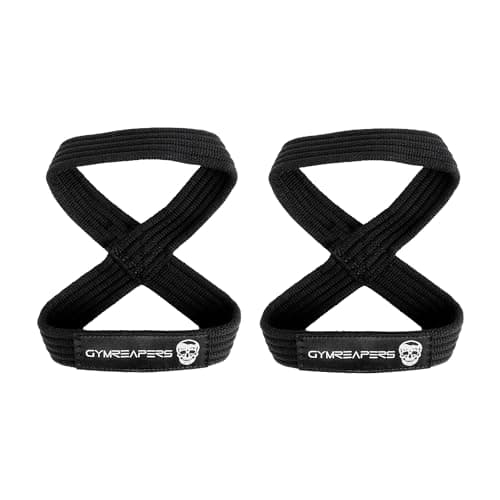
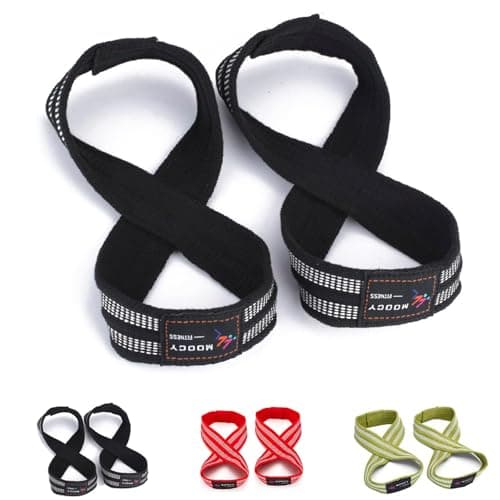
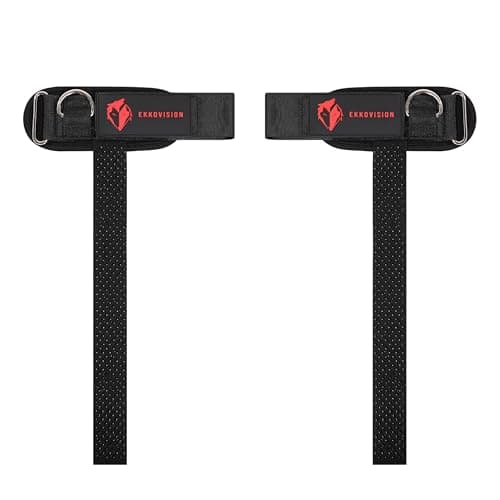
This is the entire decision. The price spread across all five picks here is about fifteen dollars, so you are not really choosing on money — you are choosing a mechanism. Pick the column whose limitation you can live with.
One rule from that table is not negotiable: never use a figure-8 on anything you may need to drop. No overhead work, no cleans, no snatches, nothing where the bar can come back at you. A closed loop means the bar is attached to your wrists, and that is precisely the property you want on a deadlift and precisely the one that makes it dangerous overhead.
Step two: length, if the maker will tell you
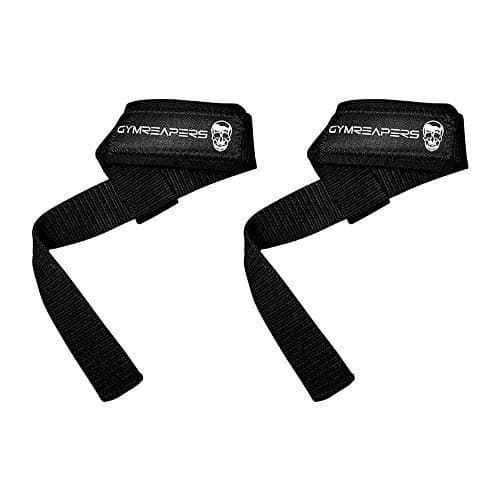
For a lasso strap, tail length is the spec that decides whether the strap works on your bar. You need enough tail to take two full wrapsaround the shaft; one wrap slips, and three is usually more than there is room for. On a 28 mm bar, roughly 18–24 inches is the useful band — and only one strap in this lineup publishes a figure. The Gymreapers lasso states 18 in. Harbinger publishes 21.5 in × 1.5 in for the same strap in its black colorway but not on the one we price here, so we have marked it as not published rather than borrowing the number. Everything else in the category is silent.
If you train with a thicker bar — a 29 mm power bar, or the 32 mm handles on a trap bar— a longer tail matters more, because the same wrap eats more strap. See barbell shaft diameter explained for why that difference is larger than it sounds.
Step three: material and padding
Cotton vs nylon webbing
Cotton is softer, grips the bar slightly better and is what most of this category uses. It also absorbs chalk and sweat, so it stiffens over time and eventually wants washing. Nylon webbing is stronger and slicker; it lasts longer and slides more. Neither is a durability problem at home-gym loads — this is a feel preference, and cotton wins it for most people.
Wrist padding
Visible in any product photo and genuinely worth having. An unpadded strap concentrates the entire load on a narrow band across the back of your wrist, which at a near-max pull is the thing that makes you let go. Both Gymreapers straps and the Harbinger use a foam or neoprene wrist section; the Ekkovision cuff is essentially all padding.
What nobody publishes
Worth stating plainly, because it is the honest shape of this category: not one maker here publishes a breaking strength, a webbing weight or a stitch specification, and four of the five publish no length. So a page that ranks straps on a tidy spec table is inventing it. What we can do is rank on type, on the one published length, on visible padding and on brand track record — and tell you where the blanks are.
Straps, chalk, or neither?
These are not competing products; they solve different halves of the grip problem.
- Chalk fixes sweat. If the bar is slipping because your hands are damp, chalk is the answer and straps are overkill. It also costs almost nothing.
- Straps fix load.If your hands are dry and your fingers are simply opening at 500 lb, no amount of chalk helps. That is what straps are for.
- A better knurl fixes both, partly.An aggressive knurl holds a dry hand far better than a passive one, which is why heavy deadlifters buy bars with bite — see aggressive vs passive knurling and best barbell for deadlifts.
- A hook grip fixes it for free and hurts for about six weeks. It is the Olympic-lifting answer, and it does not work with straps on at all.
If you own a slick chrome bar with a mild knurl and are reaching for straps on moderate weights, the honest diagnosis may be the bar rather than your hands. Barbell knurling explained covers what you are actually gripping.
How to use a lasso strap, in four steps
Most complaints about straps slipping are setup errors, and this takes one session to learn:
- Loop the strap over your wristwith the tail hanging down the palm side, toward your fingers. Pull the loop snug — a loose wrist loop is the usual reason a strap unwinds.
- Feed the tail under the bar and wrap it toward you, around the shaft, in the direction your fingers close. Wrapping the wrong way means the strap unwinds as soon as you pull.
- Take two wraps if the tail allows it, then roll the bar back toward you so the wrap tightens on itself.
- Close your hand over the wrap and squeeze. The strap is not replacing your grip in that position; it is backing it up.
When straps are the wrong purchase
Three cases, and we would rather say so than sell you a pair:
- You deadlift under about 300 lb. Your grip is still an easy training win at that point, and strapping early gives it away.
- You compete in a federation that bans them. Straps are not permitted in sanctioned powerlifting, so a trained-with-straps deadlift is not a meet deadlift.
- Your real problem is the bar. A slick knurl and a damp hand is a chalk-and-knurl problem, not a strap problem.
And if you are buying accessories generally, the two that we think beat straps for most home gyms are a proper pair of collars and, if you hip thrust, a square barbell pad.