The four things that actually differ
Read this before the price. Construction decides whether a pad suits you; the price mostly follows from it.
Why a pad rolls, and what actually fixes it
This is the complaint that brings people to a page like this one. You set up for a hip thrust, get the bar over your hips, drive, and the pad rotates around the bar so the padding ends up somewhere other than between the steel and your hip bones. It is not a defect. It is geometry: a round pad on a round bar is a cylinder on a cylinder, and the only things stopping it turning are friction and your hands.
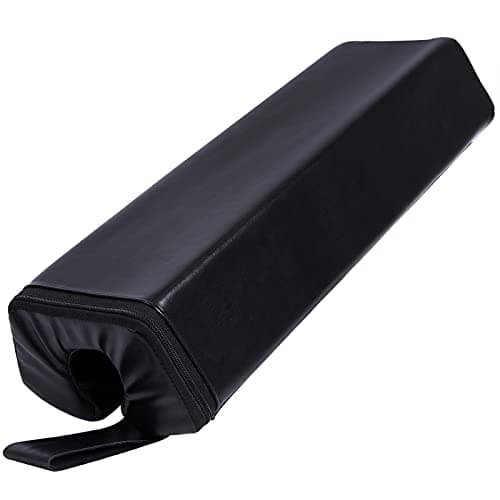
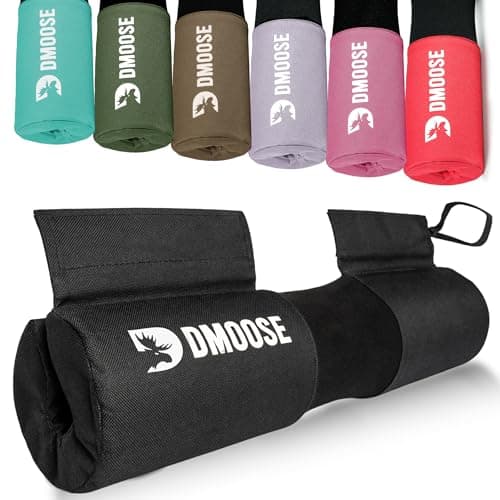
Three constructions fix it, in ascending order of effort. A square pad cannot roll, because a flat base on a flat bench or a flat floor has nowhere to go — this is the real reason square pads exist, and why one sits second on this list. A hook-and-loop wrap cinches the pad to the shaft so it turns with the bar instead of around it. Straps do a weaker version of the same thing. A plain round sleeve relies on friction alone, which is fine for a squat where the bar is pinned against your back and genuinely marginal on a heavy thrust.
One thing that does not fix it: more foam. A thicker soft pad has further to roll and a larger lever arm, so a 2-inch sponge pad can be less stable than a 1-inch firm one. If stability is your problem, change the format, not the thickness.
Thickness and foam: the specs nobody publishes
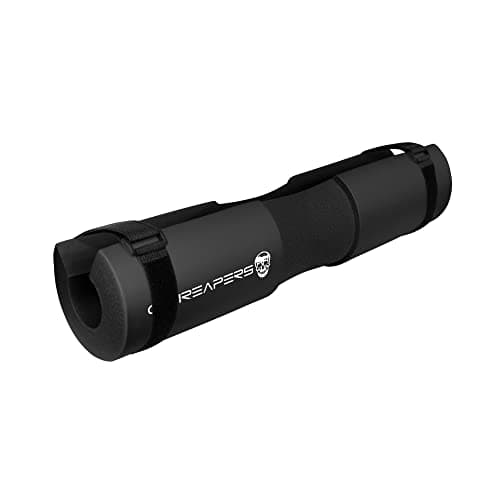
Only Gymreaperspublishes a thickness — 1.3 inches (3.3 cm) of neoprene. Everybody else sells “extra thick” padding without saying thick compared to what. That is the single biggest reason the Gymreapers pad leads this list: it is the only pick where you know in advance how much material is going between a loaded bar and your pelvis.
Foam type matters more than most buyers expect, and two makers here name it. Neoprene and EVA are closed-cell foams: they are firmer, they spring back, and they do not drink sweat. Plain open-cell sponge— what the cheapest pads use, when they say anything — is softer and more comfortable empty, and it compresses further under load and absorbs everything you sweat onto it. For a pad that will take a few hundred pounds across its middle, firmer is usually the better answer even though it feels worse in the hand in the shop.
The practical reading: on a lightly-loaded bar, soft sponge is pleasant and the cheap pad is genuinely fine. As the load goes up, soft foam bottoms out and you end up feeling the bar through it anyway, which is when a firm closed-cell pad starts to earn its extra money. Nobody publishes the crossover point and we are not going to invent one.
Will it fit your bar?
Three of the five pads here state that they fit both 1-inch standard and 2-inch Olympic bars; one is listed for Olympic bars only; one publishes no fitment at all. None publishes an inside diameter as a figure, which is the number you would actually want.
In practice, a pad is sized around the shaft, not the sleeve — so a 28 mm or 29 mm barbell shaft is what it has to slide over, not the 2-inch loading sleeve. See barbell shaft diameter and barbell dimensions for what those numbers mean. Where fit genuinely gets awkward is on specialty bars with fatter or oddly shaped shafts, and on bars with a center knurl, where the knurled band chews at the inside of a soft sleeve over time. A hook-and-loop wrap handles all of that better than a fixed-bore sleeve, which is the main argument for the Dark Iron pad even though it publishes the least.
A pad for squats is a different decision
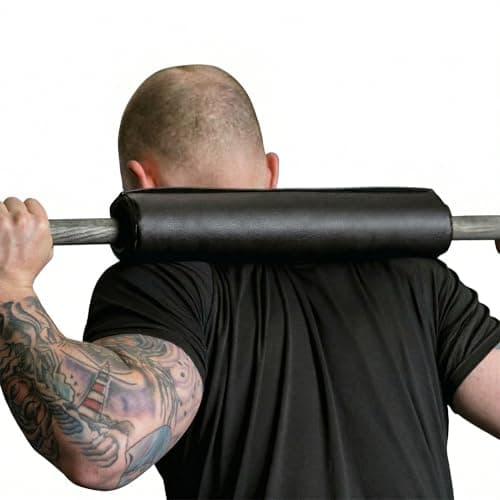
Most of these products are sold as “squat pads” and we should be straight about that use. Padding a bar for a back squat does two things you may not want. It raises the bar off your back, which shifts the load line slightly forward and changes the balance of a lift you have spent months grooving. And it removes the friction that holds the bar in place — the exact job a center knurlexists to do — so a padded bar is more likely to slide down your back, not less.
Pads are also not permitted on the bar in sanctioned powerlifting, so if you are training toward a meet you will eventually have to squat without one. None of that makes a pad wrong: if the bar on bare traps genuinely hurts and the alternative is not squatting, use the pad and get on with it. But the honest ranking of fixes for a painful back squat is bar position first, then shirt, then pad— and if the problem is a dedicated power bar’s knurl, read aggressive vs passive knurling before buying foam. Where a pad is unambiguously the right tool is the hip thrust and glute bridge, where a loaded bar sits directly on your pelvis and there is no technical fix available.
How much to spend
This is a cheap category and it should stay one. The spread here runs from roughly ten dollars to roughly twenty-five, and the money buys construction rather than material: a published thickness, a flat base, a closure. Nobody needs to spend more than the top of this range, and there is no premium tier worth chasing — a $60 pad is a $20 pad with branding.
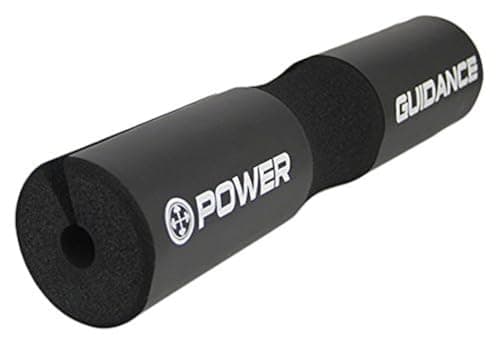
Our honest guidance: if you hip thrust heavy, buy the square pad or the Gymreapers and stop thinking about it. If you want a pad for occasional squats and the odd bridge, the budget POWER GUIDANCE sleeve is genuinely enough, and the money you did not spend is better put toward the thing most hip-thrust setups are actually short of — a bench that does not slide. A pad cannot fix an unstable bench, and do I need a weight bench is the page to read if you are still thrusting off the floor. For the bench side of the same setup, best bench for hip thrustsranks on the mass that stops a bench sliding — and are barbell pads worth it makes the case for and against before you buy one at all.