These are two takes on the same bar: a 20 kg, dual-marked, do-everything barbell that is deliberately not a power bar — and the one line that separates them is the sleeve. Rogue publishes the Ohio Bar as a 28.5 mm shaft at 190,000 PSI on bronze bushings, with dual knurl marks, no center knurl and a 16.40″ loadable sleeve. Force USA publishes the Gunner as a 28 mm shaft at 235,000 PSI on five needle bearings per sleeveover stainless steel bushings, with dual IPF and IWF marks, a 1,500 lb static rating and a 16″ loadable sleeve. Everything else on those two sheets is close enough to ignore.
So the decision is not “which bar is better.” It is do you clean and snatch, or not. Bushings are the simpler, longer-lived mechanism and they are plenty for squats, presses, rows and deadlifts. Needle bearings keep the sleeve turning while your hands rotate under the bar, which is the entire point of a bar you catch overhead. Bushing vs bearingis the guide to read if that distinction is new to you — it is the only line in the table below that will change a session.
One practical note before the specs: neither bar is an Amazon purchase. The Ohio Bar is sold direct by Rogue. Force USA publishes $269 for the Gunner and points notes that the bar is available in its retail locations, so confirm how it ships to you before you plan around it. We earn nothing on either, which is why the last section of this page is the honest one: the bars you can order today that make each of these two choices, with live prices as of October 21, 2026.
The specs, side by side
Every figure below is published by the maker. Where a maker publishes nothing, the cell says so instead of carrying an estimate.
The sleeve is the whole comparison
Two bars this closely matched on dimensions come down to one mechanical choice, and here it is a clean split. The Ohio Bar runs bronze bushings: a sleeve rotating on a pressed bronze sleeve-within-a-sleeve. It is the simplest rotating assembly in barbells, there is very little in it to fail, and the spin is smooth and controlled rather than fast. For squats, bench, deadlifts, rows and strict presses that is exactly right — a bar that spins hard under a bench press is doing nothing for you.
The Gunner runs five needle bearings per sleeve, seated with stainless steel bushings. Needle bearings cut rotational friction far harder than a bushing can, which matters in precisely one place: the moment in a clean or a snatch when your hands whip around the bar and the sleeves need to keep turning so the loaded plates do not fight your wrists. If you do those lifts, a bearing sleeve is not a luxury item — it is the difference between the bar helping and the bar resisting. If you never do them, you are paying for spin you will not use, and you have added ten more bearings that can eventually grit up in a garage.
That is the honest frame for this comparison. Rogue built a bar for the lifter who does a bit of everything and mostly lifts heavy and slow. Force USA built one for the lifter who does a bit of everything and wants the Olympic lifts to feel right too. Neither is a mistake, and no amount of tensile strength will convert one into the other.
Where the Gunner genuinely wins: published numbers
Set the spin aside and the Gunner’s spec sheet is simply more complete, which is worth something on its own. Force USA publishes a 1,500 lb static weight rating, a ±1% weight tolerance and a ±0.25 mm straightness tolerance. Rogue publishes none of those three on the standard Ohio Bar.
Manufacturing tolerances are the part worth noticing. A weight tolerance tells you how far the actual bar may sit from 20 kg, and a straightness tolerance tells you how much runout the factory will accept before a bar is rejected. Almost nobody at this price publishes either figure, and a maker that prints them is a maker that is measuring them. It is not proof of a better bar, but it is the kind of disclosure we weight heavily — the same reason a published capacity rating counts for more than a photograph of someone deadlifting.
The 235,000 PSI tensile figure against Rogue’s 190,000 PSI, on the other hand, is the least useful line in the table. Tensile strengthdescribes the stress the steel takes before it deforms permanently, and both numbers sit far beyond anything a 28 mm bar will see in a home gym. What you actually feel — whip, stiffness, how the bar settles at the top of a squat — comes from diameter and length, and these two bars are half a millimeter apart. Treat the number as a disclosure signal, not a ranking.
Diameter, knurl and finish
28 mm against 28.5 mm.The Gunner sits on the IWF men’s weightlifting diameter, which is the friendlier shaft for a hook grip and for smaller hands. The Ohio Bar is deliberately half a millimeter above it — Rogue’s stated middle ground between an Olympic bar and a 29 mm power bar. Both are sane all-round diameters; 28 mm vs 29 mm covers what actually changes as the shaft gets thicker.
Knurl marks are a draw.Both bars carry dual marks — Rogue describes them as Olympic plus power, Force USA as IPF plus IWF. Same idea: reference rings for both lift families on one shaft, so you are not eyeballing your grip width. See knurl marks explainedfor what each ring set means. Neither maker publishes a knurl aggressiveness figure, because no such figure exists; Force USA calls its pattern “standard,” which is as much as anyone can tell you in a spec table.
Finish is the Gunner’s weakest line. Force USA publishes black zincon both shaft and sleeves. Zinc is a real coating and it is not expensive, but it is the softest of the common barbell finishes — it will show wear in the knurl and at the sleeve ends faster than hard chrome, Cerakote or stainless. Rogue’s Ohio Bar finish is the one spec we have not sourced for this comparison, so the table leaves it blank rather than guessing; check the listing for the version you are actually buying. Barbell finishes explained ranks the coatings by how they age in a humid garage, which is the only context that matters for a home gym.
Which one should you buy?
- You clean, snatch or do CrossFit-style work. The Gunner. Five needle bearings per sleeve is a real functional advantage for lifts you catch, and bushings cannot be made to behave like bearings.
- You squat, bench, press and deadlift.The Ohio Bar. The bushing sleeve is the right mechanism, the 28.5 mm shaft is marginally the stiffer feel of the two, and you are not paying for spin you never use.
- You want the most disclosed spec sheet at the price.The Gunner, clearly — static rating plus both manufacturing tolerances, which Rogue does not publish on this bar.
- You want a bar that still looks new in three years. Neither sheet settles it, but black zinc is the softer of the common coatings, so check what finish the Ohio Bar version you are looking at actually carries before you treat this as a tie.
- You only lift heavy, slow and center-knurled.Neither. A dedicated power bar is the right purchase — read Olympic vs powerlifting barbell first.
The buyable bars that make the same choices
Both of the bars above are direct purchases we earn nothing on. These three are the Amazon-available bars we rank that take the same design positions — a 28.5 mm bushing all-rounder on one side, a needle-bearing bar for the Olympic lifts on the other. None of them is a Gunner or an Ohio Bar and we will not pretend otherwise, but each publishes real numbers on its listing. Prices live as of October 21, 2026.
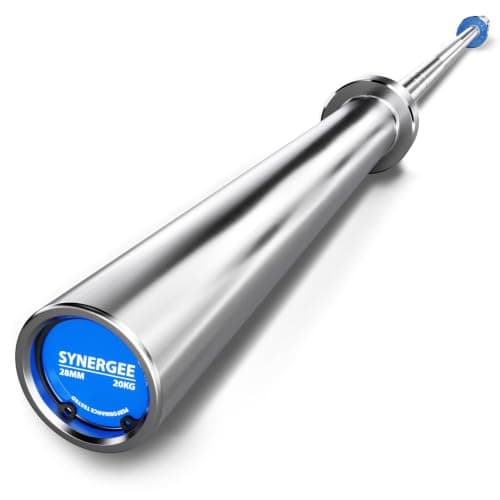
Synergee Regional 20 kg Barbell (Hard Chrome)
A hard-chrome 20 kg all-rounder rated to 1,500 lb — the sensible middle bar for a lifter who does a bit of everything and doesn't want to overthink it.
#ad · Price as of October 21, 2026 · Affiliate disclosure
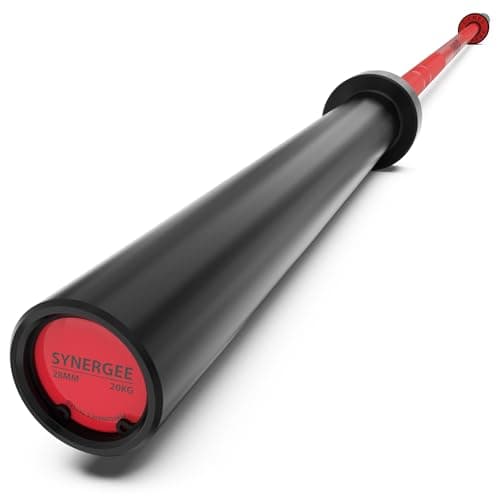
Synergee Games 20 kg Barbell
A ceramic-coated 20 kg bar rated to 1,500 lb with needle-bearing-smooth spin — the value pick for anyone who does cleans, snatches or CrossFit-style work.
#ad · Price as of October 21, 2026 · Affiliate disclosure
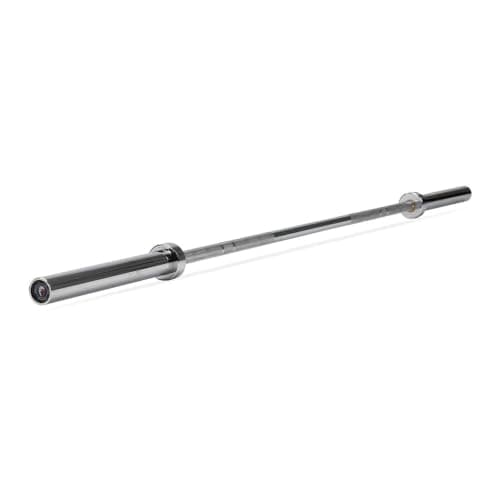
Titan Fitness Performance Series Olympic Bar
A 28mm, 700 lb-rated Olympic bar with bronze bushings and a medium volcanic knurl — the most bar you can put under mixed training at this price.
#ad · Price as of October 21, 2026 · Affiliate disclosure
The Synergee Regionalis the Ohio Bar analogue: a 28.5 mm hard-chrome shaft on bushings with dual marks and no center knurl, rated to 1,500 lb — the same decisions, in a harder-wearing finish, for a fraction of the money. The Synergee Games bar is the Gunner analogue and matches it where it counts: ten needle bearings, five per sleeve, on a ceramic-coated 28 mm shaft also rated to 1,500 lb. The Titan Performance Seriesis the cheaper middle road — 28 mm, bronze bushings, dual marks, 700 lb — and it is the bar we send most first-time upgraders to. Full rankings sit in best Olympic barbell, and best barbell for CrossFit narrows the field to bearing bars if the spin is what brought you here.
If the brand-direct price is the sticking point rather than the specs, are expensive barbells worth it works through what the premium actually buys, and are Amazon barbells any good is the test we apply before any bar gets onto a list here.
The short version
Same category, same bar weight, same dual marks, and a genuine split on one component. The Rogue Ohio Baris 28.5 mm, 190,000 PSI, bronze bushings, no center knurl, 16.40″ loadable. The Force USA Gunneris 28 mm, 235,000 PSI, five needle bearings per sleeve, 1,500 lb rated, 16″ loadable, 86.6″ long, black zinc, with published weight and straightness tolerances at $269. Buy the Gunner if you turn your hands over under a loaded bar; buy the Ohio Bar if you do not. And if neither is worth brand-direct money to you this month, the three bars above make the same two choices and ship from Amazon.
Sources
- Force USA published Gunner Barbell specifications (86.6″ / 2,200 mm overall, 45 lb / 20 kg, 28 mm grip diameter, 16″ / 410 mm loadable sleeve, dual IPF / IWF knurl marks, black zinc shaft and sleeves, stainless steel bushings, 5x needle bearings per sleeve, 1,500 lb / 680 kg static rating, 235,000 PSI tensile, ±1% weight tolerance, ±0.25 mm straightness, $269) — fetched October 14, 2026 from forceusa.com. Force USA does not publish a center knurl specification for this bar.
- Rogue Fitness published Ohio Bar specifications (28.5 mm shaft, 190,000 PSI, dual knurl marks, no center knurl, bronze bushings, 16.40″ loadable sleeve, 20 kg) — roguefitness.com, as compiled for our Ohio Bar vs Ohio Power Bar comparison.
- Specifications for the three Amazon-available alternatives come from each manufacturer’s own listing, with availability and price resolved through the Amazon Creators API. See our methodology for how every figure on this site is sourced.