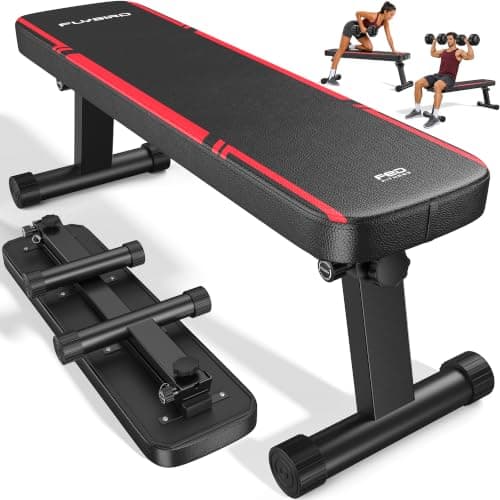
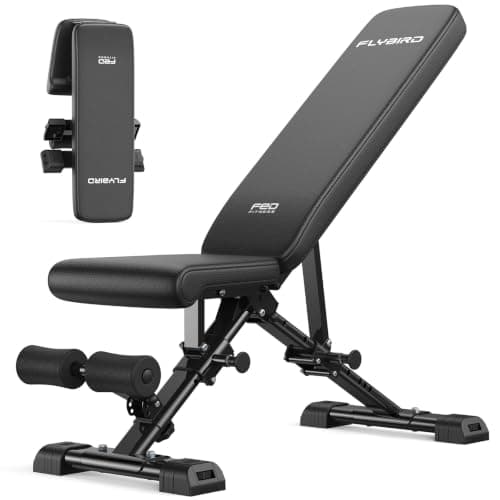
Step one: which class of bench is your gym actually asking for?
Three classes, and the right one follows from what you train rather than from your budget. Read the row that matches your week.
If that table leaves you between the last two columns, read flat vs adjustable bench and what is an FID bench. If it leaves you wondering whether you need a bench at all, do I need a weight bench makes that case in both directions.
Who each pick is for
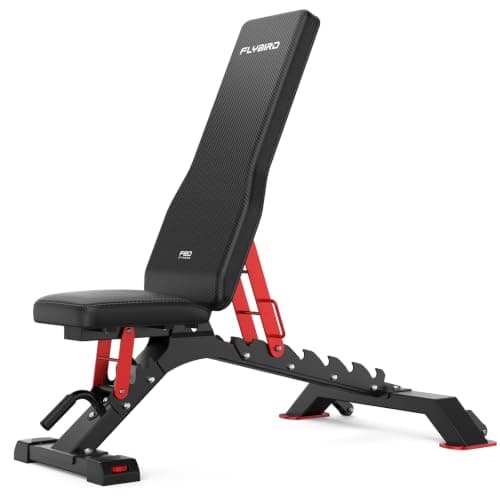
- FLYBIRD WB5— for the lifter buying their only bench. 800 lb rated, 90° to −30°, 30″ extended backrest, folds flat. The default right answer for a shared garage.
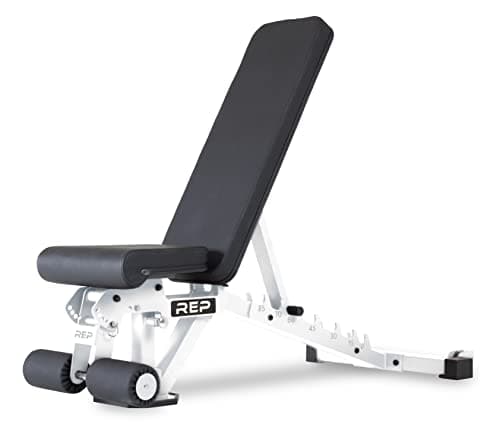
- REP AB-3000— for the lifter who presses heavy and wants a strength brand behind the bench. Foldable FID with a noticeably heavier frame than the sub-$150 benches; REP publishes no capacity figure for it, which we mark rather than guess.
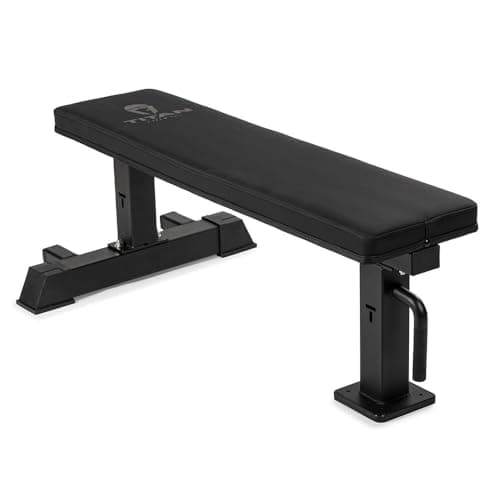
- Titan Elite Series flat bench— for the lifter who only benches. 1,000 lb, 17″ pad height, a 48″ × 12″ pad 2.5″ thick, 56 lb of 11-gauge 2×3 and 3×3 tube. Buys stability instead of angles.
- FLYBIRD WB7— for the tall lifter. A 34″ extra-long backrest and a 1,300 lb rating; the longest supported surface on this page, which is the spec that runs out first over about 6′2″.
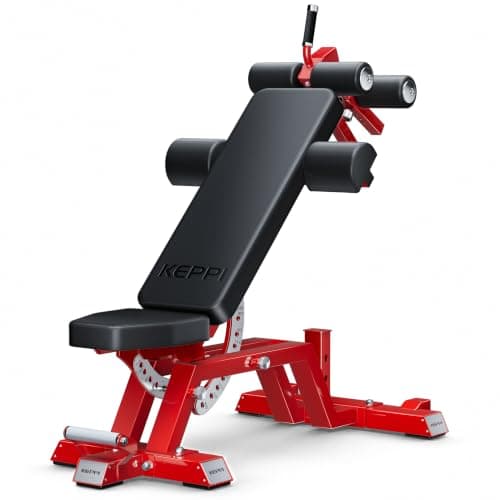
- Keppi Bench6000— for the lifter whose bench is the weak link. 97 lb of Q235 frame, 1,500 lb rating, a 2.75″ pad at a 17″ IPF height, 11 backrest and 8 seat positions, and it still stores upright in about 3.5 sq ft.
- FLYBIRD foldable flat bench— for the smallest rooms. 1,000 lb rated, a 45.3″ pad 3″ thick on a flared trapezoid base, ships pre-assembled, and the listed weight is about 19 lb — which is both why it stores anywhere and why it is the lightest bench here.
The published numbers, side by side
Every figure below comes from the maker’s own listing. Blank is not a zero — it is a maker who does not publish that spec, which is itself useful information when you are spending a few hundred dollars.
Step two: size it to the room before you size it to your bench press
Pad height is the spec to check first
A bench that is too tall takes your heels off the floor, and a press you cannot brace is a press you cannot load. The competition range is roughly 17–18 inches to the top of the pad, which is why both benches here that publish a height publish 17″. Shorter lifters should treat anything above that range as a real problem rather than a detail. Measure your inseam against the number, not against a photograph — and if you already know you sit between sizes, pad thickness and width explains how the pad changes the effective height.
Then the footprint, folded and unfolded
Three of these benches fold flat and the Keppi stores upright in about 3.5 sq ftdespite weighing 97 lb. That matters more than it sounds: a bench that lives in the walkway gets moved twice a session and eventually gets moved out. If your rack and your car share a garage, put folded footprint above capacity in your ranking. Reading the bench roundups is not a substitute for measuring: get a tape out, mark the bench footprint on the floor, then walk the route from the door to the rack. How heavy is a weight benchcovers the other half of that question — whether you can move it once it is built.
And check it clears your uprights
If you bench inside a rack, the bench has to fit betweenthe uprights with room for your hands, and the pad has to sit under the bar path. A 12″-wide pad inside a 45″-wide cage is never the problem; a wide FID base with a seat-adjust lever can be. Our bench press in a power rack guide covers the geometry, and what size power rack do I need handles it from the rack side.
Where to spend, and where not to
Spend on frame mass and pad geometry. Those are the two things you feel under a heavy press and the two things a cheap bench cannot fake — which is exactly why the benches that publish a frame weight (56 lb, 76 lb, 97 lb) are the ones that feel planted. Do not spend on capacity above about 800 lb: your bodyweight plus your bench press is the real load, and almost nobody at home is near 800. Do not spend on position counteither, unless you can name the angles you will use; eleven backrest positions are worth nothing if you press flat and incline. If your current bench wobbles rather than being under-rated, the fix may be free — see how to stabilize a wobbly bench.
One honest caveat on the folding benches: a hinge and a pin are two more joints than a single rigid post has, and every joint is a place a bench can develop play over years of loading. That is the trade for the floor space, and for most home lifters it is the right trade — just know you are making it. If you are not, the flat-bench picks here are the answer, and best flat bench ranks that class in full.