Yes, you can squat with a trap bar, and it is a genuinely useful movement— stand inside the frame with a narrower stance, take the handles, and sit down and up with your torso upright. It is one of the few ways to load a squat pattern meaningfully with no rack, no safeties and no spotter, because if a rep goes wrong you simply set the bar down. For a garage gym that has a bar and plates but no cage, that is a real answer rather than a consolation prize.
What it cannot do is replace a barbell squat, and the reason is structural rather than anything you can fix with technique: the load hangs from your handsinstead of sitting on your back. Your grip and your upper back are holding the weight, and both give out long before your legs are genuinely challenged. So the ceiling on a trap bar squat is set by your arms and torso, not your quads — which means the leg stimulus is capped too. Anyone telling you a trap bar squat is a straight swap for a back squat is skipping that sentence.
What a trap bar squat actually gives you
Three things, and they are worth having. First, a safe way to load the pattern: there is no bail-out problem, no need to set safeties at the right height, nothing to dump off your back. Second, a more upright torsothan a back squat, because the load is centred at your sides rather than above your shoulders — which makes it kinder on the lower back and easier for people with limited ankle or hip mobility to get into. Third, grip and upper-back work as a bonus, since holding the load is itself part of the job. Treat the last one as a feature if grip is a weak link and as the limiting factor if it isn’t.
Where it falls short: you will not build a competitive squat with it, you cannot progress it very far before your hands stop you, and it does not train the specific skill of supporting weight on your back — which is most of what makes a heavy squat hard. For that you want a rack, or a safety squat bar if a straight bar hurts your shoulders.
Trap bar squat vs the alternatives
What to look for if you'll squat with it
Handle height decides your depth
This is the spec that matters most and almost nobody checks it before buying. High handlesraise the starting position, which lets you keep an upright torso in a deeper knee bend without needing the mobility to reach down to a low handle — genuinely easier to squat with. The cost is a shorter range of motion. Flush or low handles sit in line with the sleeves and give you the full range, but in a squat position you have to get your hands down there, which asks more of your ankles and hips. If you want the option, buy a bar with dual high and low handles rather than one fixed height. Our high vs low handles guide covers the trade in detail.
Grip diameter is your real ceiling
Since your hands hold the load, handle thickness directly sets how much you can squat. 32 mm fat gripsare excellent grip training and a genuine handicap on a squat — your forearms will quit first. A standard-diameter handle lets your hands last longer so your legs get more of the work. Straps push the limit back somewhat, but they do not change the underlying structure: your torso is holding the weight rather than being loaded by it.
Bar weight counts before the plates do
A trap bar is heavy, and that weight is part of your working load from the first rep. One of the bars we track publishes 75 lb of bar weight; the others publish no figure at all, which makes your actual working weight a guess unless you weigh it. For squats, where you are already grip-limited, a heavy bar eats into the plate weight you can add. Our how heavy is a trap bar guide covers finding the real number.
Frame format barely matters here
Unusually, this is one use case where the open-vs-closed question is nearly irrelevant: you are not walking, so a closed hexagon is perfectly fine and generally better-specified for the money. Save the open-frame premium for carries, where you genuinely cannot do without it. See open vs closed trap bar for the full picture.
Bars that squat well
Both of these come from our own registry and are picked on handle height, the spec that decides whether a trap bar squat feels natural. Prices are live from the Amazon listings, as of October 5, 2026.
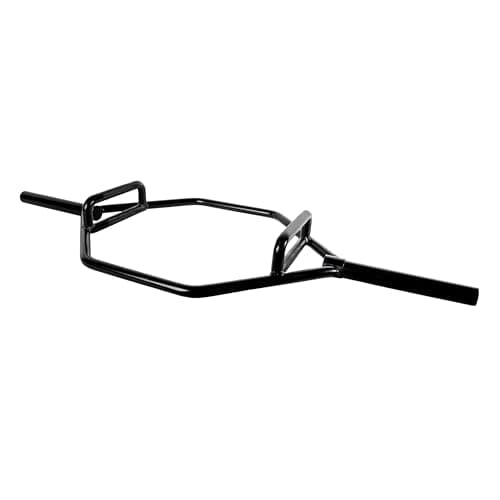
CAP Olympic Trap Bar (Thick Combo Grip, 1,000 lb)
A 1,000 lb-rated hex bar with 32 mm dual-height combo handles knurled at both positions — the most capable trap bar on this list, and the one to buy if you want one bar to cover every pull.
#ad · Price as of October 5, 2026 · Affiliate disclosure
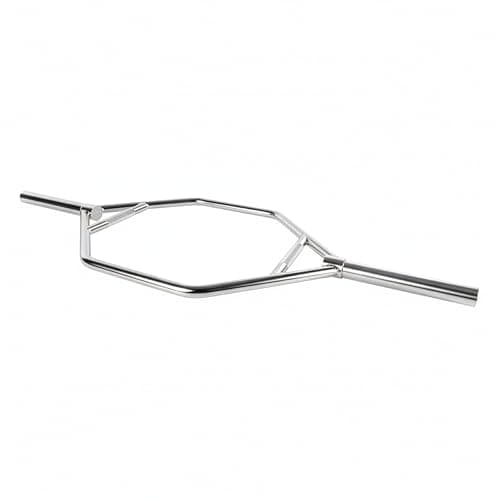
CAP Olympic Trap Bar (Chrome, Flush Neutral Grip, 750 lb)
A 750 lb-rated chrome hex bar with flush neutral handles — the cheapest way into a hard-wearing finish, and the pick if you want the traditional full-range trap-bar pull rather than a raised handle.
#ad · Price as of October 5, 2026 · Affiliate disclosure
The combo-grip bar is the one to pick if squatting is a priority: dual high and low handles mean you can raise the start when you want to and drop to the full range when you don’t, and it publishes the highest capacity of any trap bar we track. The chrome bar’s flush handles give you the full range only — better for traditional pulls, more demanding as a squat. The full field is ranked in our best trap bar roundup.
When to buy a rack instead
Be honest about the goal. If you want your squatto go up, the money belongs in a rack and a barbell, not a second bar — a rack with real safeties is what lets you squat heavy alone, and it is the single highest-value purchase in a home gym for exactly that reason. Our best power rack and best squat rack roundups rank those, and best power rack for low ceilings covers the basement case. If your shoulders are the problem rather than the rack, a safety squat bar keeps the load on your back where it belongs while sparing your shoulders.
Buy the trap bar when you want what it is actually best at: a back-friendly heavy pull, loaded carries, shrugs — with squats as a useful bonus on the days you want them. That is a good purchase. Buying one as a squat solution is the mistake this page exists to prevent.