Published trap bar capacities run from 400 lb to 1,000 lb across the bars we track — but for most home lifters the number that actually stops you is the loadable sleeve length, not the rating. A 9″ sleeve holds roughly four 45 lb bumper plates a side before you run out of room for a collar. That is about 360 lb of plates on a bar rated to 750 lb, which means the capacity figure most people shop on is not the one that binds. Live prices on every bar mentioned here are as of October 21, 2026.
The second thing worth knowing up front: the bar is heavy and nobody tells you. A trap bar is a welded steel frame, so it weighs far more than a barbell — CAP publishes 75 lb for its thick combo-grip bar, and most makers publish nothing at all. That weight counts toward your total and quite possibly toward the rating. How heavy is a trap bar covers the range; the practical answer is to weigh yours on day one.
The published figures, bar by bar
Every number below is the maker’s own. Blanks are marked rather than estimated — and two of the six bars we track publish nothing, which is itself the most useful thing to know about them.
One honest observation about that table: CAP is the only brand here that publishes capacity consistently, and the bar with the highest rating is also the only one that publishes its own weight. In a category this quiet, disclosure and build quality track each other closely — which is why our trap bar ranking and budget trap bar ranking both put published capacity near the top of the method.
Why the sleeve runs out before the rating does
This is the arithmetic nobody does before buying, and it takes a minute.
- Bumper plates are thick.A 45 lb bumper is typically around 2.5–3 inches wide. Four of them is 10–12 inches — already past a 9″ sleeve before you add a collar.
- Cast iron is thin.A 45 lb iron plate is roughly 1.5 inches, so the same 9″ sleeve takes five or six of them. An iron-plate gym gets substantially closer to the rating than a bumper-plate one.
- You need room for the collar. Leave an inch. A trap bar is loaded and lifted asymmetrically more often than a barbell is, and a plate sliding outward mid-carry is the one failure that actually happens.
Work it out in plate thicknesses rather than pounds and you will know your real ceiling in about thirty seconds. Trap bar loadable sleeve length has the full version, and bumper plate thickness explained covers why the plates differ so much.
What a rating does and does not promise
No published standard governs how trap bar capacity is measured. There is no stated test method, no load duration, no disclosed safety factor, and no requirement that the figure refer to the same thing on two different bars. So:
- Read a rating as a build signal.A 1,000 lb bar was specified with heavier tube and better welds than a 400 lb bar. That comparison is meaningful even though the absolute number is not certified.
- Assume it is static, not dynamic. Any rating of this kind describes load sitting on the bar, not load arriving suddenly. Dropping a loaded trap bar from lockout is a much harsher event than standing with it.
- Subtract the bar. Since makers do not say whether the frame weight is included, treat it as though it is. It costs you nothing and removes the ambiguity.
- Inspect, do not trust.The failure modes here are gradual — a slow bend, a fatigued sleeve weld, a sleeve that develops play. Look at the welds where the sleeves meet the frame once a year.
The same logic applies across the site: barbell weight capacity explained and how much weight can a power rack hold make the same point about straight bars and racks.
Three bars, three ceilings
If the rating is what is deciding your purchase, these three bracket the range. Prices live as of October 21, 2026.
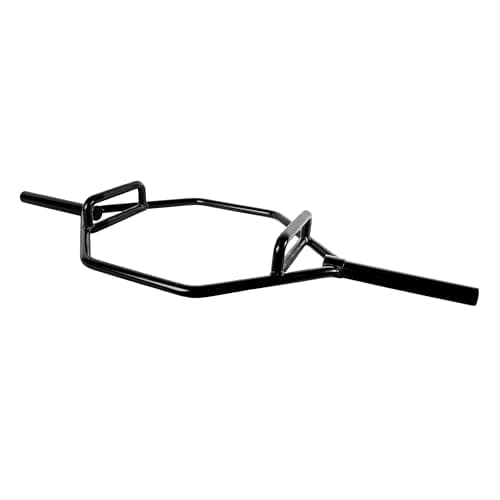
CAP Olympic Trap Bar (Thick Combo Grip, 1,000 lb)
A 1,000 lb-rated hex bar with 32 mm dual-height combo handles knurled at both positions — the most capable trap bar on this list, and the one to buy if you want one bar to cover every pull.
#ad · Price as of October 21, 2026 · Affiliate disclosure
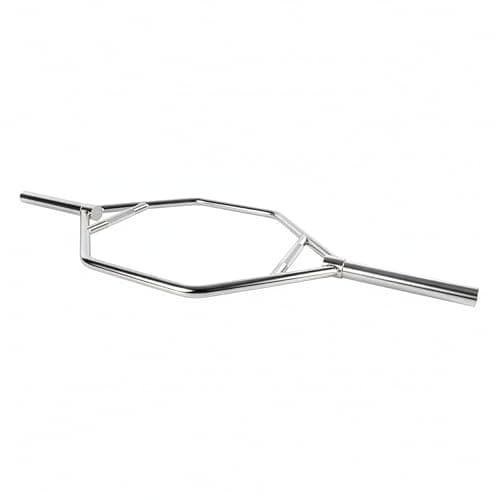
CAP Olympic Trap Bar (Chrome, Flush Neutral Grip, 750 lb)
A 750 lb-rated chrome hex bar with flush neutral handles — the cheapest way into a hard-wearing finish, and the pick if you want the traditional full-range trap-bar pull rather than a raised handle.
#ad · Price as of October 21, 2026 · Affiliate disclosure
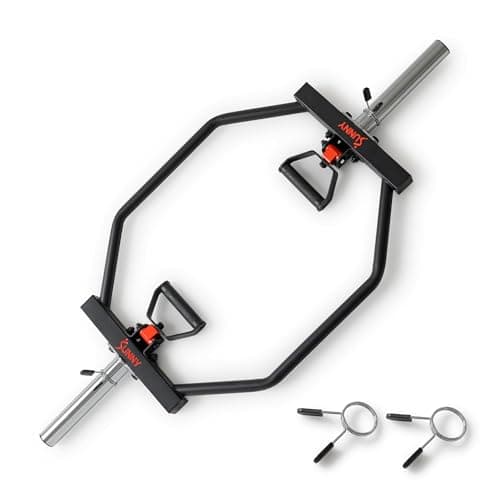
Sunny Health & Fitness Hex Trap Bar
A straightforward Olympic hex bar from a well-known home-fitness brand — a beginner-friendly, no-surprises trap bar for first deadlifts.
Note the third tile, because it makes the point of this whole page: the Sunny hex bar has the lowest capacity rating and the longest loadable sleeve. If you load cast iron and stay under 400 lb, it will take more plates than the 750 lb CAP will. Rating and capacity are not the same question.
The short version
Ratings on the trap bars we track span 400–1,000 lb, two of the six publish nothing, and almost none publish a bar weight. Before you shop on the headline number: weigh your empty bar, measure the loadable sleeve, and count your plates by thickness. For most home gyms the honest ceiling is four bumper plates a side — and if that is not enough, the thing to buy is a bar with longer sleeves, not a higher number.