A safety squat bar is worth it for three specific lifters, and an expensive luxury for everyone else. The three: anyone whose shoulders, elbows or wrists hurt holding a straight bar in the rack position; anyone who squats alone and wants a bar that is easy to bail; and anyone training around an upper-body injurywho would otherwise stop squatting entirely. If you are in one of those groups, this is one of the highest-value purchases in a home gym, because it is the difference between squatting and not squatting. If you are not, it is a second squat bar — nice to own, and not the thing standing between you and progress.
Live prices on the six bars we track start at about $120 for a 700 lb-rated budget bar, which makes “is it worth it” a cheaper question than most people assume. Prices below are live as of October 21, 2026.
What the bar actually changes
Three mechanical changes, and they compound. Worth being precise about them, because the marketing tends to say “shoulder friendly” and stop there.
The second row is the one that matters most and gets the least attention. On a straight bar your hands are part of the system holding the bar in place, which is why a tight shoulder turns a squat into an exercise in tolerating discomfort. On an SSB the yoke holds itself and your hands are just along for the ride. That is why the bar fixes the problem rather than working around it — safety squat bar vs barbell goes deeper into the mechanics.
The honest case against
Four arguments, all of them fair, and we would rather you heard them here than after spending the money.
- Front squats do much of this for free. If your issue is wanting an upright-torso, quad-dominant squat and your shoulders are fine, a front squat is the same stimulus at zero cost. The SSB wins only when the rack position itself is the problem.
- It is a lot of steel for one lift.A specialty bar lives in a corner between uses. In a small room that is a real cost — do I need a specialty bar weighs it properly.
- Your numbers go down.Most lifters squat 10–20% less with an SSB. That is the bar doing its job, not a defect, but it frustrates people who track one number.
- A trap bar may be the better first specialty bar.If you want one bar that unlocks the most new training, the trap bar is used more often by more people — see safety squat bar vs trap bar.
What to look for if you do buy one
Four published specs, in the order they matter. Everything else on an SSB listing is decoration.
- Capacity.700 lb covers almost every home squatter; 1,000–1,500 lb bars exist and are mostly buying you build quality rather than headroom. Your SSB squat will be lower than your straight-bar squat, remember.
- Padding, and whether it is replaceable. This is the part that wears out. Budget bars use basic foam that compresses over a year or two of use; the premium bars use a denser yoke pad. Nobody publishes a foam density, so treat padding as a price-tier signal.
- Length and rackability.A full 7 ft bar sits in standard J-hooks like a barbell. Shorter cambered bars can be awkward in widely spaced hooks.
- Bar weight.Most makers do not publish it, which means your working total is a guess. Bells of Steel publishes 45.6 lb for the 4.0 — one of the few. Weigh yours on day one; how much does a safety squat bar weigh covers the usual range.
Three bars that answer the question at three prices
If the answer above was “yes, that is me”, these three cover the range — from the cheapest honest way to find out, to the bar you buy once. Prices live as of October 21, 2026.
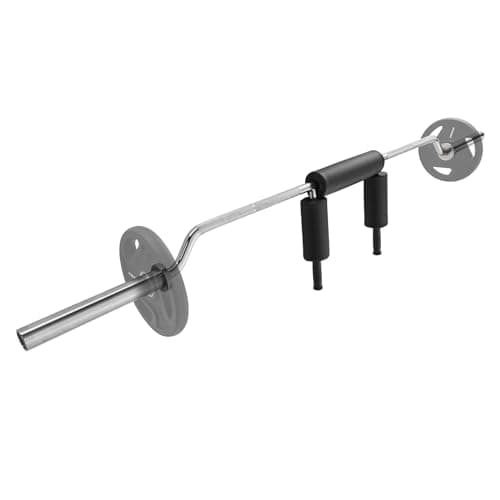
VEVOR Safety Squat Bar (700 lb, 28 mm)
A 700 lb-rated SSB with a 28mm shaft and padded shoulder yoke for around a third of a boutique bar's price — the honest budget route into safety-squat training.
#ad · Price as of October 21, 2026 · Affiliate disclosure
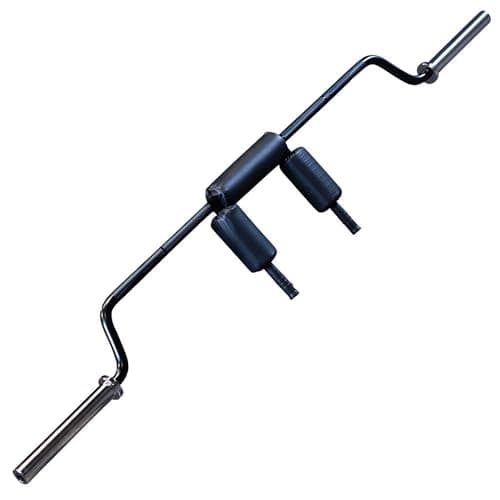
Body-Solid Safety Squat Bar
A 1,000 lb-rated safety-squat bar from an established commercial brand, with built-in shoulder padding and forward handgrips — the pick if you want an SSB you'll never worry about.
#ad · Price as of October 21, 2026 · Affiliate disclosure
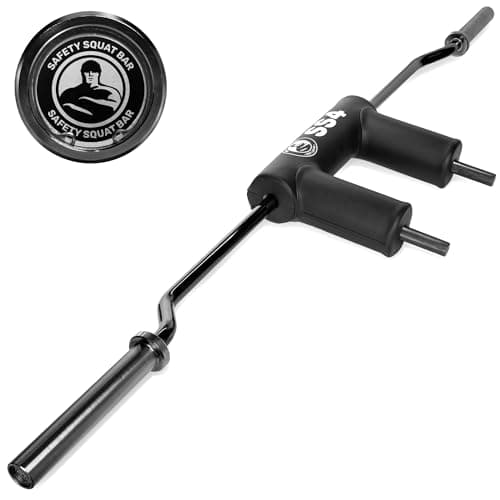
Bells of Steel Safety Squat Bar 4.0
A 1,500 lb-rated SSB from a dedicated strength brand, with a titanized sleeve/shaft coating and a premium padded yoke — the enthusiast's SSB when build quality matters most.
#ad · Price as of October 21, 2026 · Affiliate disclosure
The VEVOR 700 lbis the test-the-idea bar: a padded shoulder yoke, arm pads and a 28 mm shaft for roughly a third of a boutique bar. Its padding is basic and will compress eventually, which is an acceptable trade when the question is whether you want an SSB at all. The Body-Solidis the one to buy if you already know the answer — 1,000 lb rated, integrated shoulder and neck padding, forward handgrips and a commercial brand behind it. The Bells of Steel 4.0is the enthusiast pick at 1,500 lb with a titanized coating, and it is one of the only SSBs whose maker publishes a bar weight. Full rankings in best safety squat bar and best budget safety squat bar.
The short version
If the straight-bar rack position hurts, buy one — it is the difference between squatting and not squatting, and the budget bars genuinely work. If you squat alone and the bail worries you, buy one. If you are healthy, mobile and simply curious, try front squats and tempo work first; they cost nothing and ask the same question of your upper back. And whichever you buy, read the setup guidebefore the first session — the bar sits higher in the J-hooks than you expect, and the first rep is not the moment to discover it.