Step one: pick the format for your room
Start here, before any model comparison. The right column is the one whose constraint you can actually live with.
Still deciding? Power rack vs squat rack is the main fork, power rack vs half rack covers the middle, and folding vs freestanding settles the wall-mounted question.
Who each pick is for
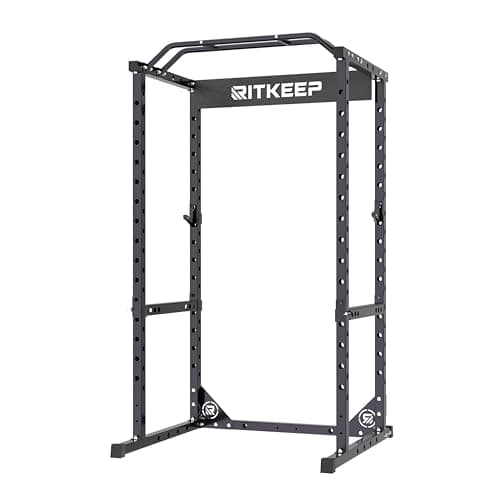
- RitKeep RMAX2250— for the lifter fitting a real cage into a real room. Publishes 44.3″ × 45″ × 81.7″, 1,200 lb and 2×2″ uprights, so you can measure first and buy second.
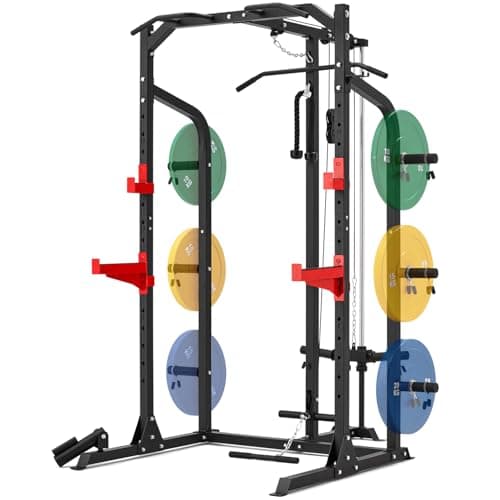
- RUNFREELY power rack— for the lifter who wants cables without a second machine. Pulley, safeties, landmine and pull-up bar at a published 1,000 lb, in one four-post footprint.
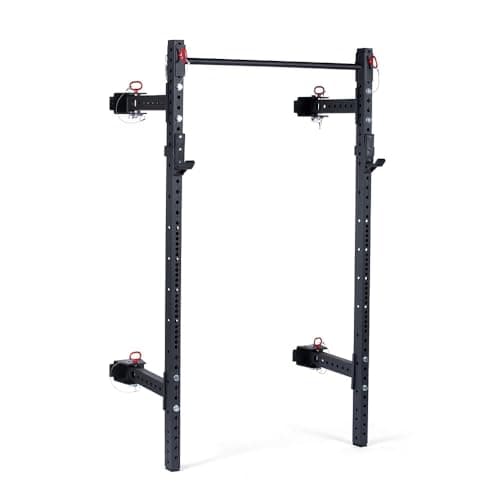
- Titan T-3 wall-mounted folding— for the garage that still parks a car. 11-gauge 2×3″ uprights, folds to roughly 5″ from the wall. The one format that gives the room back.
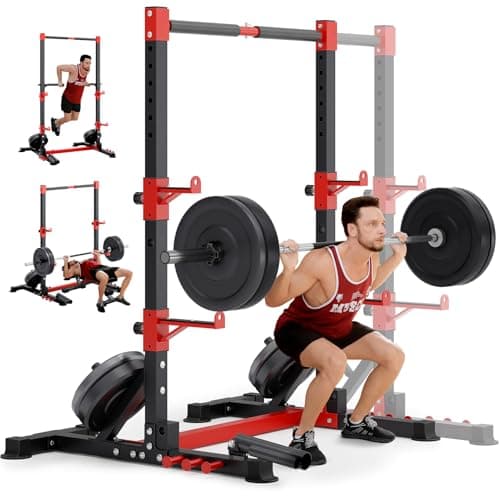
- YOLEO squat rack— for the smallest budget and the smallest footprint. Width adjusts 35″–67″, fits 6 ft and 7 ft bars, includes safety arms and a pull-up bar.
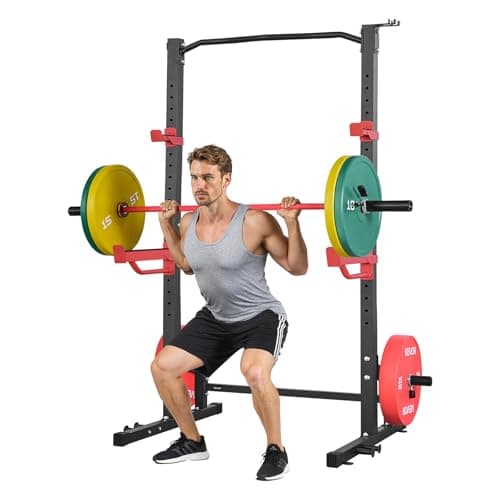
- VEVOR power cage— for the lifter who wants an enclosed cage at the bottom of the market and is unwilling to guess at the rating. 1,000 lb published, four band pegs, J-hooks and safeties.
What each rack actually publishes
This is the table the category does not want to show you. Four of five picks publish a capacity figure; one publishes its full footprint. Everything blank is a maker’s silence, not our omission.
Step two: measure the three numbers that decide it
Ceiling height, including the pull-up bar
Measure floor to ceiling, then subtract the rack height, then ask whether you can still hang from the bar without hitting the joists. A rack publishing 81.7″ needs about seven feet of clear ceiling before anyone uses the pull-up bar, and garage ceilings with an opener rail in the middle are often tighter than they look. Our power rack ceiling height guide has the arithmetic, and best power rack for low ceilings is the ranking if the number comes back short.
Depth, because you have to walk out of it
Depth is the dimension people forget. A 44″-deepcage leaves room to step back off the hooks and re-rack cleanly; a shallower one makes a walkout awkward and a bench press setup cramped. If you plan to bench inside the rack, the bench and your feet need the depth too — see how deep should a power rack be and can you bench press in a power rack.
Width, including your hands on the bar
Inside width has to clear your grip, not just the bar. A 45″-widecage is standard and comfortable; adjustable-width stands like the YOLEO let you narrow the stance for storage and widen it for a 7 ft bar, which is a genuine advantage in a shared room. How wide should a power rack be covers the trade.
Then, and only then, look at the steel
Two specs matter and both are published when a maker is being straight with you. Upright size and gauge— 2×3″ 11-gauge, as on the Titan T-3, is a materially stiffer section than 2×2″ of thinner wall, and the difference shows up as how little the rack flexes when you re-rack hard. Hole spacingdecides how precisely you can set J-hooks and safeties: 2″ spacing is fine, 1″ Westside spacing in the bench zone is better. Read 11-gauge vs 14-gauge steel, 2×2 vs 3×3 and Westside hole spacing before you let a capacity number decide anything.
Anchoring is the last thing, and the cheapest safety upgrade on the list. A cage bolted to a slab stops being a thing that can tip; a wall-mounted rack has no choice but to be anchored properly. If you are renting, how to anchor a power rack covers the options that do not involve drilling the floor, and the rack safety checklist is worth ten minutes before your first heavy session. If the budget is the binding constraint rather than the room, are cheap power racks safe runs the five-spec check on the bottom of the market. And if the room is above another room, can you put a power rack on the second floor does the weight-per-square-foot arithmetic and names the formats that suit a wooden floor.