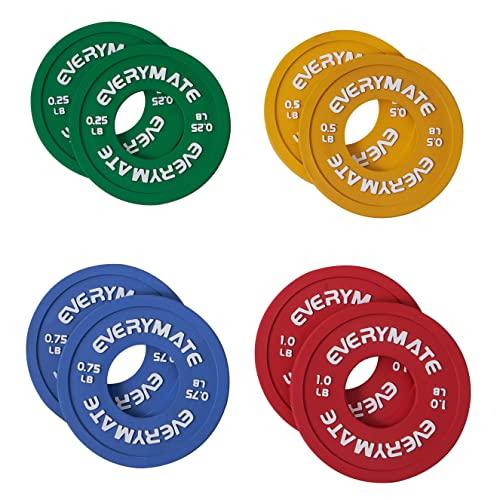
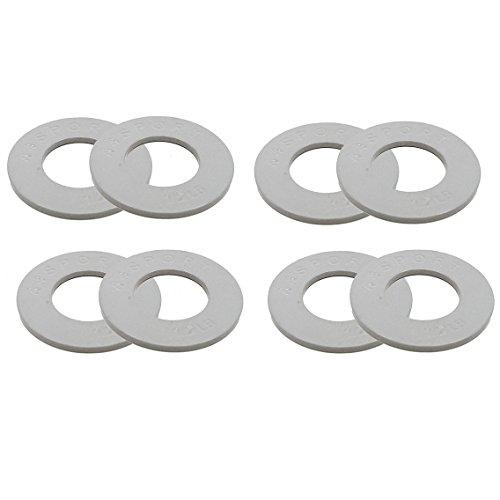
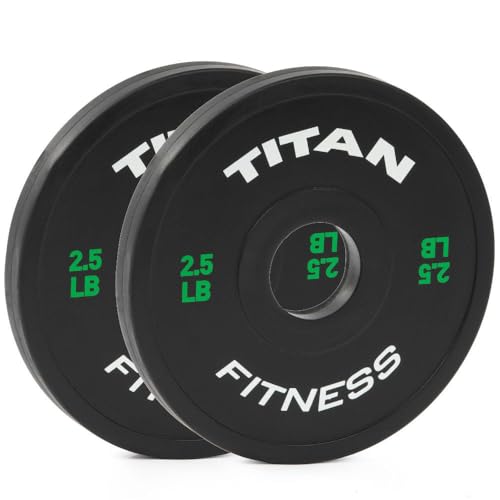
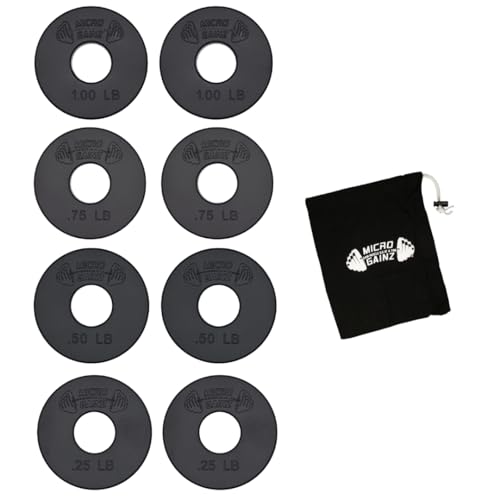
The published specs, side by side
Every figure below is from the maker’s own listing. This is the least transparent category on this site, and the blanks below are the honest state of it.
Read the fitment row twice. The Micro Gainz set is 1-inch, not Olympic — it is arguably the best-made set here, from a brand that makes nothing but micro plates, and it will not fit the Olympic bars this site ranks. It is the right buy for a standard bar or a loadable dumbbell handle and the wrong buy for everyone else. See 2 inch vs 1 inch weight plates.
Why half a pound is the number that matters
On a barbell, plates go on in pairs, so the smallest plate you own doubles. A 2.5 lb plate — the smallest in most standard sets — means a five-pound jump. On a squat or a deadlift that is fine. On an overhead press, a five-pound jump can be a 5–8% increase, and that is the arithmetic behind most stalled pressing: you are not failing to get stronger, you are being asked to get 7% stronger in one week.
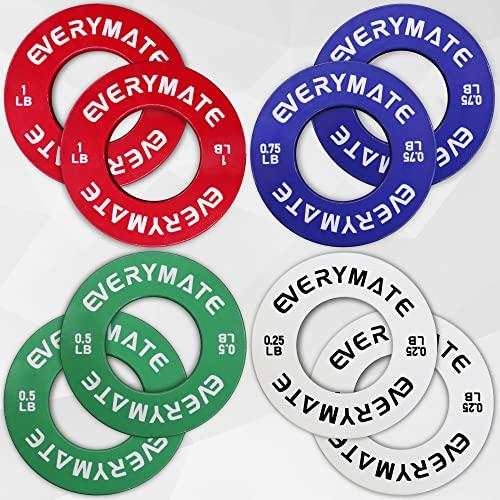
A pair of quarter-pound plates turns that into a half-pound jump, which is roughly 1%. That is the entire product category in one sentence, and it is why the sets with the full 0.25–1 lb spread rank above better-built plates that only come in one denomination. Fractional plates, explained covers the progression maths in more depth, and how many plates do I need puts the small denominations in the context of a whole loadout.
Micro plates or change plates?
Micro plates, if a lift has stalled
Sub-pound plates do one job: keep a linear progression running after the standard jumps get too big. Press and accessory lifts benefit most; almost nobody needs them on a deadlift. Buy the full denomination spread rather than one size, because the useful thing is being able to choose a half, one, one-and-a-half or two-pound increase depending on how the last session went.
Change plates, if you run bumpers
A bumper loadout usually jumps in 10 lb steps and the small iron lives somewhere else. Rubber-coated 1.25–5 lb change plates sit on the sleeve next to bumpers without chipping, are quieter, and save you keeping a separate iron set for the small weights. That is a storage and convenience purchase rather than a progression one, and the Titan pair here is the one built for it. If bumpers are the wider question, best bumper plates and best rubber weight plates are the lists.
What nobody in this category publishes
A weight tolerance.Not one set on this page states one, and this is the category where it matters proportionally most: a few percent on a 45 lb plate is noise, but a few percent on a 0.25 lb plate is a meaningful share of the plate. If your training depends on the jump being exactly half a pound, weigh the plates on a kitchen scale when they arrive. Our weight plate tolerance guide covers what published figures mean elsewhere in the plate market, and best weight plates notes the one set on this site that does publish a tolerance.
Storage. Micro plates are small, dark and easy to lose, and exactly one set here ships with a bag. Whatever you buy, give them a tin or a drawer on day one or you will be hunting a 0.25 under a rack in six months. How to store weight plates covers the bigger version of the problem.
How many do you actually need?
One set. This is a category where buying more does nothing: the plates add a maximum of four or five pounds and they only ever live on the two ends of one bar. The real decision is which denominations, and the honest answer for most people is the full 0.25–1 lb spread, because it is the only option that lets you choose your jump rather than accept it. If you already own 2.5s and only want to halve your smallest step, the single-denomination 44SPORT set does that for less.
For the rest of the plate decision, see best weight plates, best cast iron weight plates and best budget weight plates.