The published specs, side by side
Every figure below is from the maker’s own listing. Where a maker publishes nothing we say so rather than estimating, and in this category the blank that matters most is the plate breakdown.
The bottom row is the one to read twice. None of these plates is drop-safe, and that is a property of iron, not a shortcoming of any particular set. If your training includes dropping a loaded bar from the top of a deadlift or bailing on a clean, you need rubber — best bumper plates is the list, and do I need bumper plates is the honest test of whether you really do.
Why thin iron still wins for a rack gym
Loadable sleeve length is the real constraint
A standard 7 ft Olympic bar gives you about 16″ of loadable sleeve per side. Thin iron 45s let you stack considerably more weight into that space than three-inch bumpers do, which is why the people who run out of sleeve first are always the ones who bought bumpers for a rack-based gym. Barbell loadable sleeve length does the arithmetic properly, and bumper plate thickness, explained covers the other side of it.
Cost per pound is lower, and it stays lower
Iron is cheaper per pound than rubber at every set size, and it does not degrade the way economy rubber does. The caveat is handling: iron plates are harder on a bar, a floor and your shins, and a dropped 45 will take a chunk out of a concrete slab. How much do weight plates cost tracks the live spread across both materials.
Grip holes change how you handle them
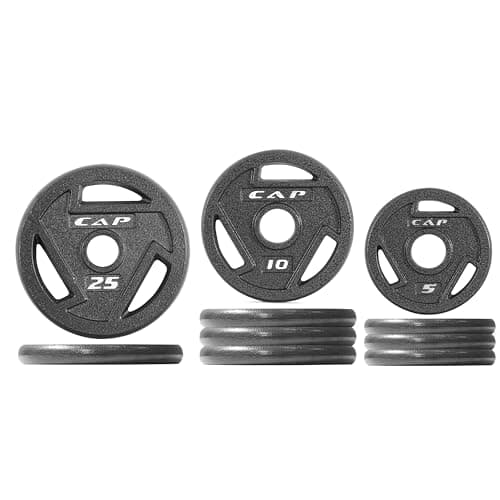
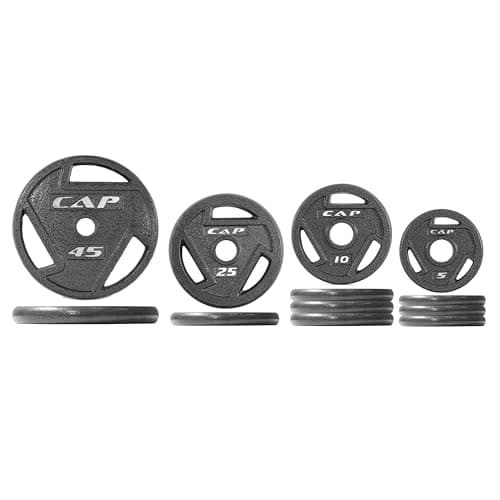
The CAP Elite plates have grip holes and raised numbers cast in, which sounds cosmetic and is not: loading a bar one-handed and reading a plate across a dim garage are both things you do dozens of times a week. Tri-grip plates take this further, at the cost of a rubber shell and a wider profile — see tri-grip vs standard plates and best rubber weight plates if that appeals.
Finish, rust and what actually fails
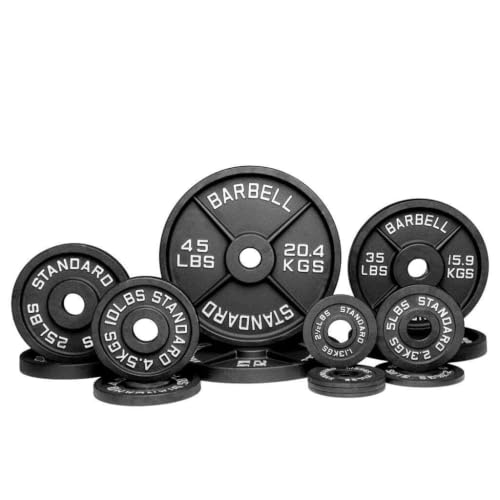
Iron plates do not wear out in any meaningful sense. What fails is the coating: baked enamel chips where plates knock together on the sleeve, and bare iron under a chip will surface-rust in a humid garage within a season. Powder coat holds up better, which is most of the reason the Barbell Standard set costs what it does. Neither is a safety issue, and surface rust wipes off with a wire brush and a little oil — how to clean weight plates covers the routine, and do weight plates wear out answers the longer-term question. If your plates live outdoors, best weight plates for outdoor use is deliberately a different list, and bare enamel iron is the plate it tells you not to buy.
How much iron do you actually need?
For a lifter squatting and pulling in the low three hundreds, 200–250 lb of plate plus a 45 lb bar covers almost everything, provided the small denominations are there — 2.5s and 5s are what let you add weight weekly instead of monthly. How many plates do I need works through the loadouts by lift, and fractional plates, explainedcovers the jumps below 2.5 lb. If you do not own a bar yet, a combo set is usually cheaper than buying both separately — see best barbell and weight set, where CAP’s 300 lb cast-iron set with a 7 ft bar is the top pick. For the ranking across every material, see best weight plates, and for the cheapest honest route in, best budget weight plates.