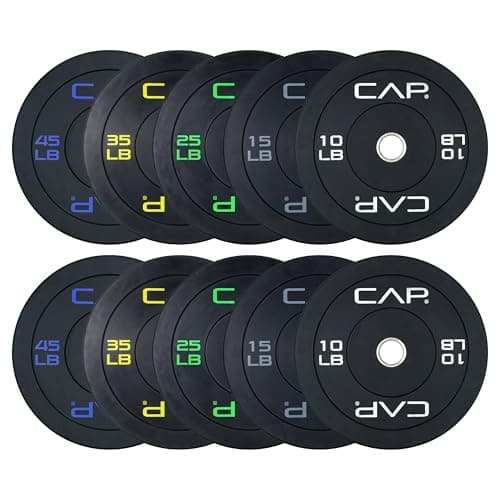
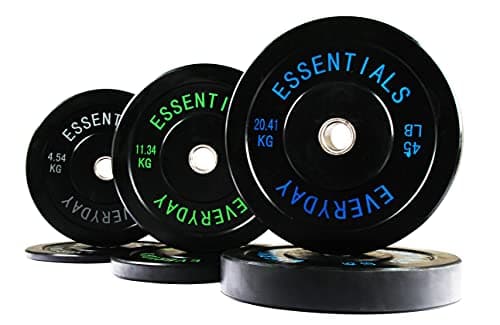
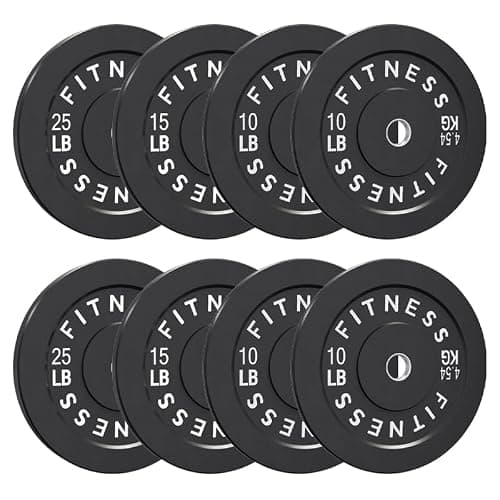
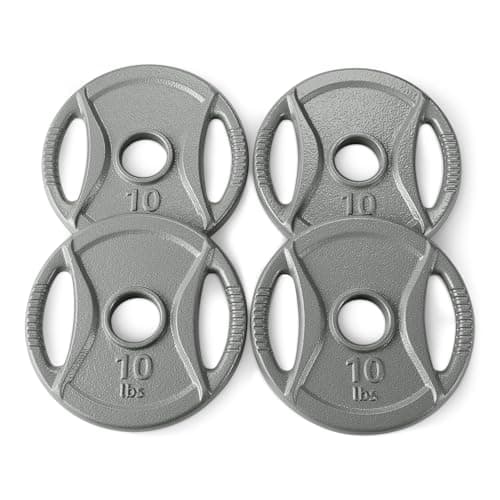
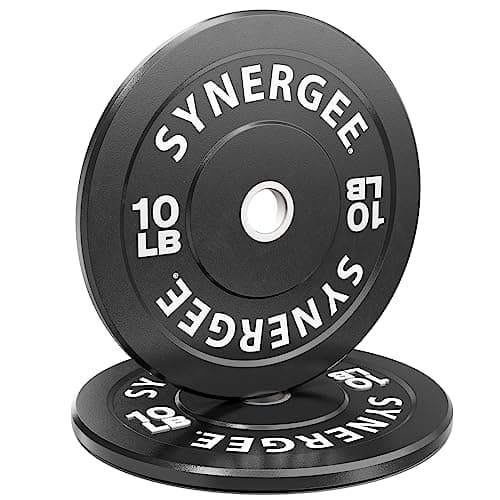
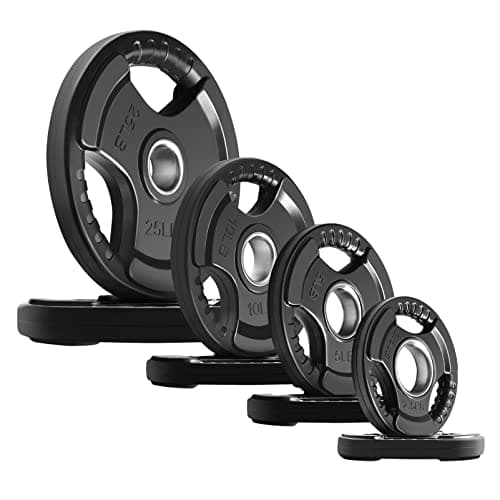
The two classes, side by side
The sleeve row is the one people discover too late. A 7 ft Olympic bar gives you roughly 16″ of loadable sleeve per side, and three-inch bumpers fill it long before an encased plate does. If you already own a rack and you expect to pull over about 400 lb, that constraint is real — barbell loadable sleeve length does the arithmetic and bumper plate thickness, explained covers why bumpers are built that way.
Within the bumper class: check the hub
Every bumper on this page publishes a hub construction, and it is the one spec worth comparing because it is what fails first. A machined steel or stainless insertkeeps the 2″ opening round over years of loading; a molded rubber collar does not, and once the hub goes oval the plate rattles on the sleeve and wears the bar finish. The HULKFIT set publishes a solid stainless insert, CAP and BalanceFrom publish steel inserts, and Synergee publishes a steel insert on its by-the-pair plates. How to choose bumper plates covers the rest, and bumper plate bounce, explained is the other spec that affects how a garage platform feels.
Within the grip-plate class: the handles are the feature
Tri-grip and cut-out handles sound cosmetic and are not. You load a bar one-handed dozens of times a week, you carry plates across a garage, and you read denominations in poor light — handles and raised numbers make all three easier, and they are the main reason to pay slightly more per pound than bare iron costs. Tri-grip vs standard plates covers the trade: handles add a little diameter and the rubber adds a little thickness, so you lose a fraction of the bare-iron loading advantage.
Buying a set or buying by the pair?
Two of the six picks here are sold by the pair rather than as a graduated set, and that is a genuinely different purchase. A set is cheaper per pound and arrives complete; the catch is that three of the sets on this page publish only a total weight, not a plate-by-plate breakdown, so you cannot work out your real weight jumps before buying. Buying by the paircosts more per pound but lets you fill exactly the gaps you have — usually the small denominations that decide whether you can add weight weekly or monthly. How many plates do I need works through the loadouts, and fractional plates, explainedcovers the jumps below 2.5 lb.
Rubber, iron, or both?
For most home gyms the honest answer is both, in that order: a pair of drop-safe 45s for the deadlift and a stack of thin plates for everything else. That gives you a bar you can set down hard on the pull and a sleeve that still takes a heavy squat. If you want the single-material rankings instead, see best bumper plates for the drop-safe class ranked on its own terms and best cast iron weight plates for the thin-plate class. Bumper plates vs iron plates is the full argument, and do I need bumper plates is the honest test of whether you actually do.
Two more things worth knowing. Rubber is not automatically the outdoor choice— full bumpers do best outside, rubber-encased plates have an iron core that will rust where the shell is breached, so best weight plates for outdoor use is deliberately a different list. And economy rubber smells for the first week or two; that is virgin rubber off-gassing, it fades, and it is worse in a closed garage in summer. For the whole-category ranking see best weight plates, and on price why are bumper plates so expensive explains the gap you are looking at.