The specs, side by side
Published materials and figures only, from each maker’s own listing. The “exposed metal” row is our reading of those published materials, not a maker claim — it is the whole basis for the ranking, so we have shown our working rather than hiding it in a score.
Who each set is for
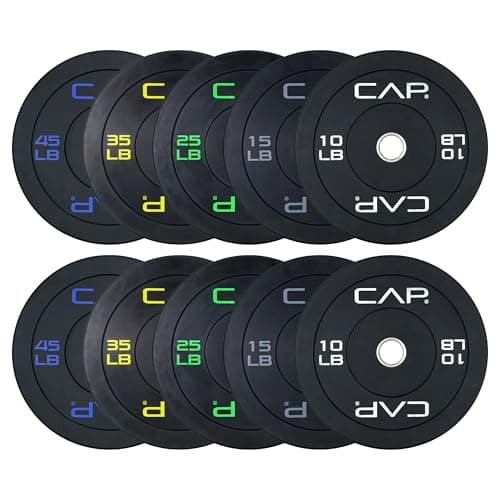
- CAP 260 lb Olympic bumper set— for the outdoor platform where you drop the bar. Virgin rubber body, steel inserts, low bounce, and a complete loadout in one purchase. The economy rubber smells for a week or two, which outdoors is a non-issue.
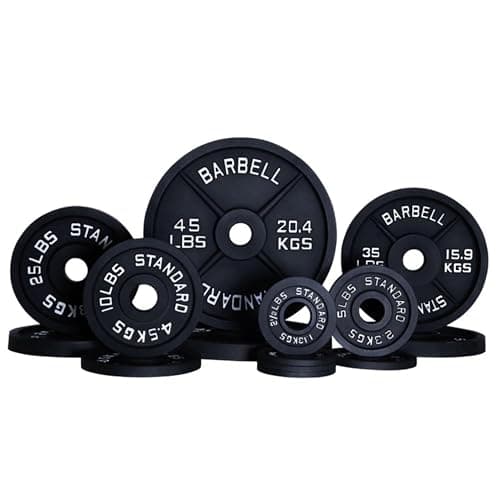
- Barbell Standard 250 lb powder-coated set— for the lifter who racks every lift and lowers under control, and wants thin plates that fit more weight per sleeve. Powder coat is the better outdoor finish on iron, and the published 2% tolerance means your numbers are your numbers.
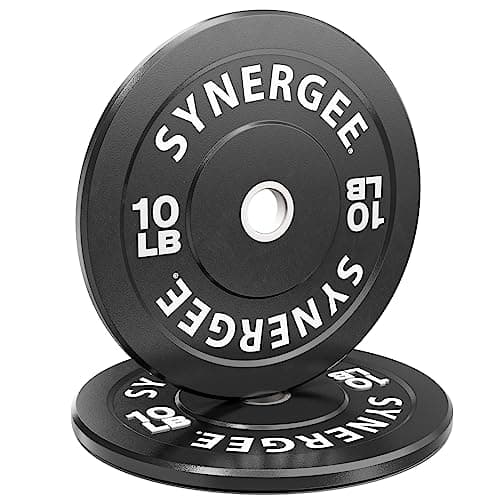
- Synergee bumper plates— for topping up an existing outdoor set by the pair rather than buying another whole loadout. Genuinely low bounce, which matters more on a hard patio or driveway than on a padded gym floor.
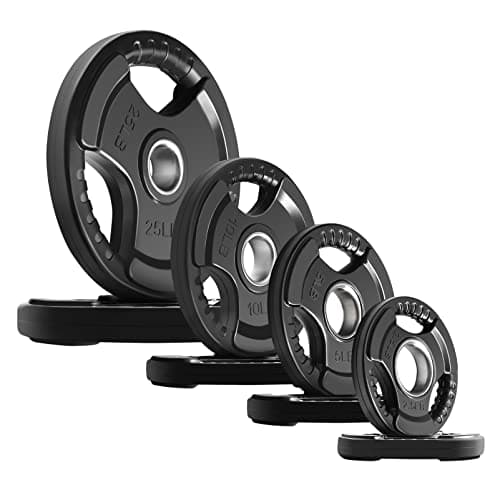
- RitFit rubber grip plates— for accessory work and loaded carries outside, where the cut-out handles earn their keep. Rubber-encased rather than drop-safe, so treat them as iron with armour.
How to choose plates that live outside
Rubber body beats any coating
The reason a bumper plate wins here has nothing to do with being marketed as tough. It is a geometry argument: on a bumper, the rubber is the plate— it is not a layer over steel, so there is no coating to chip through and nothing underneath to rust when it does. The steel insert at the hub is the one metal part, and it sits recessed in the middle where it gets the least weather and the least impact. A coated iron plate, by contrast, is 100% steel wearing a jacket. Powder coat is a genuinely good jacket — much better than baked enamel — but every chip from loading and unloading is a new place for rust to start, and plates get chipped. See what are bumper plates for how they are built and rubber vs urethane for the next tier up.
Outdoors usually means dropping, which settles it
Most people asking this question have a platform on a driveway, a patio or a bit of yard, and the reason it is out there is that they want to drop the bar— deadlifts to the floor, cleans, snatches. That requirement alone eliminates every iron plate on this page regardless of coating: iron plates are not drop-safe, and dropping a loaded bar on them damages the plates, the bar and the surface. If you drop, the decision is made for you and you are buying bumpers. Our do I need bumper plates guide is the honest version of that test, and bumper plate bounce matters more outdoors than in, because concrete and asphalt return far more energy than a padded floor.
The hub insert is the part to look after
Since the hub is the only exposed metal on a bumper, it is also the only maintenance item. Both bumper sets here publish a steel insert, which is the right spec — a molded rubber collar wears oval and starts to wobble on the sleeve, while a steel insert holds the 2-inch opening true. Keep the insert dry and lightly oiled the way you would a bar sleeve, store the plates on their edge rather than flat in a puddle, and they outlast the platform. Our how to clean weight plates guide covers the routine, and how to store weight platescovers getting them off the ground — which is most of the battle outdoors.
Protect the bar before you worry about the plates
Worth saying plainly: in an outdoor setup the barbellis far more vulnerable than the plates. A bar is bare or thinly-coated steel with a knurled surface that traps moisture, and it will rust long before a rubber plate shows any sign of weather. Do not store the bar outside. Bring it in, or at minimum keep it off the ground, dry and oiled — see how to prevent barbell rust and how to store a barbell. If your gym genuinely lives outdoors, a Cerakote or stainless shaft is a much better use of money than upgrading plates.
What you give up by going rubber
Bumpers are not a free win, and the trade is sleeve space. Rubber is far less dense than steel, so a 45 lb bumper is dramatically thicker than a 45 lb iron plate — and the thick ones fill your loadable sleeve long before capacity becomes an issue. On a full-size Olympic bar that is roughly 15–16 inches of usable sleeve per side, and bumpers eat it fast. If you need a lot of weight on the bar and you don’t drop it, coated iron is the smarter outdoor choice precisely because it is thin. Our bumper plate thickness and loadable sleeve length guides have the arithmetic, and bumper vs iron is the head-to-head.