What each price step actually buys
This is the whole page in one table. Every figure is the maker’s published number; blanks are marked rather than filled in.
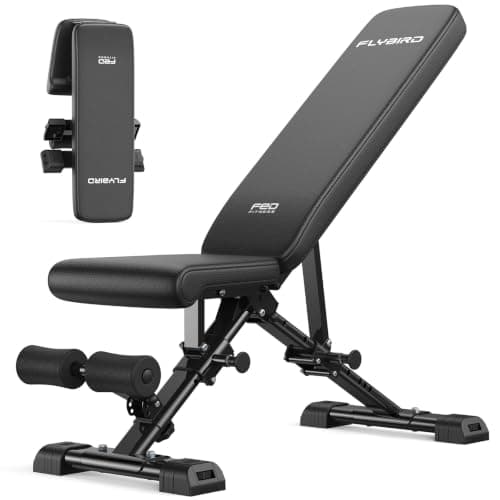
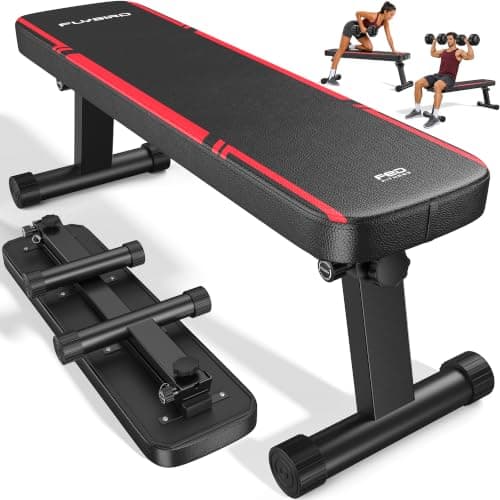
Two patterns are worth naming. First, the adjustable benches publish less than the flat ones— FLYBIRD states a capacity and a backrest length but no pad width or height, which are the two numbers that decide whether you can set up properly. Second, the two lightest benches are the two cheapest, and 18–19 lb of bench has no mass to stay planted when you drive with your legs.
The three specs that are free, and whether each bench got them right
Pad height: 17 inches, not 19
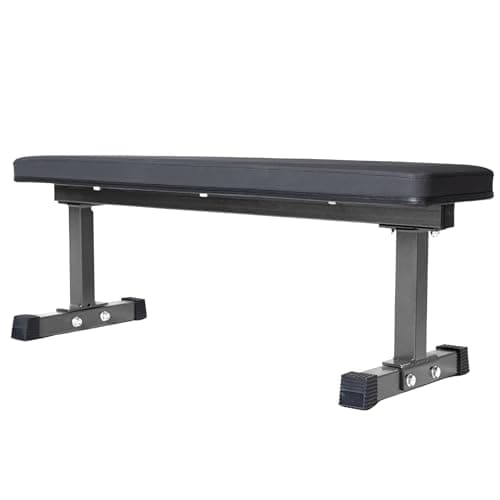
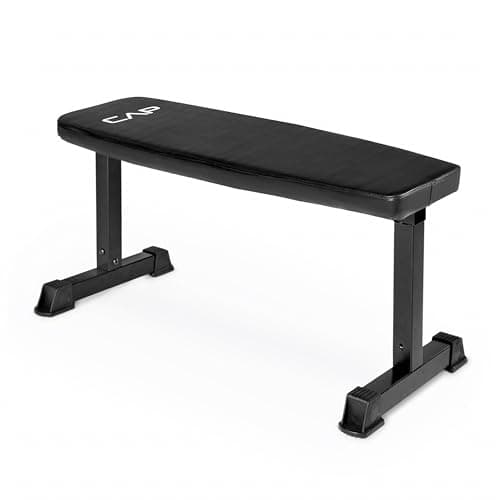
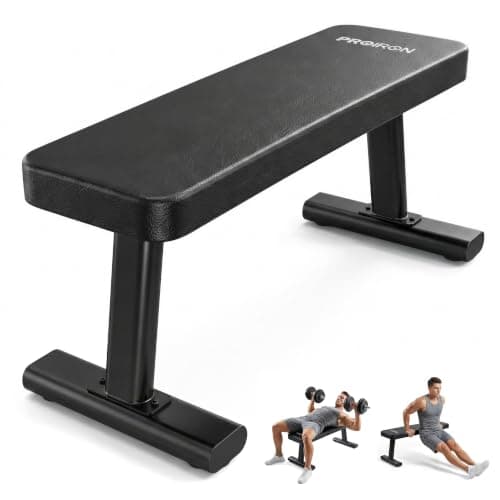
The IPF’s competition window is 42–45 cm — about 16.5–17.7 inches — and it exists because at that height a lifter of average build can get their feet flat on the floor and drive. At 19 inches, which is what both the PROIRON and the CAP measure overall, a shorter lifter is reaching with their toes, and the leg drive that holds your arch together goes away. This is the single most common thing budget benches get wrong, and it costs nothing to get right. See bench angles explained.
Pad width: 11 to 12 inches
Wide enough to support you, narrow enough that your shoulder blades can pin back behind the pad rather than being propped forward on it. The competition band is 29–32 cm. PROIRON’s 11.8″ and REP’s 12″ both land inside it — which, as we note on best flat bench, the most expensive bench we track does not. Bench pad thickness and width has the full explanation.
A pad that does not sag
The REP is the only bench in this band that specifies what is underthe foam: a plywood substrate rather than particle board. Particle board is what fails first on a cheap bench — not dramatically, but it develops a dish in the middle that quietly changes your arch. You cannot see the substrate in a photograph, which is exactly why a maker stating it is worth something. Bench upholstery explained covers the cover material too.
Flat or adjustable, at this price
At $150 you can have a well-built flat bench or a lightly-built adjustable one, and which is right depends on one question: do you need incline?If your training is barbell bench, hip thrusts, rows and core work, a flat bench is stiffer, cheaper and has no hinge to check. If dumbbell incline pressing matters to you, the FLYBIRD WB5 is the cheapest honest route to it, and the seat-to-back gap that every folding bench has is the price — bench seat gap explained covers why it is there and when it matters. Flat vs adjustable bench works through the full fork, and do I need a weight bench is the step before that.
What to do about a light bench
If you buy one of the sub-20 lb benches — and for dumbbell work and hip thrusts they are fine — three things make them behave:
- Put it on rubber, not on a smooth slab. A horse-stall mat under a light bench does more for stability than another $50 of bench would.
- Load the base. A plate laid flat across the rear foot adds the mass the frame does not have.
- Re-torque the bolts after the first few sessions.Most “wobbly bench” complaints are loose hardware, not bad steel — how to stabilize a wobbly bench runs through the rest.
When to spend more
One case, and it is a clear one: if you bench heavy and bench alone. A 500 lb-rated 18 lb bench is a fine platform for dumbbells and a poor one for a 315 lb barbell press, because a 200 lb lifter pressing 315 already puts about 515 lb through the frame. Our heavy-duty bench and most stable bench pages rank for exactly that, and how much weight can a bench hold does the arithmetic on why your bodyweight counts.