What stability actually comes from
Four mechanisms, in the order they matter for a bench you press heavy on.
Who each pick is for
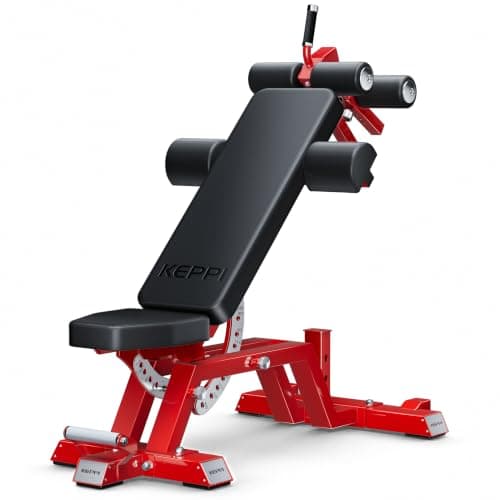
- Keppi Bench6000— for the lifter who wants gym-floor solidity at home and will accept a 97 lb bench to get it. The heaviest published frame here, the highest published rating at 1,500 lb, and it still stores upright in about 3.5 sq ft.
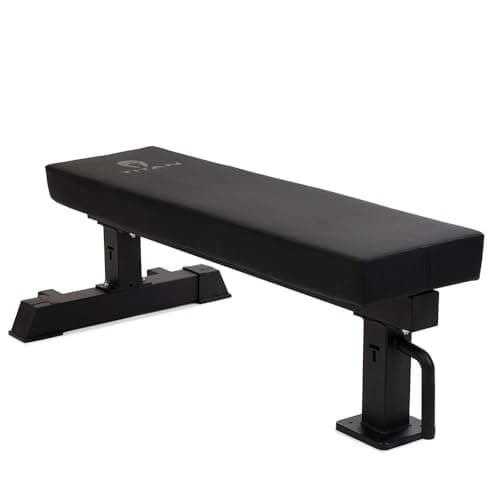
- Titan TITAN Series flat bench— for the heavy bench presser who does not need angles. 76 lb, 3×3″ 11-gauge frame, 1,200 lb rating, and a 50″ × 14″ pad 4″ thick — the widest, thickest pad on this page.
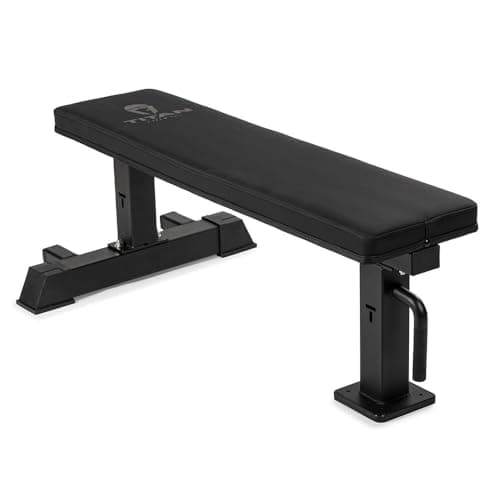
- Titan Elite Series flat bench— for the lifter who wants a published frame weight and competition geometry at the lowest price. 56 lb, 11-gauge 2×3″ and 3×3″ tube, 1,000 lb, 48″ × 12″ pad at 17″.
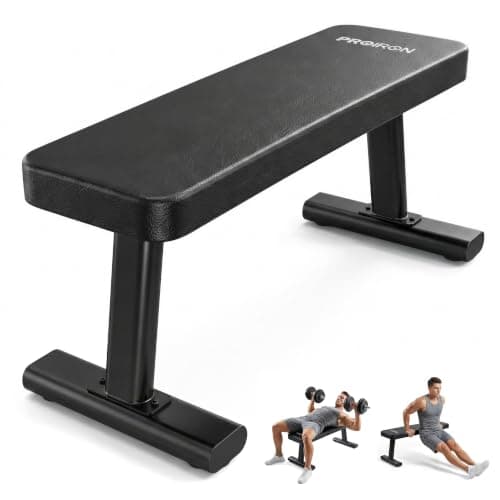
- PROIRON flat bench— for the lifter shopping on base geometry rather than mass. PROIRON publishes an 8-degree foot splaywith adjustable feet, a 42.5″ × 18″ × 19″ overall size and a 1,200 lb static rating; it does not publish a bench weight, which is why it sits below the three that do.
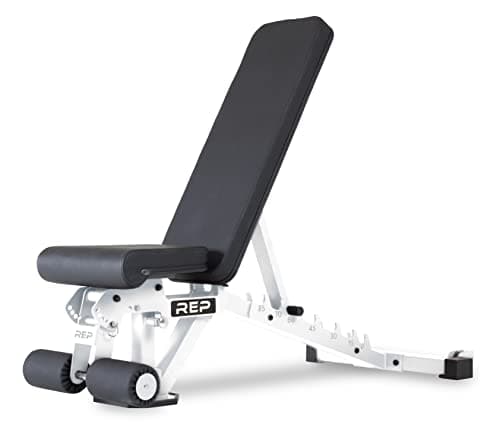
- REP AB-3000— for the lifter who wants an adjustable bench that is as solid as an adjustable bench gets. A heavier frame than the budget folders and a strength brand behind it — but REP publishes neither a capacity figure nor a bench weight for it, so it is ranked on class and build description rather than on numbers.
The published numbers, side by side
Blank means the maker publishes nothing. On a page about stability that absence is the finding, not a gap in our research.
How to judge stability before you buy
Read the weight, and treat silence as information
A maker who publishes 97 lb is telling you where the money went. A maker who publishes nothing is usually shipping a bench whose weight would not help the sale. You can often infer it from shipping weight on the listing, but that figure includes packaging and hardware, so it is a hint rather than a spec. Our how heavy is a weight bench guide covers the typical ranges by class, and the practical point: the benches people describe as rock-solid almost always publish a number.
Count the joints
A single-post flat bench has one structural connection between pad and floor. A folding flat bench adds a hinge and a locking pin. A folding FID adds a backrest ladder, a seat adjustment and a second hinge. None of that makes a folding bench bad — it makes it a bench with more places for play to appear after a few hundred heavy sessions. If stability is your single priority, the class answer is a non-folding flat bench, and best flat bench ranks that class properly. If you need angles, ladder vs pop-pin adjustment explains which mechanism holds up better.
Check the base width against the pad width
A bench tips sideways, not forwards. What resists that is the footprint: how far the feet sit from the center line, and whether they splay outward. PROIRON publishing an 8-degree splay and an 18″overall width is a real stability claim; a narrow base under a wide pad is the opposite. If your bench rocks on one corner, the cause is usually the floor rather than the bench — a concrete slab is rarely flat, and adjustable feet exist for that reason. Our pad thickness and width guide covers the pad side of the geometry.
Do not pay for a bigger capacity rating
Worth repeating as buying advice: the ratings on this page run from 1,000 lb to 1,500 lb, and none of them is the reason a bench feels planted. Your real load is bodyweight plus bar, so anything on this page is rated far beyond what a home lifter will ever put on it. Spend the money on mass, geometry and fewer joints. The rating is a floor you need to clear once, not a score to maximize.
Where stability stops being a bench problem
Two honest limits. First, if your bench is solid and the barmoves, that is a rack or technique question rather than a bench one — see bench pressing without a spotter and spotter arms vs safety straps. Second, a heavy bench on a flexing floor is still going to feel alive; on a wooden joist floor the cheapest real fix is a plywood or rubber platform that spreads the load, which also protects the floor from plates. Our plates on concrete guide covers the surface side of that.
And if you are weighing this against your first bench purchase rather than a replacement, best home gym benchsettles the class question first — which matters more than squeezing the last pound of frame mass out of a budget. And if the reason you care about frame mass is that your bench walks backwards on every rep, best bench for hip thrusts is the ranking built around exactly that problem.