A barbell pad is unambiguously worth it for hip thrusts, and a genuine trade-off on squats. The split matters because the two lifts ask for opposite things. On a hip thrust the bar sits across your hip crease on bone, and the pain is sharp enough that the pad is the difference between doing the lift and quietly dropping it from your program. On a squat the same cushion lifts the bar off your back, raises your center of mass, insulates you from the feedback that tells you the bar has moved, and covers the center knurlwhose entire job is to stop the bar sliding. Pads run roughly $10–$25 at live prices, so this is a cheap thing to get right. Prices below as of October 21, 2026.
Where a pad helps, and where it costs you
What to try before buying one for squats
Most squat-bar pain is a position problem, and a pad treats the symptom. Four free things first:
- Move the bar down.New squatters put the bar on their neck, where the C7 vertebra sticks out and there is nothing but skin over bone. The bar belongs lower — on the trap shelf for a high-bar squat, on the rear delts for a low-bar.
- Pull your shoulder blades together hard. That retraction is what creates the shelf. Without it, there is no shelf to rest on, pad or no pad.
- Widen your grip slightly. A grip that is too narrow forces the bar high and gives your shoulders nowhere to go.
- Wear a thicker shirt. Unglamorous, works immediately, and does not raise your center of mass.
If you have done all four and it still hurts — and for very lean lifters or anyone returning from a back injury it sometimes does — a pad is a reasonable accommodation. Just know you are trading stability for comfort, and use the thinnest pad that solves it.
The specs worth caring about, in a category that publishes almost nothing
This is the honest problem with barbell pads: the listings are nearly spec-free. Across the five pads we track, only one publishes a foam thickness and none publishes a length or inside diameter. So the four things that genuinely differ are these:
- Format — round sleeve or square block. The single most important choice, and the only one that changes behavior under load. Round pads roll; square pads cannot.
- Closure. A slip-on sleeve stays put by friction. A hook-and-loop wrap cinches to the bar, so it cannot creep along the shaft mid-set and it fits a wider range of bar diameters.
- Foam type. Closed-cell foams like neoprene and EVA do not absorb sweat and stay firm; open-cell sponge soaks up everything and compresses flat under real weight.
- Bar fit.Most pads list both 1″ standard and 2″ Olympic bars. A thick specialty bar — a 32 mm trap bar handle, for instance — is not covered by any of them.
Our barbell pad roundup ranks on exactly those four, in that order, because they are the only things a buyer can actually verify.
Three pads for three different problems
If the answer above was yes, these three cover the realistic cases. Prices live as of October 21, 2026.
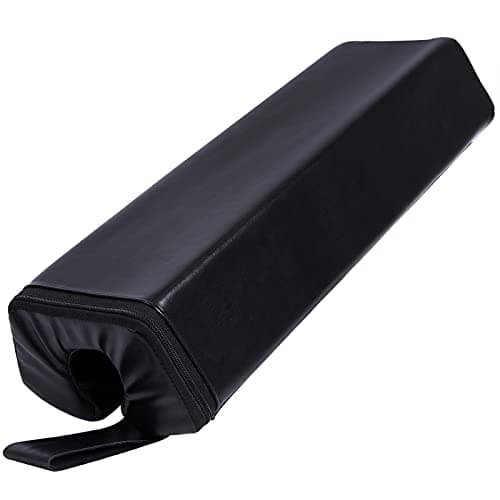
POWER GUIDANCE Square Hip Thrust Pad
A square pad instead of a round one, which is the single change that stops a barbell pad rolling under a heavy hip thrust.
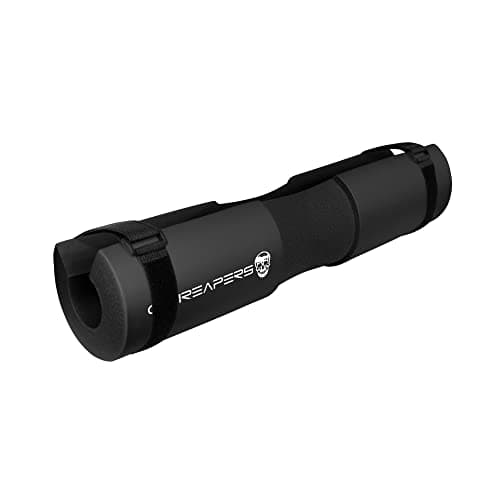
Gymreapers Barbell Squat Pad
The only pad here whose maker publishes a foam thickness — 1.3 inches of neoprene — which in a category this opaque is most of the reason to buy it.
#ad · Price as of October 21, 2026 · Affiliate disclosure
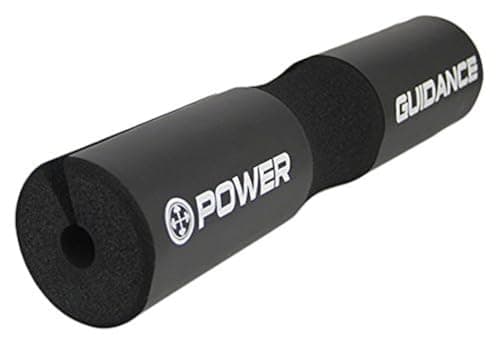
POWER GUIDANCE Barbell Squat Pad
The cheapest pad worth owning — a plain round sponge sleeve that costs about a third of the field and still keeps a loaded bar off your hip bones.
#ad · Price as of October 21, 2026 · Affiliate disclosure
The square POWER GUIDANCE padis the hip thrust answer and the one we would buy first — a flat base that will not roll, at the cost of sitting the bar slightly higher off your hips. The Gymreapers padis the round-sleeve pick purely on disclosure: 1.3 inches of neoprene, published, in a category where nobody else states a number. The basic POWER GUIDANCE sleeveis there because this is a question worth answering cheaply — it is the least pad on the list and still protects your hips. If you want a pad that fastens rather than slides, the Dark Iron wrap on the full roundup uses a hook-and-loop closure.
Two things a pad will not fix
It will not make a bar grip better.The opposite — it covers the knurl. If your bar slides on your back, you want a center knurl and a dry shirt, not more foam. Barbell knurling explained covers what you are padding over.
And it will not fix a bad hip thrust setup.If the bench slides backwards on every rep, no pad helps — that is a bench mass problem, and best bench for hip thrusts ranks the benches that stay put. A square pad on a heavy bench standing on rubber is the whole solution; the pad is only one third of it.
The short version
Buy a pad if you hip thrust, and buy the square one. Do not buy a pad for squats until you have tried moving the bar down, retracting your shoulder blades properly and wearing a thicker shirt — all free, and they usually work. If those fail, use the thinnest pad that solves it and accept you are trading a little stability for being able to train.