The three specs that decide a squat bar
Everything else — finish, sleeve spin, brand — is secondary for this one lift. These three are not.
Why 29 mm, in one paragraph
Bar stiffness rises very steeply with diameter — for a round shaft, bending resistance scales with the fourth power of the diameter, so the step from 28 mm to 29 mm is worth roughly 15% more resistance to bending, not the ~4% the numbers look like. That is the entire reason the power-bar standard settled on 29 mm and the Olympic standard stayed at 28 mm: one discipline wants a dead bar, the other wants a bar that whips. Our barbell whip guide covers what that feels like in practice, and shaft diameter explained has the full comparison.
The center knurl question
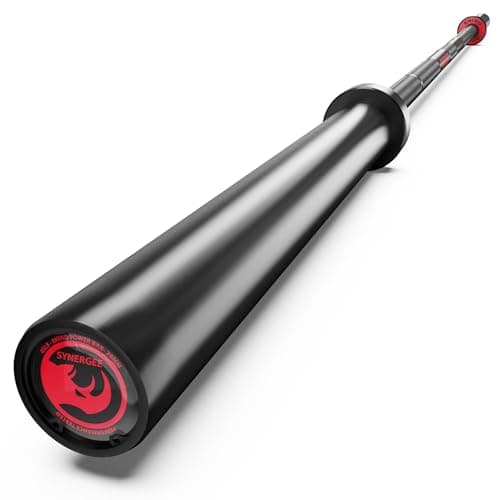
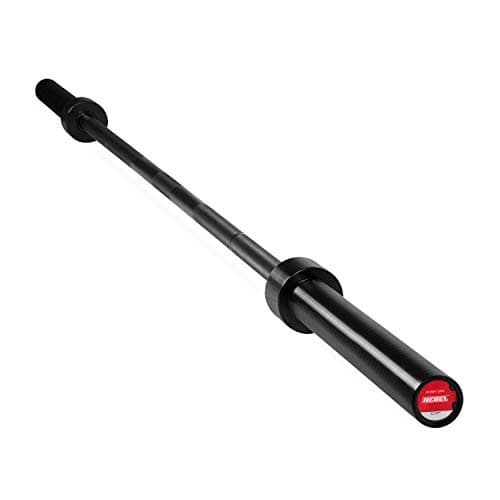
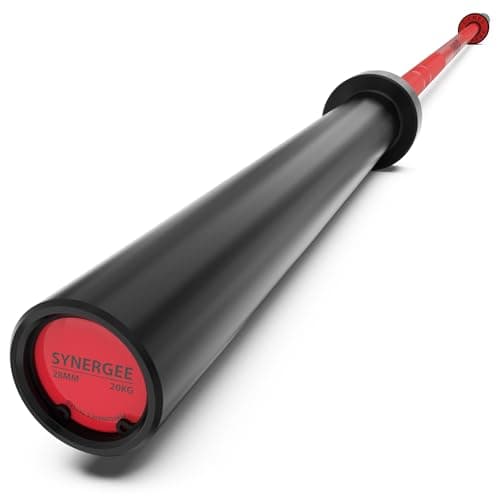
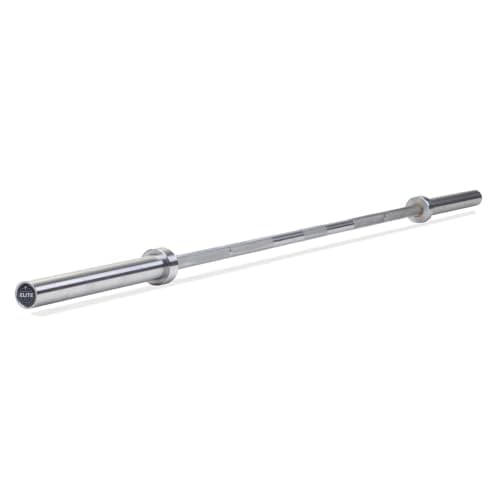
This is the spec that splits the category, and it is genuinely a trade-off rather than an upgrade. The Titan Elite, the Synergee Rhinoand CAP’s Rebel-class power bars carry a center knurl. The Titan Performance Series and most all-purpose bars do not.
- Low-bar squatting: you want it. The bar sits on your rear delts against a shirt, and without a knurl it creeps down your back set by set.
- High-bar squatting: you can take it or leave it, and with a thin shirt an aggressive center knurl will leave marks on your traps.
- Front squats and cleans: you do not want it. The center knurl rides on your throat and collarbone.
- Shared bar, shared gym: no center knurl. It is the setting that annoys the fewest people.
Full detail in center knurl explained, and knurl marks explained covers the ring spacing that tells you which standard a bar was built to. The Synergee Rhino review walks one bar's published sheet line by line if you want to see the specification in context, and lifting straps are the accessory that comes up once your pulls outgrow your grip.
What about a specialty bar?
Worth saying plainly, because for a lot of lifters it is the better purchase: if your problem with squatting is shoulder mobility rather than bar feel, no straight bar fixes it. A safety squat bar puts the load on a padded yoke with forward handles and removes the shoulder position entirely, and a trap barlets you load a squat pattern with the weight at your sides. Those are different tools, not better barbells — safety squat bar vs barbell and can you squat with a trap bar work through when each one makes sense.
How this list differs from our other barbell pages
We rank bars several ways because the lifts ask for different things, and the picks genuinely change between them. Best powerlifting barbell ranks for all three competition lifts at once. Best barbell for deadlifts weights knurl aggression and whip far higher than this page does, because a deadlift bar is allowed to flex. Best barbell for bench press cares about stiffness and ring marks but not at all about a center knurl. Best Olympic barbell is the opposite page to this one in almost every spec. This page is for the lifter whose squat is the lift that decides the purchase.