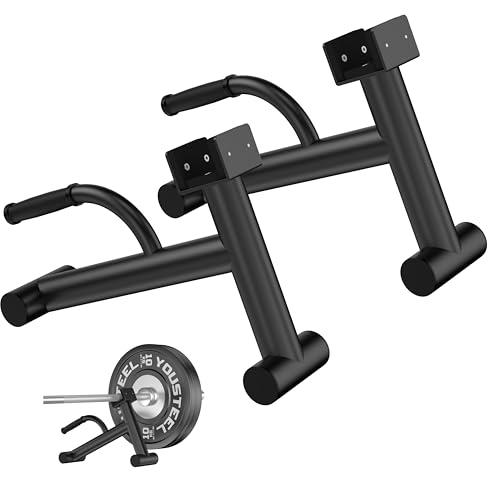
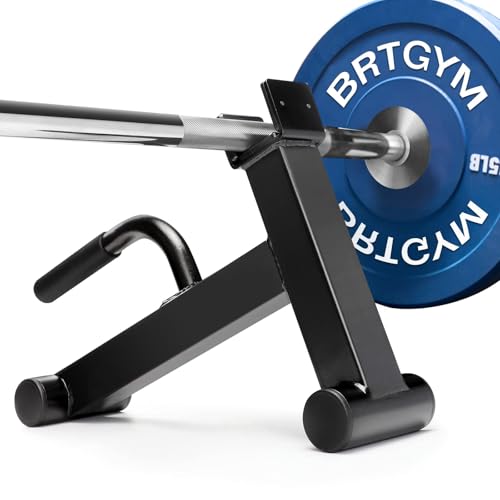
The published specs, side by side
Every figure below is from the maker’s own listing. The capacity column is better filled in here than in most sub-$50 accessory categories, which is worth knowing before you buy on price alone.
Read the capacity column against what you actually lift, not against the biggest number. A 600 lb jack covers a 7-foot bar carrying six 45s a side and change, which is well past the overwhelming majority of home lifters. The difference between 600 and 660 is not the reason to pick one of these; the base, the handle and the material are.
What the $50 cap excludes
Exactly two jacks, and they are excluded for different reasons. The Titan full deadlift jack stand (a published 2,000 lb) and the Bells of Steel 2.0 are both well above this cap. One is a different tool altogether; the other is the same tool built properly.
- A full stand lifts the whole bar at once. It sits under the middle of the barbell and raises both sleeves together, so a plate change is one setup rather than two. If you train heavy singles and change weight on every set, that compounds across a session in a way that is hard to appreciate until you have used one.
- The Bells of Steel names its roller material — UHMW nylon. That is the commercial standard, hard enough to carry the load and soft enough not to score a sleeve, and no sub-$50 steel jack here states anything equivalent.
- Long handles. Real leverage turns lifting a loaded bar into a push you can do one-handed. The cheap jacks here all have shorter handles, which is the single most noticeable difference in daily use.
The honest test: if you deadlift heavy and change weight often, the full stand is worth several times this price. If you deadlift once or twice a week at a steady weight, a lever jack does the whole job for a fifth of it. The full field is on best deadlift jack.
What a cheap jack does to your bar
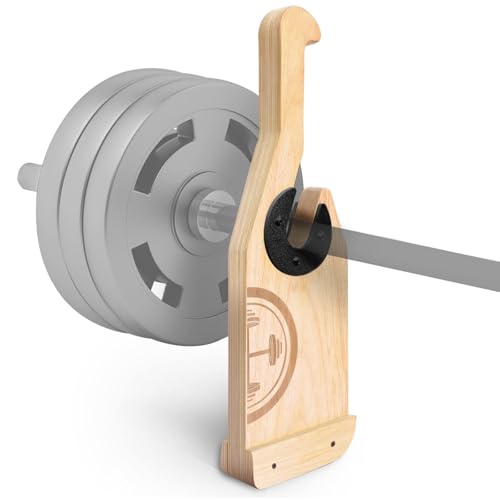
This is the part no listing puts in a bullet point, and it is the reason the wooden jack is on this page at all. The jaw of a jack rests against your barbell sleeve, and over hundreds of sessions a bare steel jaw marks it. Premium jacks solve this with a UHMW nylon roller. Under $50, nobody states a roller material — except that the POWER GUIDANCE jack is made of wood, which cannot score steel no matter how many times you use it.
So there is a real choice at the bottom of this category: a powder-coated steel jack that publishes a capacity, or a wooden one that protects the bar and publishes nothing. If you have spent serious money on a bar from best olympic barbell or best powerlifting barbell, the wood is a defensible pick for exactly that reason. Barbell sleeve explained covers what is under the jaw, and barbell finishes explainedcovers which finishes mark most easily — bare steel and chrome are the ones to worry about.
One caveat on the wood, stated plainly: a wooden jack in a damp garage is a consumable, not a lifetime tool. It will swell, and eventually it will split. At this price that is an acceptable trade for some people and not for others.
What the money buys inside the cap
- At the very bottom— the wooden jack and the BRTGYM trade within pennies of each other — you get a working lever jack. One names its material and a 600 lb rating; the other protects your sleeve. Pick on which of those you care about, because the price is effectively identical.
- A few dollars upbuys the ergonomics: the Tamisom’s non-slip rubber handle, which is what you want with chalk on your hands. Best gym chalk is the other half of that problem.
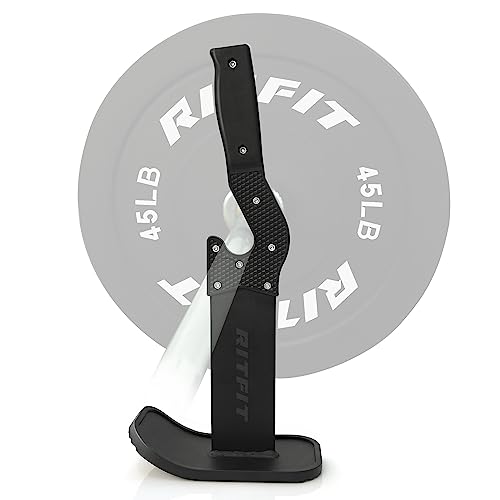
- At the top of the cap, the RitFit adds the highest published capacity here, a PVC-protected base and no assembly. For a few dollars over the cheapest jack, that is the best value in the category and the reason it leads this page.
Where this sits in a sub-$50 accessory budget
A jack is one of three things worth buying under $50, and they do genuinely different jobs. A jack saves your back on loading; it does not change what you can train. If your plates are still stacked on a concrete floor, storage under the same $50 fixes the room and stops the plates rusting at the rim — see best weight plate storage under $50. If your rack only presses and squats, a dip attachment under $50 adds an entire movement — see best dip bar attachment under $50. Of the three, the dip bar changes your training most and the jack changes your sessions most.
For the rest of the loading setup, best barbell for deadlifts covers the bar, best bumper plates covers the plate type a jack helps most, and best barbell accessories ranks collars, chalk, straps and pads across classes.