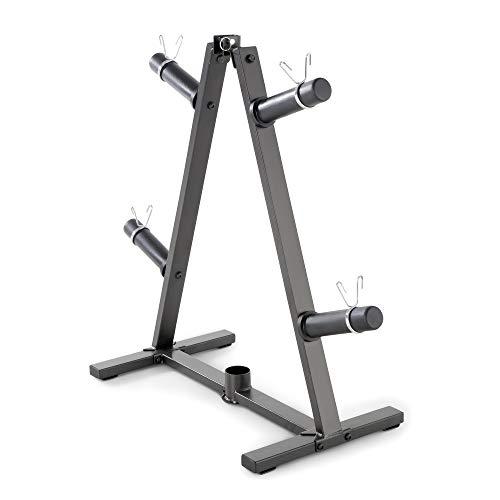
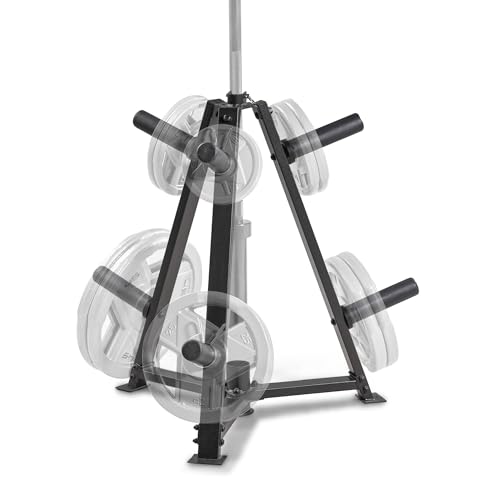
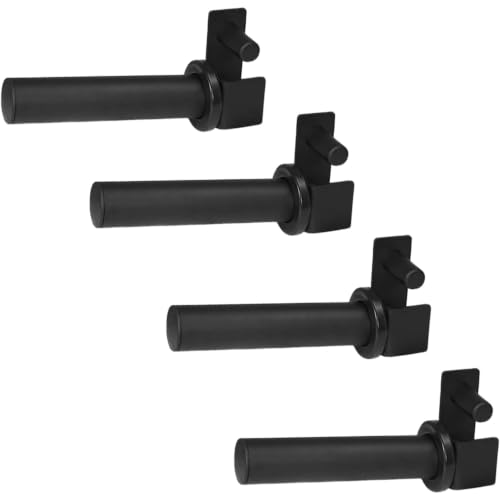
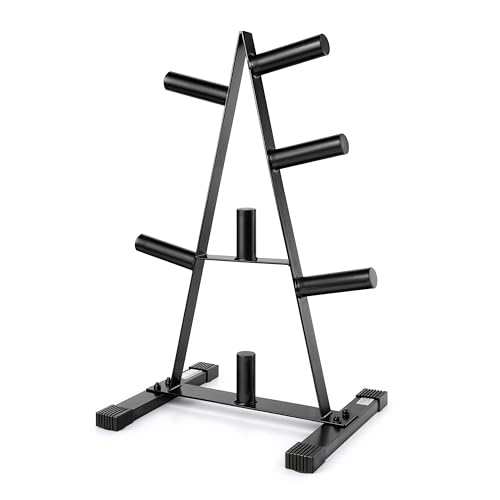
The published specs, side by side
Every figure below is from the maker’s own listing. The capacity row is where this price bracket shows its hand — read the gaps in it, not just the numbers.
Three of five publish no capacity. That is the honest signature of this price bracket, and it is why the two that do state a figure lead the ranking. It does not make the other three unsafe — a plate rack is a simple welded frame and outright failures are rare — but when two units cost within a few dollars of each other and one commits to a number, take the number.
What the $50 cap excludes
Three units from our main list, and it is worth knowing exactly what you are giving up:
- The CAP 6-post tree, which wins the category outright with six posts, four barbell holders and a published 660 lb. If you own a full plate collection and more than two bars, that is the unit, and this cap is costing you real capability.
- The Steelbody horizontal rack, which is the right shape for bumper plates and the only unit anywhere in the category on transport wheels. Nothing under $50 rolls, and nothing under $50 stores bumpers on their edge.
- The Amazon Basics tree, which clears the cap by only a couple of dollars at most price stamps and is the simplest vertical tree we rank.
The practical test: if your collection is mostly bumper plates, spend past this cap. A bumper is wide and soft-edged, the rubber presses against a peg, and lifting one to hip height is genuinely awkward. If your plates are iron, the cap costs you capacity you probably do not need. Bumper plates vs iron plates is the distinction that decides it, and how many plates do I needtells you whether 440 lb of capacity is a ceiling or a joke.
Tree, A-frame, or bolted to the rack?
The vertical tree: best sorting, worst loading
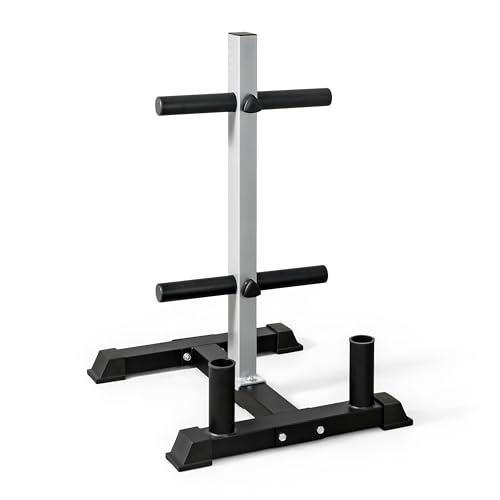
A tree is an upright with pegs. Plates slide on from the side, sorted by denomination, so you grab the right one without reading it. Two picks here are trees and the CAP 4-post is the best of them because it adds bar holders and a stated capacity. The cost is that every plate has to be lifted to peg height, which with a 45 is a small deadlift you do not get credit for.
The A-frame: best loading, worst sorting
An A-frame is a low triangular frame that plates lean against. You roll a plate in at shin height and tip it onto the frame — no lifting at all. Two picks here are A-frames and both are new to this site, because above $50 nobody bothers building one. The compromise is that plates stack against each other rather than sitting on separate pegs, so a mixed set needs more digging. A low wide base is also harder to tip than a tall tree, which matters in a garage with kids in it.
Rack-mounted horns: no floor at all
The Yes4All set bolts four horns onto 2×2 uprights. It is the only option here with a zero floor footprint, and it has a genuine side benefit: plates hung low on the uprights add mass near the floor and steady an unanchored cage. The catch is fitment — measure your upright and your hole diameter first. 2x2 vs 3x3 power rack covers what to measure, are power rack attachments universal covers why it matters, and weight plate storage on a rackwalks through what hanging plates does to an upright. If your rack is 3×3, this is the wrong part and the A-frames are your answer.
What to check before you buy at this price
Plate diameter and insert size.Everything here is built for 2-inch Olympic plates. If you run 1-inch standard plates, none of these pegs or bays fit properly — 2 inch vs 1 inch weight plates explains why the two systems never mix.
Where it will actually stand. A tree wants a wall to sit against; an A-frame wants a run of floor and clearance to tip a plate in. Measure the gap you intend to fill before you pick a format, not after it arrives flat-packed.
Whether you need the bar holder.Three of these five take a barbell, and at this price that is the feature most worth paying the extra few dollars for. Standing a bar vertically rests its whole weight on one sleeve end, which is fine for an unloaded bar in storage and not fine for a loaded one — how to store a barbell covers the right way round and how to prevent barbell rust covers what storage is really protecting against in a damp garage.
Assembly and the floor under it. Everything in this bracket ships flat-packed with bolts, and an A-frame on an uneven garage slab will rock with weight on one side. Check the floor, not the frame, if it wobbles. How to clean weight plates and do weight plates wear out cover what getting them off concrete actually prevents.
Where this sits in a sub-$50 accessory budget
Plate storage is one of three things worth buying at this price, and it is worth being clear about the order. Storage is a floor upgrade: it does not make you stronger, it makes the room usable and stops the plates you already paid for from rusting at the rim. If you deadlift from the floor, a jack under the same $50 removes a dozen bent-over lifts a session — see best deadlift jack under $50. If your rack only presses and squats, a dip attachment under $50 adds a whole movement — see best dip bar attachment under $50. And if the plates themselves are still on the shopping list, best weight plates and best barbell and weight set come first.