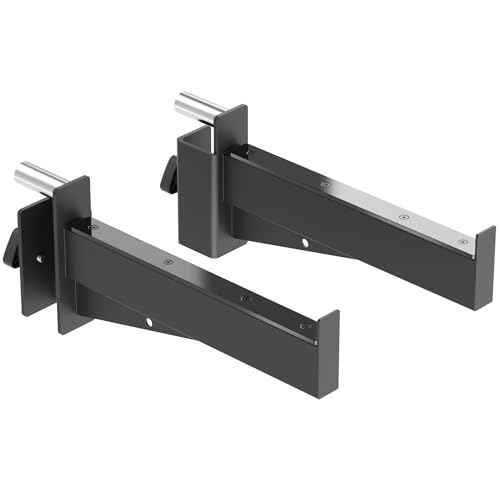
The five classes, side by side
Every figure below is from the maker’s own listing. The fitment row is the gate; the capacity row is the tiebreak.
Notice that four of the five picks fit 2×2 uprights. That is not a bias in our ranking — it is the market. Budget and mid-range home racks are overwhelmingly 2×2, so that is where the parts are. If your rack is 3×3 the parts exist but the choice is narrower and the prices higher; each class page names the 3×3 option where there is one.
Buy them in this order
1. Safeties, before anything else
Most budget racks ship with J-hooks and nothing else. J-hooks hold a bar; they do not catch one. Spotter arms or safety straps are what let you train to failure alone, and that single change does more for your training than every other attachment on this page combined. Spotter arms vs safety straps compares the two mechanisms, and best spotter arms ranks the arms themselves. If you bench alone, read bench press without a spotter before you buy anything else.
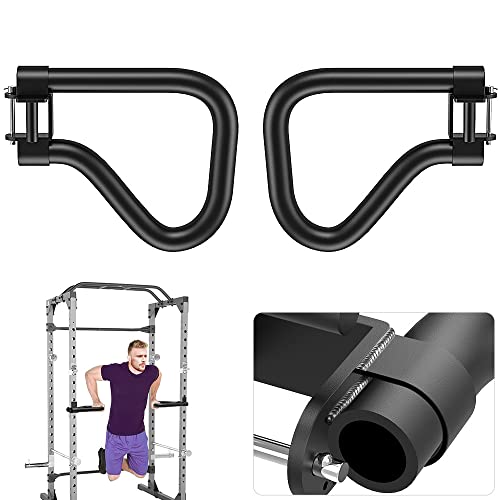
2. Dip bars, because they close the biggest movement gap
A rack presses and squats. It does not dip, and dips are the cheapest upper-body pressing variation you can add — our pick costs less than a barbell pad. Ranked in full on best dip bar attachment.
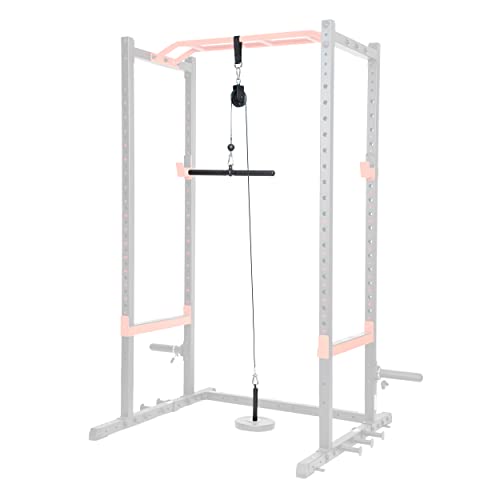
3. A lat pulley, if you want loaded pulling
Vertical pulling is the other thing a bare rack cannot do. A bolt-on pulley is the cheap route and a tower is the capable one; best lat pulldown attachment ranks both, and lat pulldown attachment explained covers how plate-loaded carriages actually feel. If you have not bought the rack yet, best power rack with cable pulley is usually cheaper than a rack plus an attachment.
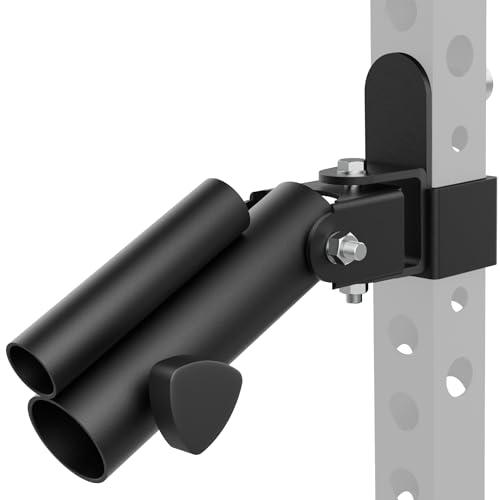
4. A landmine, for the movements a straight bar cannot do
Rack-mounted or floor-mounted, a landmine turns one end of your barbell into a pivot and opens up rows, presses and rotational work. Best landmine attachment ranks five, and do I need a landmine attachment is the honest answer on whether it earns its place.
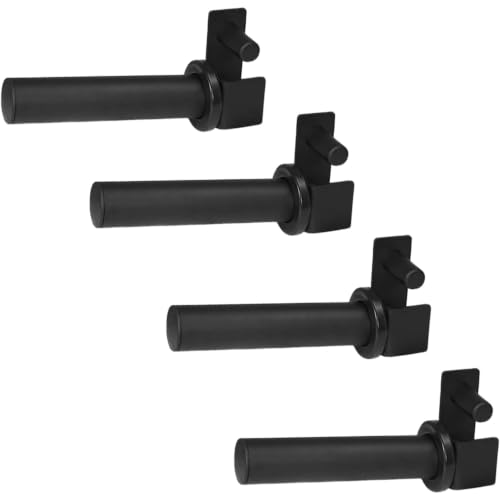
5. Plate storage, last, and worth it anyway
Horns bolted to the uprights are the only storage that costs no floor at all, and they have a real side benefit: plates hung low add mass to an unanchored cage and steady it. Best weight plate storage ranks the freestanding alternatives, and weight plate storage on a rack covers what hanging plates does to an upright.
What this page deliberately leaves out
J-hooks, because your rack came with them and replacing them is a repair rather than an upgrade — J-hooks and rack attachments explained covers when a swap is worth it. Band pegs, because they are cheap, rack-specific and covered in what are band pegs on a rack. Pull-up bars, because almost every rack we rank already includes one — see best squat rack with a pull-up bar and rack-mounted vs freestanding pull-up bar.
And one piece of arithmetic worth doing before you start: attachments add up fast, and a better rack that already includes them is often the cheaper purchase. If you are early enough to change course, compare your total against best power rack and how much does a power rack cost.