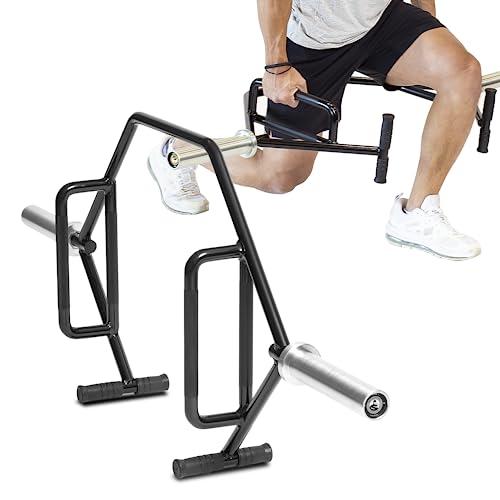
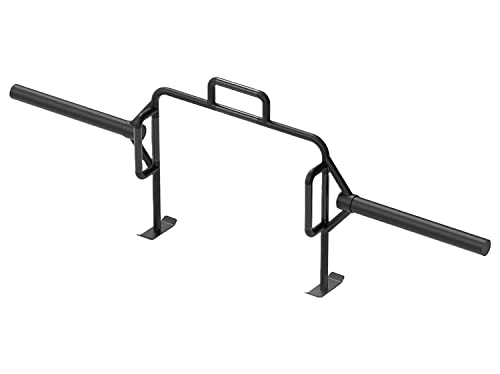
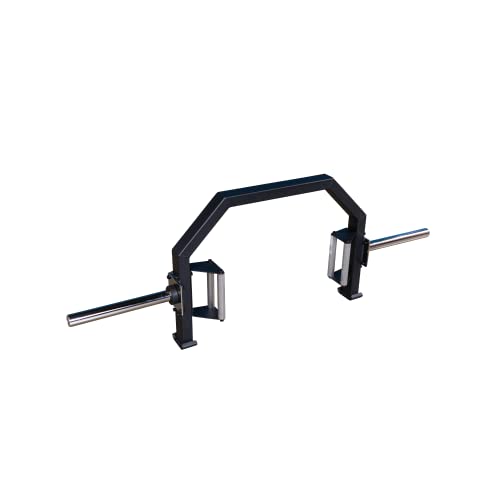
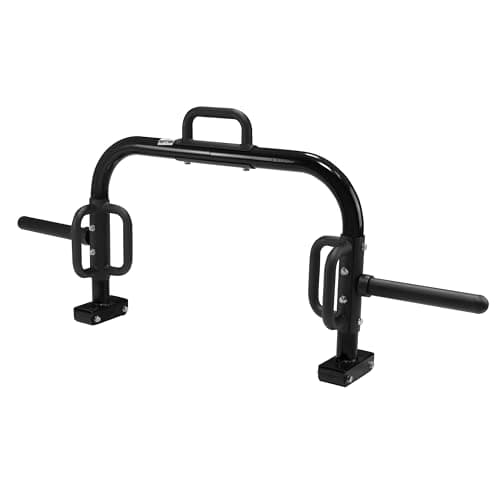
The published specs, side by side
Every figure below is from the maker’s own listing. The blanks are the honest state of this category, and the capacity column is the row that should decide most purchases.
Two rows deserve a second look. Not one bar on this page publishes its own weight, and on an open frame that matters more than usual — these bars carry more steel than a closed hex and can run well past 60 lb before a plate goes on. Weigh the empty bar on day one; how heavy is a trap bar covers the usual range. And the Body-Solid’s published 100 lb plate capacity is a real number, not a typo: it marks that bar as a shrug and accessory tool rather than a bar to build a deadlift on.
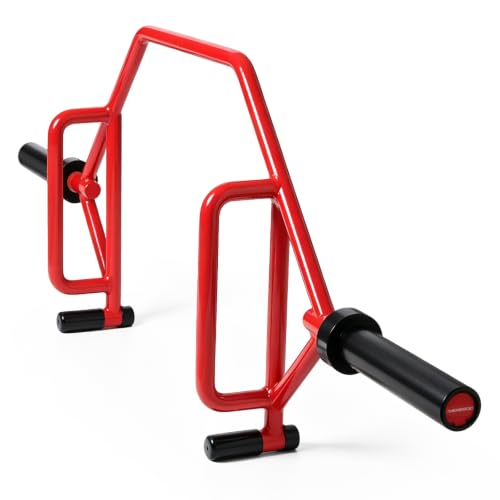
What the open back actually buys you
Carries, lunges and step-ups
This is the whole argument. A closed hex frame boxes you in, so the bar can only be lifted and set down in place. An open frame lets you walk out of it loaded, which turns one bar into a farmer’s carry implement, a walking-lunge tool and a loaded step-up handle. For a home gym where floor space is the budget, that is three pieces of equipment in one frame — best trap bar for farmers carries ranks specifically for that use, and open vs closed trap bar works the format fork through properly.
Easier entry and exit
Less discussed and genuinely useful: you step into an open bar from the back rather than lifting a leg over a frame. For anyone with hip or knee limitations — often exactly the lifter a trap bar was recommended to in the first place — that makes the bar usable on days a closed frame is not. Trap bar vs barbell deadlift covers why the pull is kinder in the first place.
What you give up
Stiffness and storage. An open frame is a cantilever — the back is not tied together — so it flexes more under a heavy pull than a closed hex of the same steel. And most of these lie flat rather than standing upright, which is both a storage problem and the reason loading is such a chore. That is precisely the gap the Bells of Steel’s built-in jack closes.
The loading problem, and the one bar that solves it
Here is the daily reality nobody mentions in a spec sheet: an open trap bar lying flat on the floor is awkward to load. You are crouching to slide plates onto a sleeve a few inches off the ground, then doing it again on the other side, then again between every set. A closed bar that stands upright lets you load at waist height; most open bars do not stand up at all.
The Bells of Steel bar has a deadlift jack built into the frame, so you tilt the bar and the sleeve lifts clear of the floor. It is the only bar on this page with any loading aid at all, and it is most of the reason it costs what it costs. If you buy any of the others, budget for a separate deadlift wedge or accept the crouch. How to load a barbell covers the general technique, and trap bar loadable sleeve length does the arithmetic on what actually fits once you are down there.
Which one should you buy?
- If the trap bar is your main deadlift tool:the E.T.ENERGIC, on its 700 lb published capacity and rotating sleeves. Nothing else here publishes a figure that supports heavy pulling.
- If you load and unload constantly: the Bells of Steel, for the jack. It is the most expensive bar here and the one you will be least annoyed by.
- If you want an open frame cheaply: the CAP Deluxe Open, and accept that no capacity is published. See also best trap bar under $100, where it is the top pick under that cap.
- If you mainly shrug and rack-pull:the Body-Solid, whose 100 lb plate capacity is sufficient for those lifts and whose brand support is the best here.
Still deciding between a trap bar and something else? Best specialty barbell ranks trap bars against safety-squat bars, which is the comparison most people should make first, and is a trap bar worth it is the honest test of whether the category earns your floor space at all. For the closed-frame ranking, see best trap bar and best budget trap bar; on cost, how much does a trap bar cost tracks the live spread.