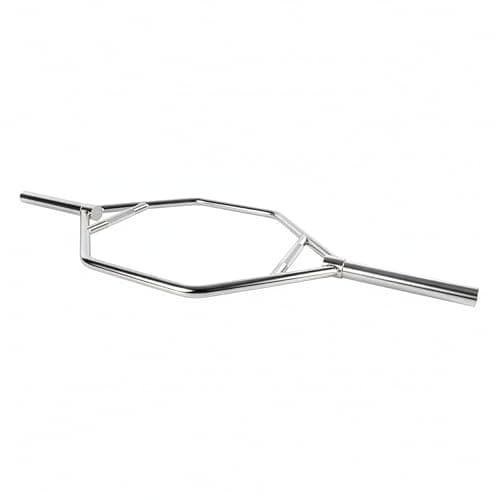
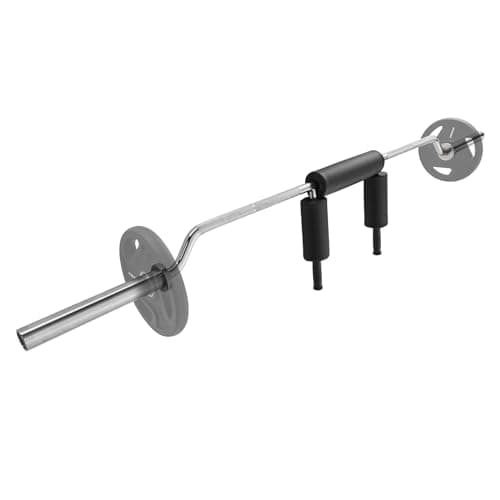
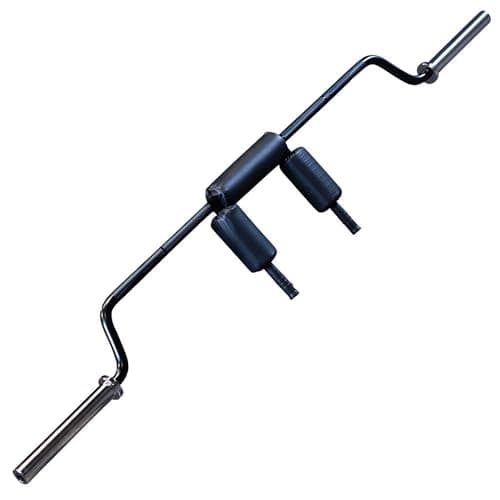
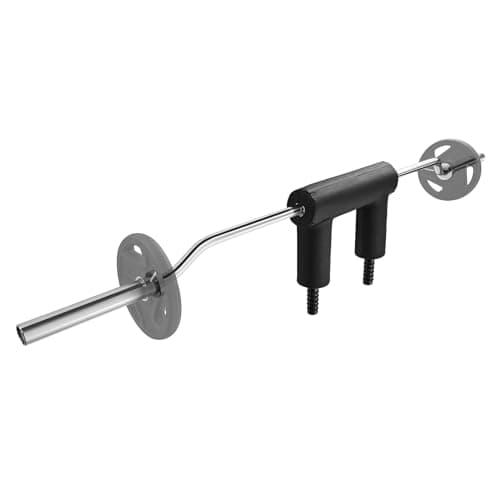
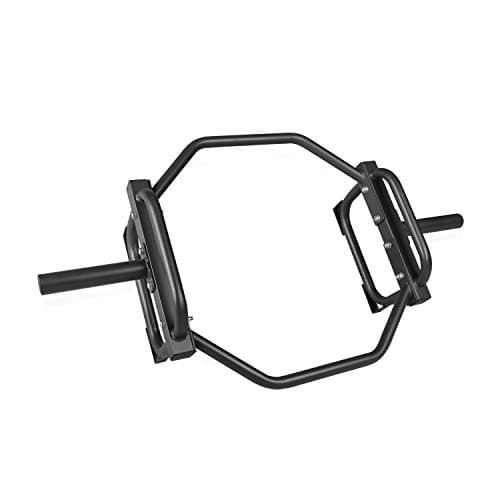
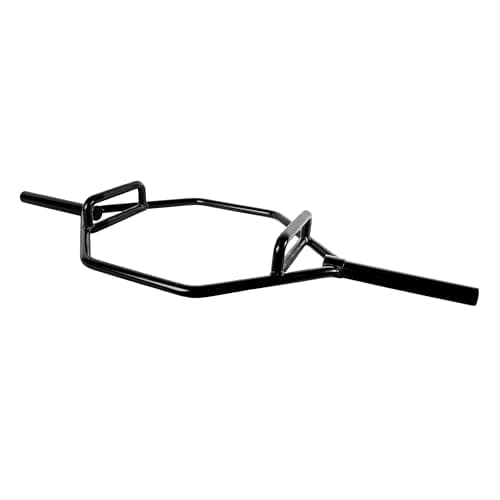
The published specs, side by side
Every figure below comes from the maker’s own listing. Where a maker publishes nothing we say so rather than estimating — and in this category the blanks cluster in one predictable place: bar weight.
Look at the bar-weight row. Only one bar on this page publishes its own weight, and that matters more on a specialty bar than on a barbell: a trap bar can weigh anywhere from 45 lb to 75 lb, and a loaded safety-squat bar carries yoke and pad mass you cannot see. Weigh the empty bar on day one. How heavy is a trap bar and how much does a safety squat bar weigh cover the usual ranges and why they vary so much.
Which class should you buy first?
Buy the trap bar if the deadlift is the problem
A trap bar puts your hands at your sides instead of in front of your shins, which shortens the moment arm on your lower back and lets most people pull heavier with less technical risk. It is also the more versatile purchase of the two: the same frame does shrugs, rack pulls, farmer-style carries (on an open bar) and even a jump. If you are not sure a specialty bar earns its space at all, is a trap bar worth it is the page to read before spending anything, and trap bar vs barbell deadlift covers what actually changes.
Buy the safety-squat bar if the squat is the problem
An SSB sits on a padded yoke with the load cambered forward and two handles in front of your chest, so you never have to externally rotate your shoulders into a back-rack position. That is the entire pitch, and for a lifter with a cranky shoulder, a wrist injury or limited thoracic mobility it is the difference between squatting and not squatting. The cost is a forward lean you have to brace against, which makes an SSB squat harder than a straight-bar squat at the same weight. See is a safety squat bar worth it and safety squat bar vs barbell.
If you genuinely cannot choose
Buy the trap bar. It is cheaper at the bottom of the range, it covers more lifts, and it is the easier bar to sell on if it turns out you do not use it. Safety squat bar vs trap bar works the fork through properly, and do I need a specialty bar is the honest answer for anyone whose straight bar is doing fine.
What the money actually buys
The useful thing about this category is that the price spread is narrow and the specs are published, so you can see exactly what each step up pays for.
- At the bottom, around the price of a pair of bumper plates, you get a single-height handle and a 400–500 lb rating. That is a real tool, not a toy, but it is not a bar for a max pull.
- In the middle, you buy capacity and finish — 750 lb and chrome instead of 500 lb and paint, or a 1,500 lb SSB rating instead of 700 lb.
- At the top, you buy handle options and a brand that will still exist when a pad splits. Dual-height knurled handles and integrated shoulder padding are the two features that only appear once you are past the bottom third of this list.
For the per-class rankings, see best trap bar, best safety squat bar, and the two budget lists — best budget trap bar and best budget safety squat bar. If your ceiling for this purchase is a hundred dollars, the three bars on best trap bar under $100 are the whole of what is available.
One thing to check before you order
Both classes load on 2″ Olympic sleeves, so your plates will fit — but a specialty bar needs rack and floor space a straight bar does not. A closed hex frame does not stand upright in a corner, a safety-squat bar will not sit in most J-hooks the way a barbell does, and both are awkward to store. Measure before you buy, and read how to store a barbell if your gym is a shared garage. On sleeve capacity, trap bar loadable sleeve length does the arithmetic on what actually fits.